
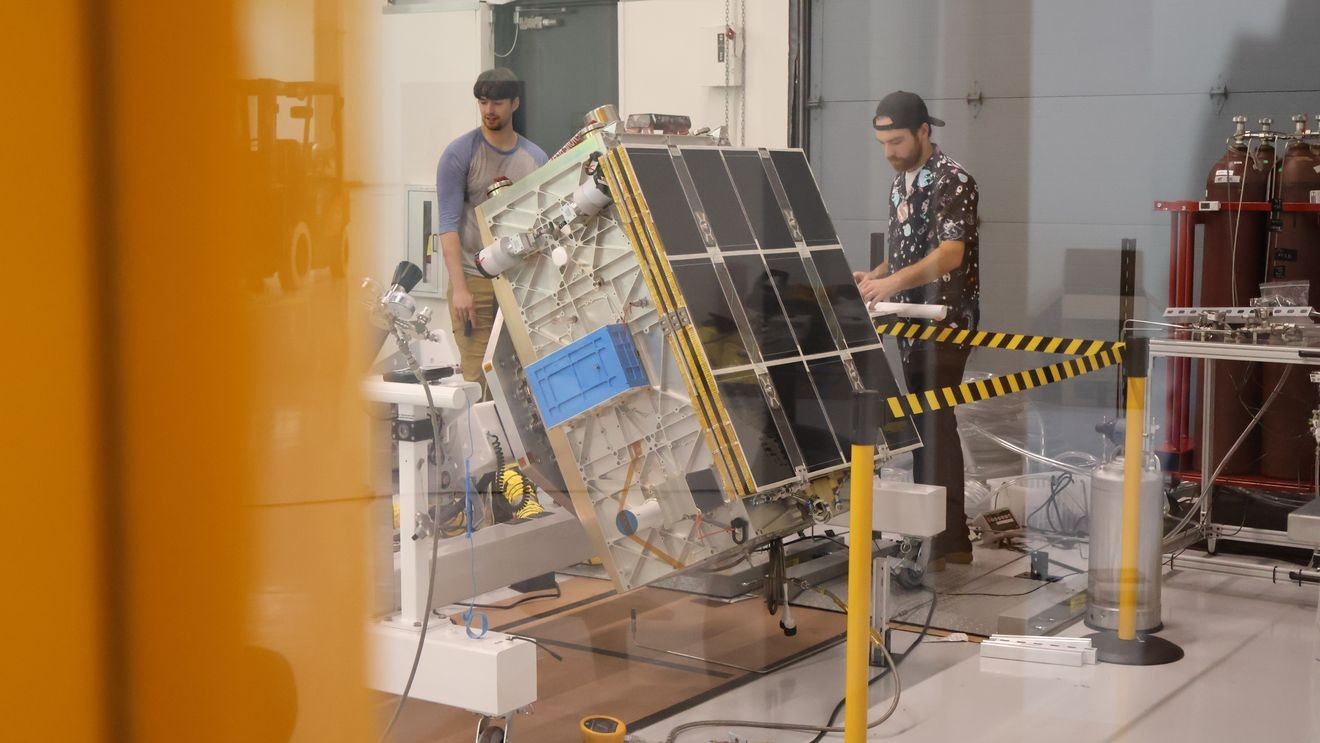
BOTHELL, Wash. — A new era is about to begin for Portal Space Systems in Bothell as the company prepares to launch its first spacecraft into orbit.
The spacecraft, called Starburst, is a 600-pound vehicle built to be highly mobile and serves as Portal’s initial prototype.
“It’s a smaller 600-pound spacecraft that’s built to be highly mobile and really our initial prototype to demonstrate Portal’s early capabilities to our customers on the defense and commercial side,” said Portal Space Systems CEO Jeff Thornburg.
Portal let KOMO into the new facility to get a look at Starburst before it shipped to Cape Canaveral, where it is scheduled to launch in October. Thornburg said the spacecraft will launch on a Falcon 9 rocket.
“To launch on a Falcon 9 rocket that I worked on when I was at SpaceX in the 20-teens is a pretty exciting development for us,” he said.
Thornburg started Portal Space Systems in his garage five years ago.
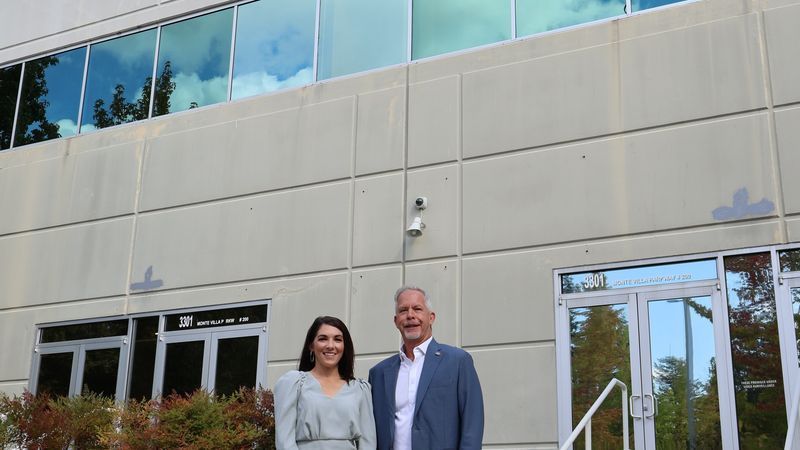
KOMO News Anchor Holly Menino interviewed Portal Space Systems CEO Jeff Thornburg before Starburst’s launch. (KOMO News)
“Founded the company originally to really push humanity farther into the solar system,” he said.
Starburst will carry a new camera system designed to monitor the spacecraft’s health and its surroundings. It will also carry what Portal describes as “the world’s largest superconducting magnet that’s ever flown on orbit,” Thornburg said.
Thornburg compared the magnet’s potential to science fiction technology.
“It’s really kind of like the Star Trek shields or the tractor beam of space. You can do a lot of cool things with that,” he said.
He said the magnet could allow the spacecraft to orient in ways different from normal propulsion systems, protect sensitive electronics from radiation, and potentially “push and pull on things theoretically on orbit.”
Once in space, Starburst will operate within a single orbit. It is designed for five years of life and has a year’s worth of mission objectives.
Starburst is also described as a smaller version of Portal’s Supernova, a space transport vehicle designed to carry items in space and move quickly around orbits between Earth and the Moon using Portal’s solar thermal propulsion system.
“This is really about verifying the engineering team’s design on orbit and showing our customers that data,” Thornburg said.
Portal has expanded rapidly, outgrowing a 6,000-square-foot facility and is now in a 65,000-square-foot facility in Bothell. The company plans to build about 30 spacecraft a year at the Bothell site.
Portal also purchased its own Falcon 9 mission with SpaceX. The rocket will be a Portal mission and is expected to fly the first Supernova spacecraft in 2028.