
Mike Relja, a retiree in his late 70s, received an unexpected job offer from NASA about a month ago.
The assignment: Help put a former NASA-operated Lockheed SR-71A Blackbird back in the air after a nearly 27-year hiatus.
Two former test engineers confirm jobs were offeredNASA withdrew Tail No. 844 from display poleAgency administrator seeks new X-planes for aeronautic breakthroughs
Relja, an ex-U.S. Air Force and NASA test engineer for the SR-71A, could not believe his ears. David Ash, a former U.S. Navy and Joby test pilot who was hired in June as a special projects director for NASA, asked Relja to provide his expertise for a secret effort to return a long-retired and neglected Blackbird to flight.
“I told the guy, ‘You know, I’m too old to be doing this,’” Relja recalls to Aviation Week. “‘I wish you well. I’d like to see you make it. It would be interesting. But I just don’t think you can get there from here.’”
It appears NASA is going to try.
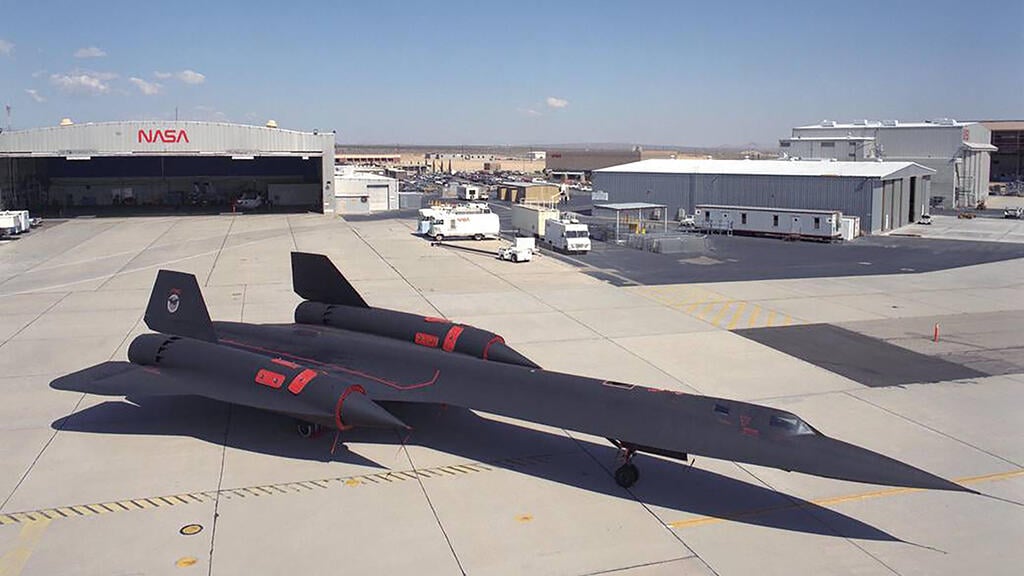
At some point early this year—certainly before May 17 and perhaps even before April, according to commercial satellite imagery acquired by Aviation Week—agency employees removed the SR-71A with Tail No. 844 from a display pole near the corners of Lilly and Walker Avenues at the Armstrong Flight Research Center on Edwards AFB, California.
That SR-71A had stood there since about Oct. 9, 1999, the day that marked the final flight of No. 844—and of any Blackbird. NASA employees rolled the SR-71A into the hangar that once housed the Space Shuttle at Edwards, Relja says. An inspection of the aircraft followed. By the time Ash extended the job offer to Relja in August, NASA had crews working on the SR-71A inside the hangar.
“I do know they’ve got people working on it,” Relja says. “But again, without equipment, it’s beyond me what they’re doing.”
The first public hint that a return to flight for the SR-71A was brewing came at the exclusive All-In Summit in Los Angeles on Sept. 12-14. On stage as a panelist, NASA Administrator Jared Isaacman teased an image of a new X-plane, revealing the famous outline of the SR-71A’s inward-canted vertical tails, bulbous midwing engine nacelles and flush and blended cockpit. The image prompted speculation that NASA is planning to create a modern X-plane based at least loosely on the Blackbird’s distinctive profile.
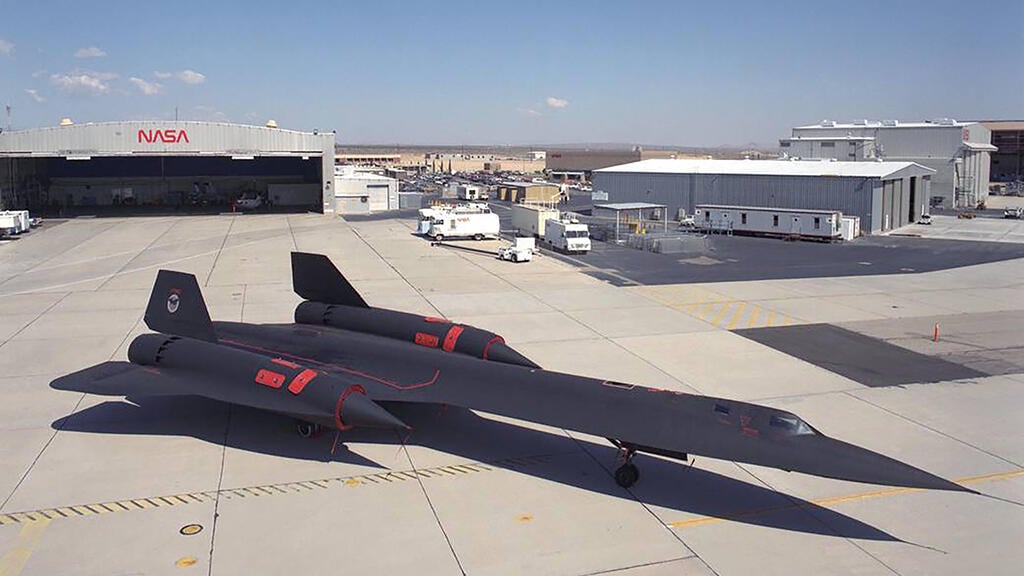
NASA removed SR-71A Tail No. 844 from display before April and rolled it into the former space shuttle hangar at Armstrong Flight Research Center, California. Credit: NASA
Retired NASA employees tell a different story. Aviation Week confirmed that the agency approached Relja, Tim Conners, another former NASA SR-71A test engineer and others over the summer with job offers to work on the return-to-flight project for Tail No. 844.
In meetings with the prospective rehires, Ash brushed aside all questions about why NASA wanted to go to the effort and expense of putting the Mach 3-capable SR-71A back in flight.
During his remarks at the All-in Summit, Isaacman provided some context for NASA’s overall campaign to reinvigorate the agency’s aeronautics research mission with a new stable of X-planes pursuing breakthroughs rather than incremental improvements over the state of the art.
“In the service of the first ‘A’ in NASA, we are rebuilding our X-plane fleet,” Isaacman said. “It will not be long before NASA is once again flying as high and as fast from decades past—and then even more.”
An agency spokesperson declined to elaborate on Isaacman’s comments or the reason for the removal of Tail No. 844 from the display position. NASA has not confirmed that the return-to-flight project exists.
“We recognize the interest in the SR-71 and its remarkable history at NASA but have no additional information to share regarding the aircraft at this time,” the spokesperson tells Aviation Week.
To achieve that goal, Ash’s project must somehow restore to airworthiness a 59-year-old airframe that has not flown in nearly 27 years, despite a lack of everything—trained crews, spare parts and a supply chain ready to build them.
The challenges and costs of returning an SR-71A to flight after so many years seemed overwhelming to Relja, and he told NASA’s project lead as much when he met with him.
The cavities inside Tail No. 844 are likely full of water and sand from its nearly three-decade perch on display, he said. The two engines inside and the spare engine sitting beneath the airframe likely have not been lubricated and rotated since its final flight.
“When we were operational, if we had a spare engine, every 90 days we had to rotate the engine,” Relja says. “Every 180 days, we had to run it to keep it as a ready spare. Now you’re talking about engines that have been sitting for 30-plus years.”
The Air Force and NASA destroyed a $600 million supply of spare parts for the Blackbird fleet in 2007. The move came long after it seemed unlikely, if not impossible, that an SR-71A would return to operational service.
That decision could lead to significant restart costs. In addition to all of the consumable spares that must be in regular supply, NASA would need to restore access to the Blackbird’s unique JP-7 fuel blend, the triethylborane ignition chemical, engine oil and hydraulic fluids, Relja adds. A hodgepodge of bespoke ground equipment also no longer exists, leaving the current effort without vital, if unheralded, pieces of equipment.
“To raise the wing, you need a cart,” he says. “To get the engine out, you need a cart. You need equipment to pull the [engine] spikes, pull the [ejection] seat. All that stuff is gone.”
When Relja raised all of these issues with Ash, the NASA manager assured him it would not be a problem, without going into details about their solutions.
“Every time I threw one of these things out there, he says, ‘Oh, engineering will take care of that [and] engineering will take care of that,’” Relja recalls.
At the same time, he does not dismiss a return to flight as impossible, especially if NASA has enough resources to make it achievable.
“If you got a ton of money, maybe you can make it happen,” he says. “They went to the Moon, you know.”
Conners, a former colleague of Relja, tells Aviation Week that he turned down an offer to return to the SR-71A program, despite his hopes that it will succeed. Conners shares many of Relja’s concerns about feasibility.
“My first thought was, ‘My god, I would drop everything’” to help NASA achieve its goal, Conners says. “My second thought was, ‘How in the world are they going to do it?’”
But he thought of a few possible solutions to the spare parts problem. Dozens of retired Blackbirds adorn flight museums across the U.S. and in the UK. Nine flew to their final destinations, so their engines are parked with those aircraft on museum display.
“Those subsystems could be cannibalized,” Conners says.
Despite its pioneering design and still-unmatched performance even 60 years later, Lockheed’s famed Skunk Works, led by Kelly Johnson, produced an aircraft with an elegantly simple approach to electronics and key subsystems.
“The architecture was as simple as they could make it,” Conners says.
The lack of trained pilots and maintenance crews presents another challenge for NASA, but it might not be a showstopper. Conners recalls how the agency’s trained flight-test pilots did not require significant instruction after it received three aircraft from the Air Force in the early 1990s. And Lockheed’s operational manuals for the SR-71A still exist—and are superb, Conners adds.
“Training the pilot isn’t going to be that big of a deal,” he says.