
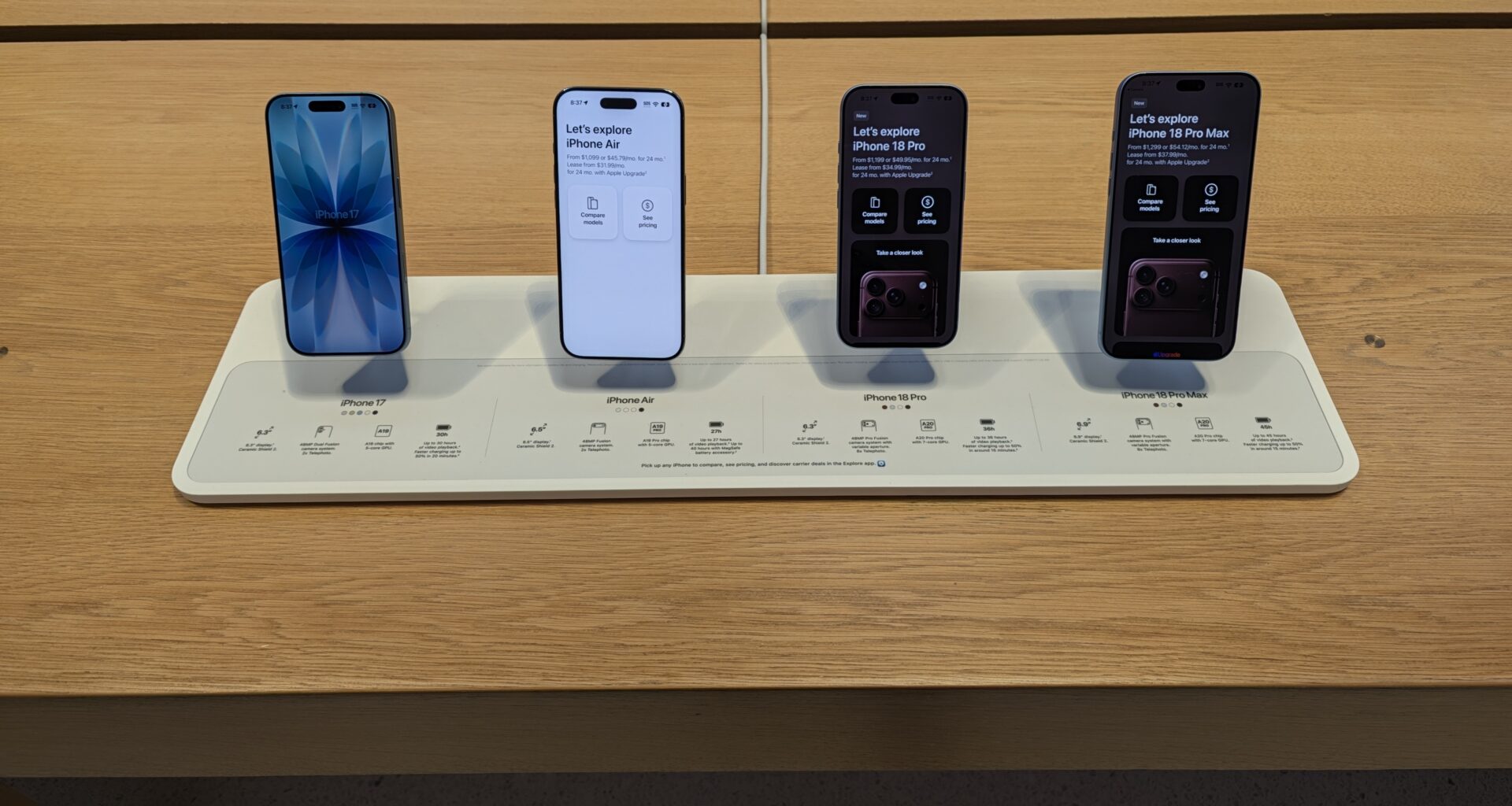
Apple’s new $1,199 iPhone 18 Pro and $1,299 18 Pro Max are now on sale, and for the first time these phones will not be joined by a lineup of lower-cost iPhone models. Instead, the 18 Pro and 18 Pro Max are available alongside the base iPhone 17, the lower-cost iPhone 17E and the thin iPhone Air.
In another first, those latter three phones received $100 price increases without getting any revisions — likely influenced by the ongoing RAM shortage that led Apple to increase prices across many of its other product lineups. The iPhone 17E now starts at $699, the iPhone 17 at $899 and the iPhone Air at $1,099. The iPhone 16 is also still available, but at $829 for only 128GB of storage, it’s an easy pass since every other option has more value. It’s rumored that an iPhone 18E, iPhone 18 and an iPhone Air sequel will instead be coming early next year.
Plus there’s also the upcoming $1,999 iPhone Duo, Apple’s first folding phone, that will go on sale Oct. 23. That phone adopts a passport-style design when closed with a 5.4-inch outer display that’s shorter and wider than other iPhone models. After unfolding it, you get an expansive 7.6-inch internal display.
So if you need a new iPhone right now, you may have a bit of a split decision. You can either go for one of the brand-new Pro or Duo options — which are Apple’s most premium and expensive models — or you can choose one of the earlier iPhone 17, 17E or Air phones that still have a lot of value even after a year on the market. Let’s go over all of the current options, and break down which one could be a better fit for your needs.
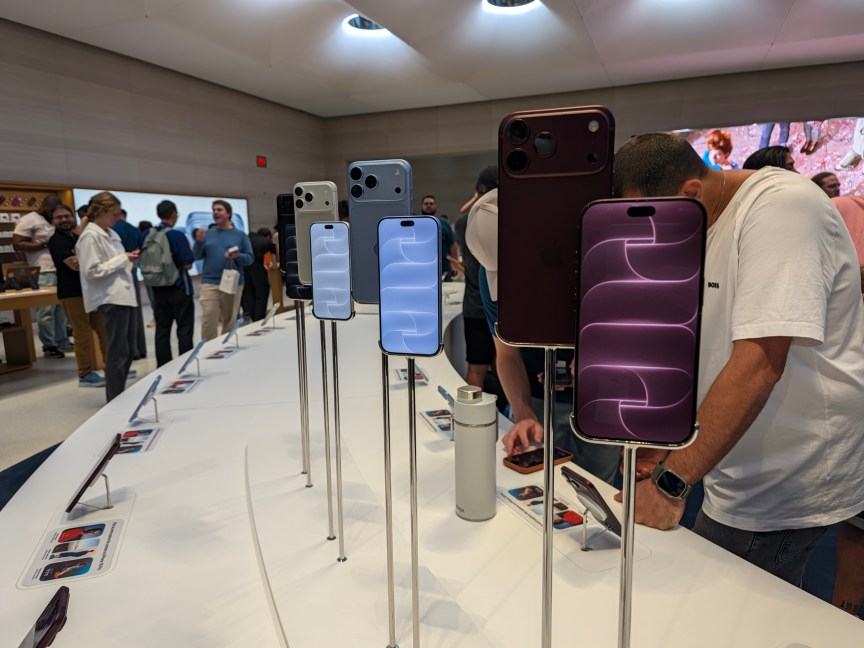 The iPhone 18 Pro and Pro Max on display at Apple Fifth Avenue for the phones’ launch.Mike Sorrentino/CNET
Design and display
Through hardware and software touches, every phone Apple makes is easy to identify as an iPhone. However, this year’s lineup comes in so many shapes and screen sizes that you’ll have plenty of options based on whether you want a simple, smaller iPhone, a thinner iPhone, a bigger iPhone for photography or a folding iPhone that functions as a smaller phone and unfolds into a tablet.
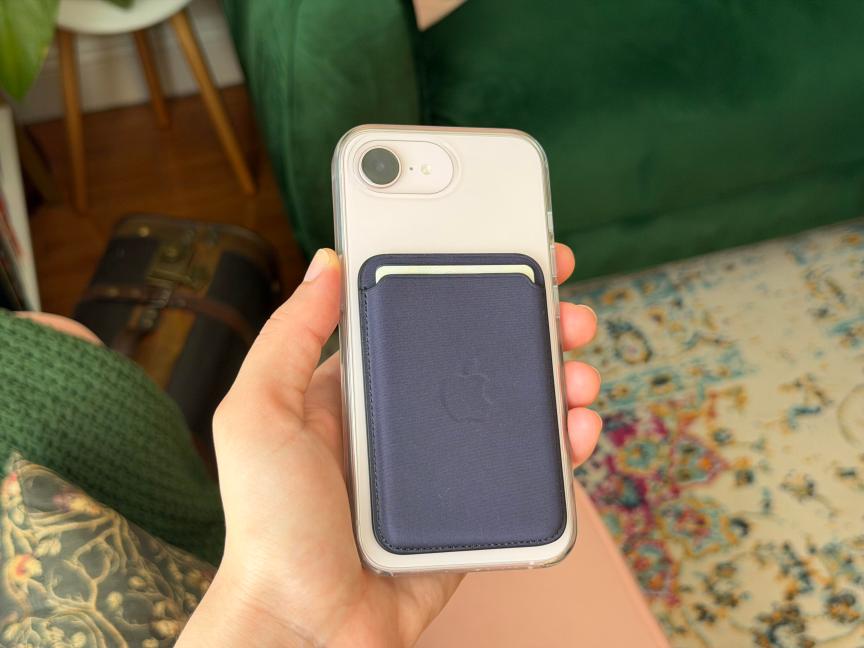 The iPhone 17E includes support magnetic accessories such as MagSafe wallets.Abrar Al-Heeti/CNET
Starting with the $699 iPhone 17E, Apple’s lower-cost option continues to use a design that’s similar to 2022’s iPhone 14. On the front, the phone has a 6.1-inch display and puts its Face ID sensor and 12-megapixel front-facing camera into a notch at the top of the screen. While it does not include the Dynamic Island seen on other iPhone models, Live Activities such as timers and checking the status of a rideshare driver appear as interactive notifications. The iPhone 17E comes in three colors: white, black and pink. As with all of Apple’s current iPhone models, you can attach MagSafe accessories such as wireless chargers and wallets to the back of the phone.
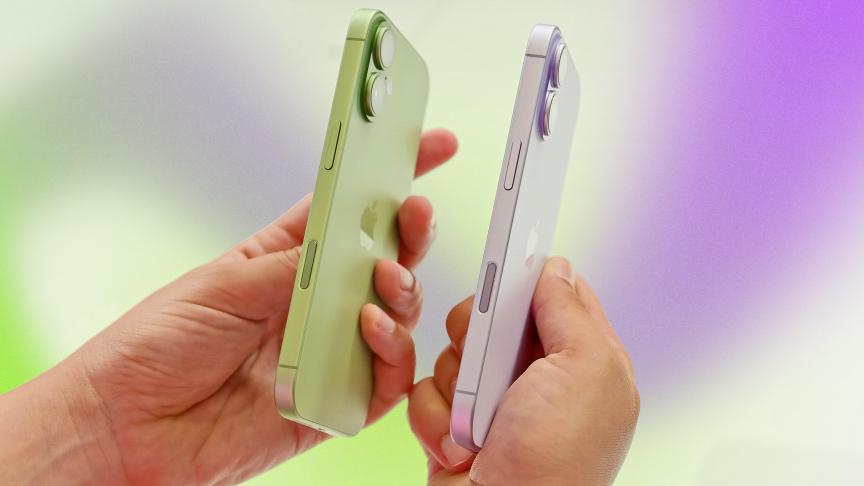
Here is the iPhone 17 in sage (left) and lavender.
CNET
Apple’s $929 iPhone 17 spices up the design quite a bit, starting with bolder color options including lavender, mist blue and sage along with standards such as white and black. I’m personally fond of how sage looks like a matcha green. Apple incorporated the screen cutout where the front-facing camera and Face ID sensor live into what it calls the Dynamic Island, which enlarges or shrinks to show contextual information such as timers and flight information. Its 6.3-inch display is slightly larger than the iPhone 17E, and includes support for a 120Hz refresh rate along with an always-on display option.
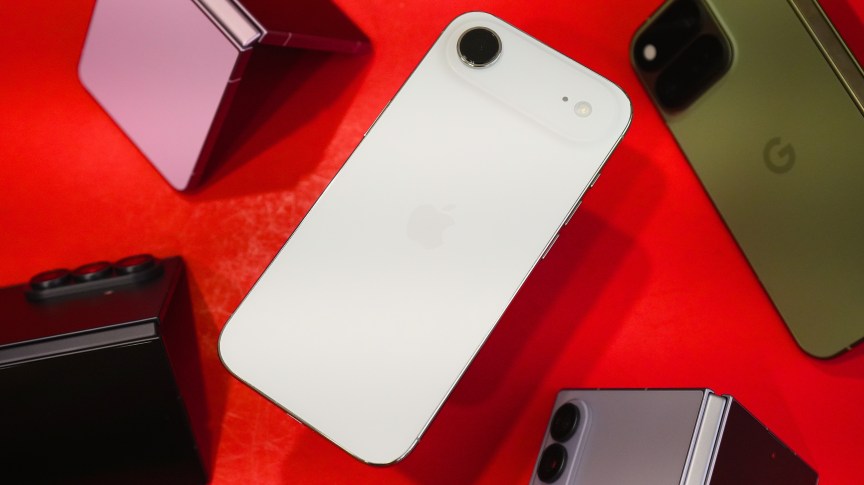 The iPhone Air (center).Kerry Wan/ZDNET
The $1,099 iPhone Air prioritizes thinness above all else, with a depth of just 0.22 inches and a weight of 165 grams (roughly less than three eggs). The phone comes in sky blue, cloud white, light gold and space black. Its 6.5-inch display supports a 120Hz refresh rate, an always-on display and the Dynamic Island. One accommodation for the thin design is that there’s only a single speaker for audio — which is worth noting if you regularly use your phone without headphones for music and watching video.
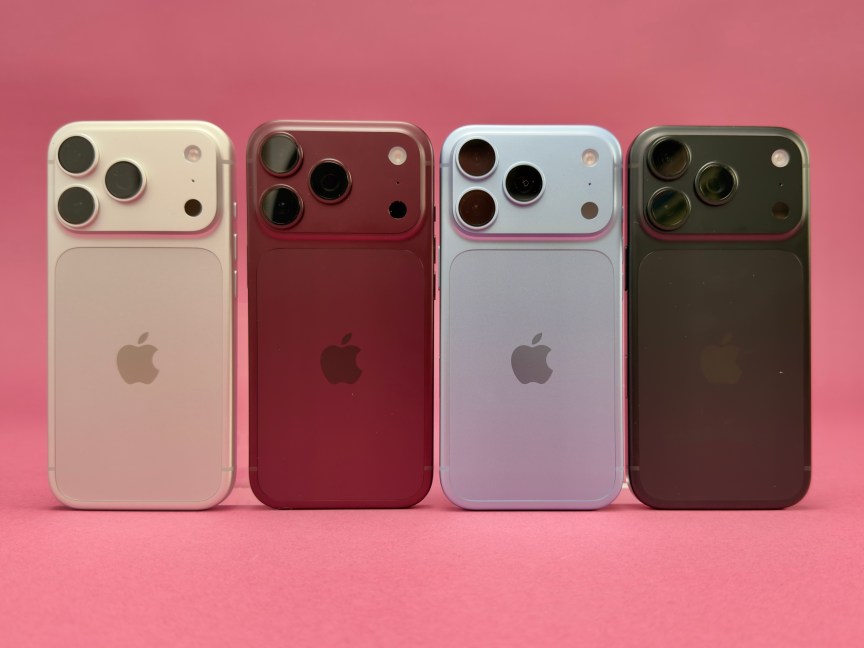 The four colors of the iPhone 18 Pro and Pro Max include (left to right) silver, burgundy, glacier and black.Patrick Holland/CNET
The $1,199 iPhone 18 Pro and $1,299 Pro Max take a more utilitarian look, with a unibody aluminum design that makes both phones look like they’d blend right in with film equipment — something Apple has already done by live broadcasting a recent Major League Baseball game. The phones come in burgundy, glacier blue, silver and black. The Pro has a 6.3-inch display, matching the size of the standard iPhone 17, while the iPhone 18 Pro Max has a 6.9-inch display. These phones include the most features — which we’ll go into more detail later — but are also heavier at 211 grams for the Pro and 249 grams for the Pro Max. That’s roughly the weight of four eggs or a billiard ball, attributable to the camera system and physically larger batteries compared to other models.
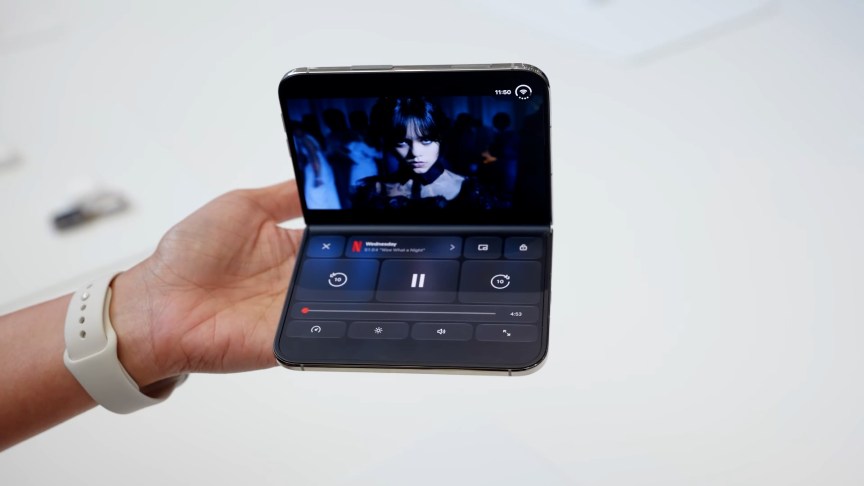 The iPhone Duo is Apple’s first foldable phone.Celso Bulgatti/CNET
The $1,999 iPhone Duo is Apple’s most distinctive phone yet, entering the book-style foldable phone category that’s been led by Android phones for years. When folded, the Duo feels like a small phone with its 5.4-inch display that’s roughly the shape of a passport. When unfolded to reveal its 7.6-inch display, the Duo shows content in the same aspect ratio as it did when folded, allowing for a more seamless switch between the two displays. The phone will be available in sky white and night sky (black) when it ships in October.
If you’re prioritizing a phone that’s lightweight and is easier to use with one hand, you might be more tempted by the iPhone 17E, iPhone 17 and iPhone Air. All three are under 180 grams in weight, making them lighter than a billiard ball. But if you want your phone to feel more like a tank because of how packed it is with features and battery life, the 18 Pro, Pro Max and Duo may be worth their slightly heavier weight at between 211 grams and 254 grams.
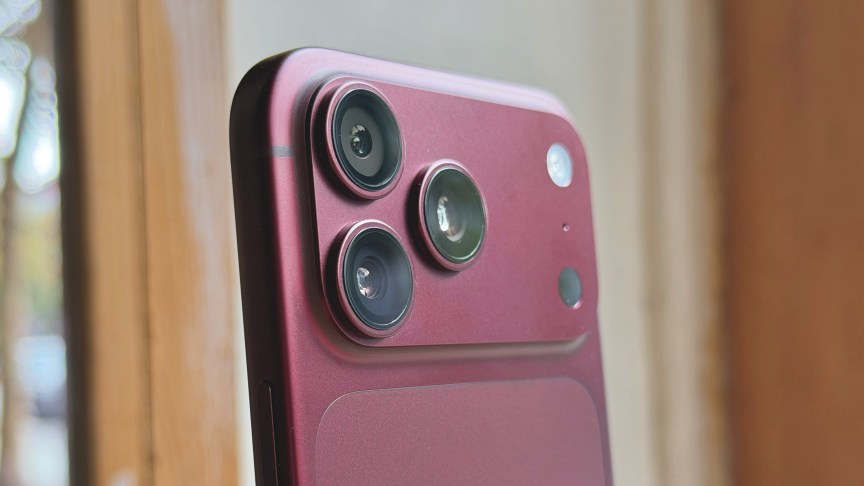 The iPhone 18 Pro supports variable aperture on its main camera.Patrick Holland/CNET
Cameras
Apple’s entire iPhone lineup — from the iPhone 17E up to the iPhone Duo — has a similar 48-megapixel wide camera. That camera supports a 1x and 2x optical zoom achieved by cropping into the photo, and a digital zoom of up to 10x. Apple’s iPhone 17E and iPhone Air only have this camera on the back, and for many simple food photos and standard scenes, it may be enough — as long as you don’t plan on shooting lots of zoomed photos or ultrawide shots. But if you do want to take ultrawide photos or improve your zoom range, that’s when you’ll want to consider the cameras offered on Apple’s other iPhones.
The iPhone 17 and the iPhone Duo each have a second 48-megapixel ultrawide camera, and that adds a 0.5x zoom for when you want to fit more details into the frame. This sometimes creates a mild fishbowl-like effect, which comes along with that wider field of view. The ultrawide camera is also used for Macro mode because it has a very close focusing distance — great for closeup photos of flowers and insects. For video recording, that second camera also assists with Cinematic Mode, which gives your footage a more movie-like look with a depth effect for selectively keeping subjects in focus while blurring the background.
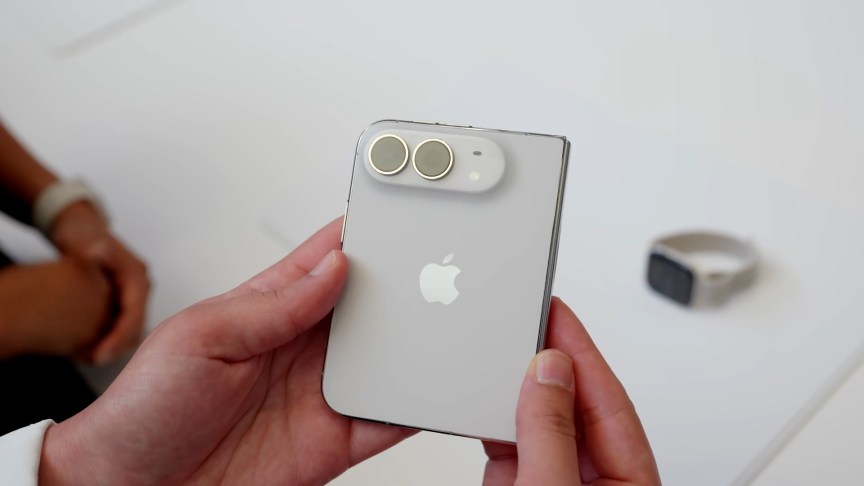 The iPhone Duo has two 48-megapixel rear cameras.Celso Bulgatti/CNET
The iPhone 18 Pro and Pro Max have a third 48-megapixel telephoto camera with a 4x optical zoom and an 8x optical-quality zoom. This means you can take a photo of a subject that’s further away, and preserve a substantial amount of detail before the phone resorts to using its up to 40x digital zoom. The Pro and Pro Max also have a larger maximum aperture (f/1.48) on the wide camera, plus a new variable aperture that can open or close to control how much light gets through — a particular benefit for lowlight photos and manually affecting how much of the scene is in focus.
When making a decision between these iPhone models and weighing how the cameras factor in, you’ll want to decide based on how much flexibility you need. If you’re just going to take simple photos of people and scenes that are directly in front of you, your needs might only require an iPhone with one or two cameras. If you’ll regularly want to take photos from farther away, especially in challenging environments such as concerts or sport events, that’s when a telephoto camera comes in handy.
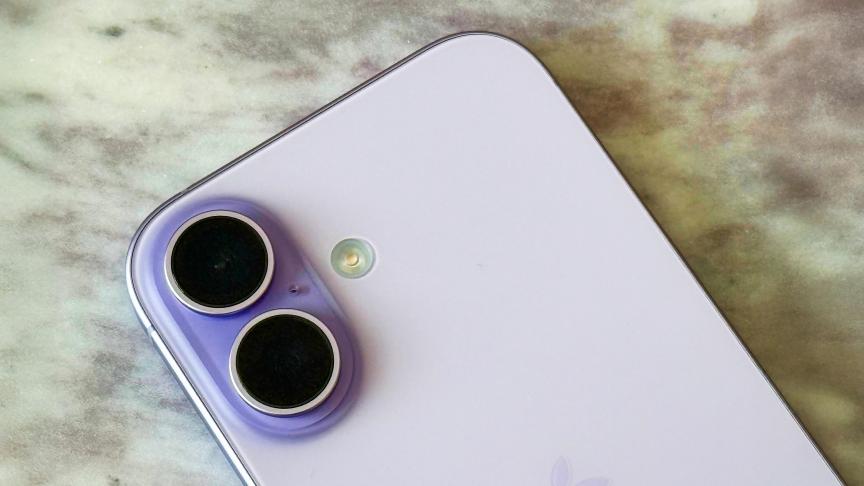
The iPhone 17 has a wide and ultrawide camera, which are both 48 megapixels.
Abrar Al-Heeti/Zooey Liao/CNET
Performance
The iPhone 18 Pro, 18 Pro Max and Duo all include Apple’s new A20 Pro processor, which is the company’s first to use a 2-nanometer process. This means the chip is denser, and should translate to greater power and efficiency.
But don’t count last year’s iPhone models out when it comes to performance. The iPhone Air uses the A19 Pro processor — the same that was included in the iPhone 17 Pro — while the iPhone 17 and 17E use a standard A19 processor that’s a small step down from the Pro models.
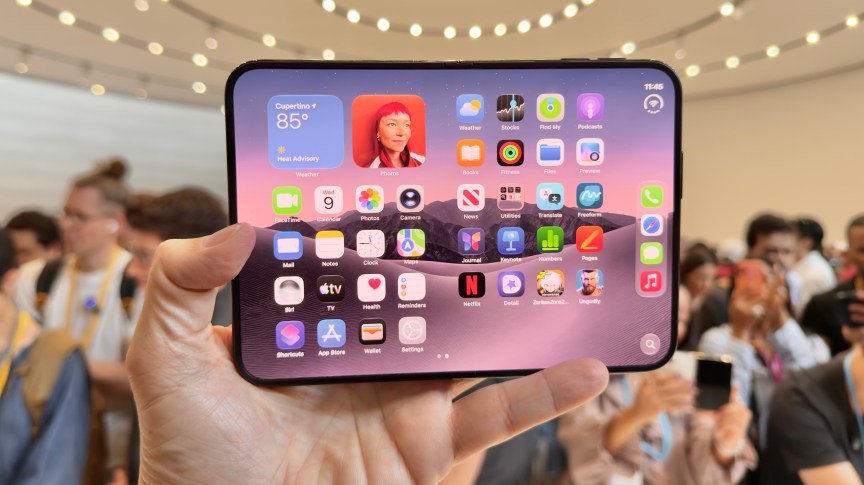 The iPhone Duo is Apple’s most innovative and expensive phone.Patrick Holland/CNET
We’ll have to wait on the iPhone Duo’s release to see how it performs, since the A20 Pro is powering so much screen real estate. It is worth noting that iOS 27 on the Duo will have a redesigned look to take advantage of its shape when folded and unfolded. This includes placing the dock vertically on the right side of the display, rather than along the bottom of the display like on other iPhone models.
But all of the iPhone models have nearly the same access to all of iOS 27, including the new Siri AI assistant, the ability to run console-quality games like Resident Evil 4 Remake and Apple Intelligence features such as Visual Intelligence for scanning objects. The iPhone 17 and 17E miss out on Siri Expressive Voices, which for the other iPhone models means you can customize both Siri’s voice and how fast the assistant speaks, but you can still pick between a variety of different Siri voice choices.
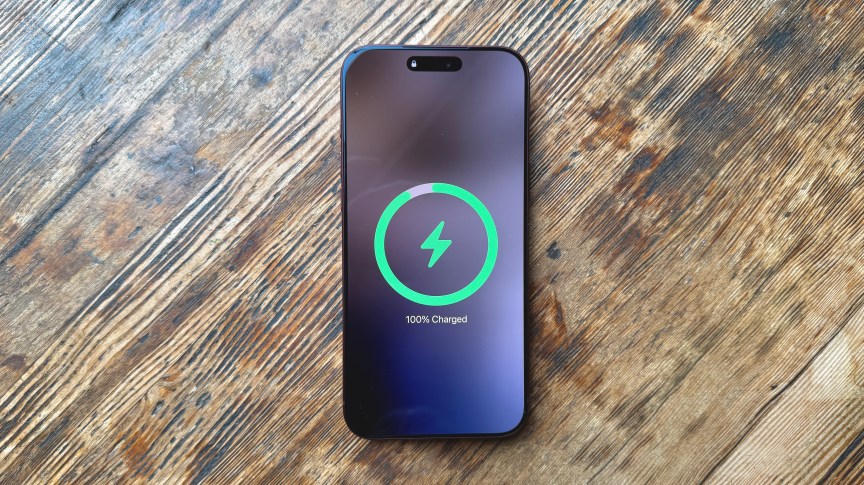 Apple’s iPhone 18 Pro and Pro Max have fast wired and wireless charging speeds.Patrick Holland/CNET
Battery and charging
While all of Apple’s new iPhone models have batteries with at least “all-day” battery life, wired charging over USB-C and magnetic wireless charging with MagSafe, this is also an area where there’s quite a bit of variance between each iPhone.
Apple’s iPhone 17E and iPhone Air have the slowest charging speeds among the lineup, but that doesn’t mean they’re slow. While both phones can make it through a day of typical use, you may want to bring along a battery pack or plan for an extra charge for days that you think you’ll use your phone more intensively. According to Apple’s product page in the European Union where capacity disclosure is required, the iPhone Air has a 3,149-mAh battery capacity and the iPhone 17E has a 4,005-mAh battery capacity. Both phones support a 20W wired charging speed. The iPhone 17E supports a 15W wireless charging speed using a MagSafe or Qi2 wireless charger, while the iPhone Air supports a slightly faster 20W wireless charging speed. In our wired charging tests, the iPhone 17E recharged to 58% capacity in 30 minutes and the iPhone Air recharged to 54%.
The iPhone 17 gets a boost in its charging speed, with a 40W wired charging speed and 25W wireless charging speed. While its battery is on the smaller side — 3,692 mAh, according to the EU — the phone benefits with a faster charging speed. In our 30-minute wired charging test, the iPhone 17 recharged to 69%.
The iPhone 18 Pro and Pro Max have larger batteries, although Apple doesn’t currently disclose the capacity for the eSIM-only models that are sold in the US, which have larger batteries than the ones in models with physical SIM slots sold in the EU. For reference, the physical SIM model of the iPhone 18 Pro has a 4,056-mAh battery capacity and the 18 Pro Max has a 5,391-mAh battery capacity. We do know that the phones have a very speedy 60W wired charging speed, and in our test the 18 Pro recharged to 82% in 30 minutes while the Pro Max recharged to 77% — these are phones that don’t need an overnight charge.
While we still need to wait on the iPhone Duo’s release to fully compare its charging speeds, right now it’s clear that if battery anxiety is your biggest concern, the iPhone 18 Pro and Pro Max have the largest capacities along with the fastest charging speeds when you do need to recharge. That doesn’t mean the 17E, 17 and Air are bad by comparison, but this is a clear area where those phones are a step back.
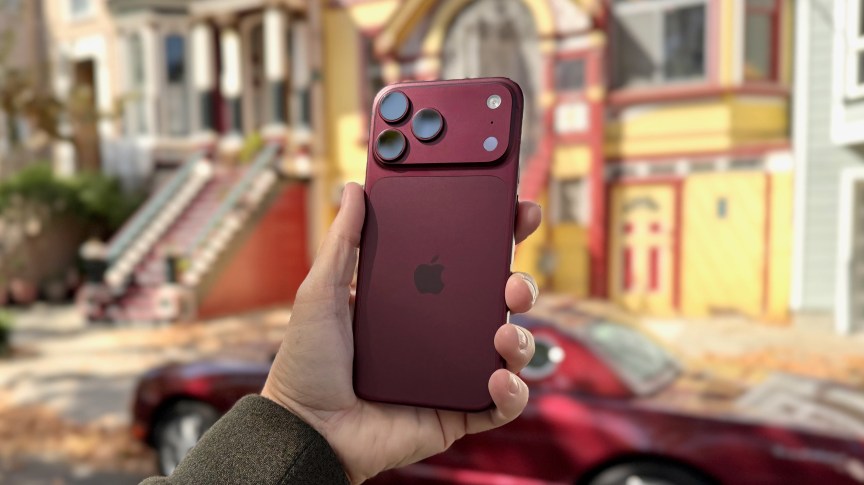 The iPhone 18 Pro and Pro Max include all of the Apple’s best features, but the Pro phones might be overkill for your needs.Patrick Holland/CNET
What iPhone should you buy?
We’ll continue updating this comparison as we keep testing Apple’s new iPhone lineup, but we can draw a number of conclusions from what we’ve seen so far.
If you just want to get a new iPhone at the lowest possible price, you’ll want to look at the $699 iPhone 17E and the $929 iPhone 17. Both phones include the best of iOS 27, but you’ll get perks such as an ultrawide camera and faster charging speeds if you spring for the iPhone 17. Apple’s also selling the iPhone 16 for $829, but with only 128GB of storage it’s hard to recommend when every other iPhone doubles that with 256GB.
If you want a thinner and lighter iPhone, the $1,099 iPhone Air is likely the best choice — as long as you don’t mind areas where the phone does make tradeoffs despite its higher price. But if you want a second camera, stereo speakers and longer battery life, then step back to the iPhone 17.
If you want the best possible iPhone camera with a fast recharging speed, then the $1,199 iPhone 18 Pro and $1,299 iPhone 18 Pro Max are your picks. While you’ll pay a premium, you’ll be getting Apple’s best possible combination of features. That said, still consider the other options or even last year’s iPhone 17 Pro, because some of the Pro phones’ features might be overkill for your needs.
And if you have deep pockets and absolutely need to be on the bleeding edge, then you should wait for the foldable $1,999 iPhone Duo.
Apple iPhone 18 Pro, 18 Pro Max, Duo, Air, 17 and 17E specs comparison
iPhone 18 ProiPhone 18 Pro MaxiPhone DuoApple iPhone AirApple iPhone 17Apple iPhone 17EDisplay size, resolution6.3-inch OLED, 2,622×1,206 pixels, 120Hz refresh rate6.8-inch OLED, 2,868×1,320 pixels, 120Hz refresh rateCover: 5.4-inch OLED, 2,342×1,080 pixels, 120Hz refresh rate; Internal: 7.6-inch OLED, 2,670×1,878 pixels, 120Hz refresh rate6.5-inch OLED; 2,736×1,260 pixel resolution; 1-120Hz variable refresh rate6.3-inch OLED; 2,622×1,206 pixel resolution; 1-120Hz variable refresh rate6.1-inch OLED display; 2,532×1,170 pixels; 60Hz refresh ratePixel density460 ppi460 ppiCover: 460 ppi; internal: 430 ppi460ppi460ppi460 ppiDimensions (inches)5.9×2.3×0.3 in6.4×3.1×0.3 inOpen: 4.6×6.5×0.2 in;
Closed: 4.6×3.3×0.4 in6.15×2.94×0.22 in5.89 x 2.81 x 0.31in5.78×2.82×0.31Dimensions (millimeters)150×71.9×8.75mm163.4x78x8.75mmOpen: 117.8×164.6×5.2mm
Closed: 117.8×84.1×11.3mm156.2×74.7×5.64 mm149.6×71.5×7.95mm146.7×71.5×7.8Weight (ounces, grams)211 g (7.4 oz)249 g (8.8 oz)254 g (9 oz)165 g (5.82 oz)177 g (6.24 oz)167g (5.88 oz.)Mobile softwareiOS 27iOS 27iOS 27iOS 26iOS 26iOS 26Camera48-megapixel (wide), 48-megapixel (ultrawide), 48-megapixel (telephoto)48-megapixel (wide), 48-megapixel (ultrawide), 48-megapixel (telephoto)48-megapixel (wide), 48-megapixel (ultrawide)48-megapixel (wide)48-megapixel (wide)
48-megapixel (ultrawide)48-megapixel (wide)Front-facing camera18-megapixel18-megapixelCover display: 12-megapixel; Internal display: FaceTime camera, megapixels not disclosed18-megapixel18-megapixel12-megapixelVideo capture4K at 120fps4K at 60fps4K at 60fps4K4K4KProcessorApple A20 ProA20 ProApple A20 ProApple A19 ProApple A19Apple A19RAM/StorageRAM N/A + 256GB, 512GB, 1TB, 2TBRAM N/A + 256GB, 512GB, 1TB, 2TBRAM N/A + 256GB, 512GB, 1TB, 2TBRAM N/A + 256GB, 512GB, 1TBRAM N/A + 256GB, 512GBRAM unknown + 256GB, 512GBExpandable storageNoneNoneNoneNoneNoneNoneBattery/ChargerUp to 24 hoursUp to 30 hoursUp to 24 hours3,149 mAh3,692 mAh4,005 mAhFingerprint sensorNone (Face ID)None (Face ID)SideNone (Face ID)None (Face ID)None, Face IDConnectorUSB-CUSB-CUSB-CUSB-CUSB-CUSB-CHeadphone jackNoneNoneNoneNoneNoneNoneSpecial featuresColors: black, silver, glacier, burgundy. Fast charge up to 50% in 20 minutes using 40W adapter or higher via charging cable. Fast charge up to 50% in 30 minutes using 30W adapter or higher via MagSafe Charger.Apple N1 wireless networking chip (Wi-Fi 7 (802.11be) with 2×2 MIMO), Bluetooth 6, Thread. Action button. Camera Control button. Dynamic Island. Apple Intelligence. Visual Intelligence. Siri AI. Dual eSIM. 1 to 3,000 nits brightness display range. IP68 resistance. Colors: black, silver, glacier, burgundy. Fast charge up to 50% in 20 minutes using 40W adapter or higher via charging cable. Fast charge up to 50% in 30 minutes using 30W adapter or higher via MagSafe Charger.Colors: black, white. Fast charge up to 50% in 20 minutes using 60W adapter or higher via charging cable. Fast charge up to 50% in 30 minutes using 35W adapter or higher via MagSafe Charger.Apple N1 wireless networking chip (Wi-Fi 7 (802.11be) with 2×2 MIMO), Bluetooth 6, Thread. Action button. Apple C1X cellular modem. Camera Control button. Dynamic Island. Apple Intelligence. Visual Intelligence. Dual eSIM. 1 to 3,000 nits brightness display range. IP68 resistance. Colors: space black, cloud white, light gold, sky blue. Fast charge up to 50% in 30 minutes using 20W adapter or higher via charging cable. Fast charge up to 50% in 30 minutes using 30W adapter or higher via MagSafe Charger.Apple N1 wireless networking chip (Wi-Fi 7 (802.11be) with 2×2 MIMO), Bluetooth 6, Thread. Action button. Camera Control button. Dynamic Island. Apple Intelligence. Visual Intelligence. Dual eSIM. 1 to 3,000 nits brightness display range. IP68 resistance. Colors: black, white, mist blue, sage, lavender. Fast charge up to 50% in 20 minutes using 40W adapter or higher via charging cable. Fast charge up to 50% in 30 minutes using 30W adapter or higher via MagSafe Charger.MagSafe, Qi2 charging (up to 15W), Action button, Apple C1 5G modem, Apple Intelligence, Ceramic Shield, Emergency SOS, satellite connectivity, IP68 resistance.Price (USD)$1,199 (256GB), $1,399 (512GB), $1,799 (1TB), $2,399 (2TB)$1,299 (256GB); $1,499 (512GB); $1,899 (1TB); $2,499 (2TB)$1,999 (256GB); $2,199 (512GB); $2,599 (1TB); $3,199 (2TB)$1,099 (256GB), $1,299 (512GB), $1,699 (1TB)$929 (256GB), $1,009 (512GB)$699 (256GB), $899 (512GB)

Mike Sorrentino
Senior Editor
Mike Sorrentino is a Senior Editor for Mobile, covering phones, texting apps and smartwatches — obsessing about how we can make the most of them. Mike also keeps an eye out on the movie and toy industry, and outside of work enjoys biking and pizza making.
See full bio