
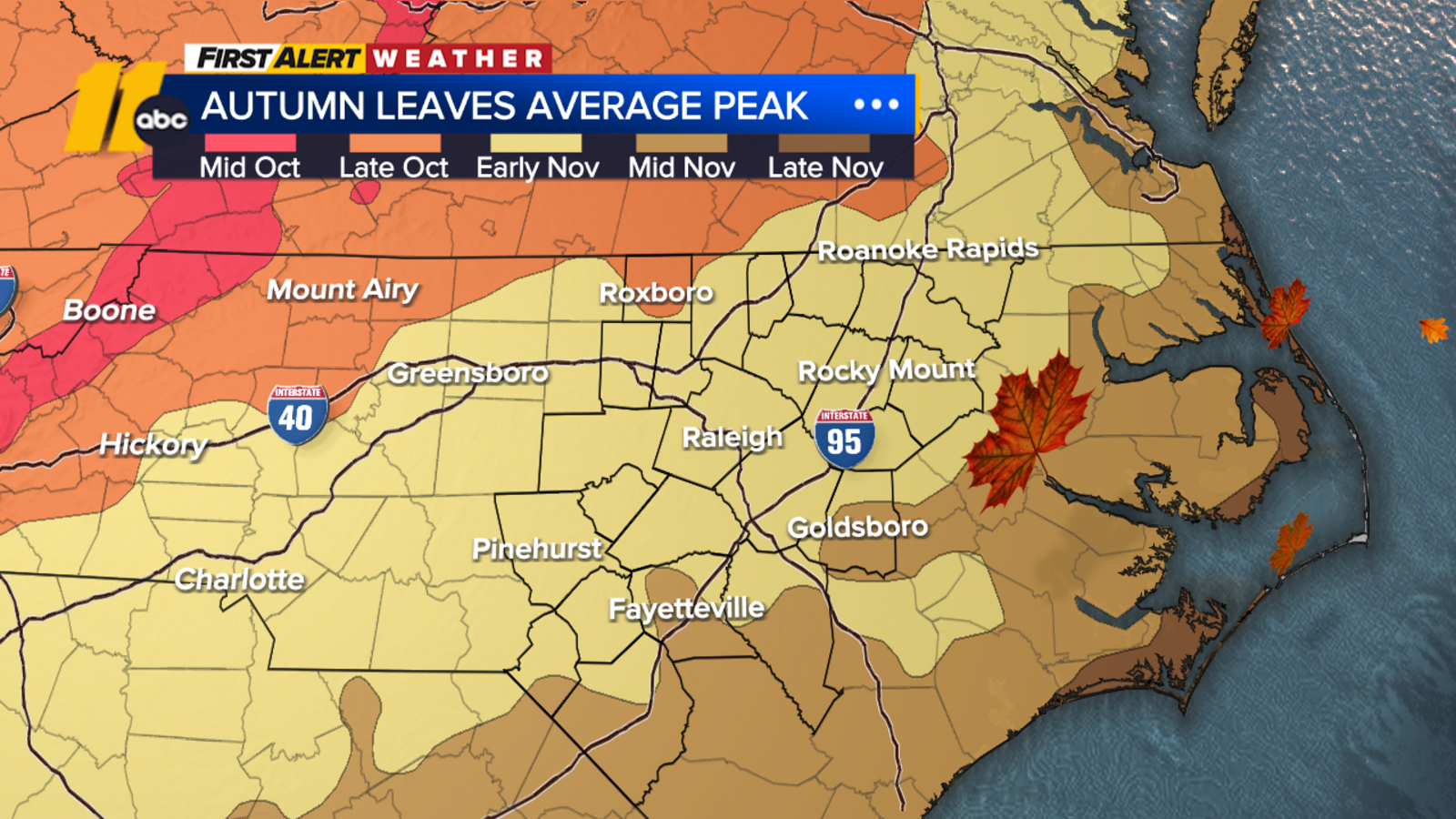
NORTH CAROLINA (WTVD) — Fall officially began on September 22, and one thing people get really excited for this time of the year is fall foliage.
Families love to pack the car, take weekend road trip and watch nature do its fall colors thing.
North Carolina is known for its impressive foliage display, especially in the mountains. The southern state gets all 4 seasons, fall is a fan favorite.
The color displays can be vibrant during a good year. Years like this year could be less vibrant than a normal year.
Drought Affects Color
Drought conditions, that have been in place since last fall, could have an impact on the foliage this year.
When in a state of drought, trees can drop their leaves earlier than normal and this can affect the vibrancy of the colors.
With a lack of meaningful rainfall leading up to peak foliage, trees become stressed. Stressed trees may stop producing chlorophyl when water-starved, which can lead to leaves changing color prematurely.
Under drought conditions, yellow and brown are common colors for leaves to change to. This year however, leaves may not reach the vibrant orange and red we’re used to.
How Temperatures Help and Hurt
Temperatures also play a role here. It has been an above average fall so far with temperatures staying very warm.
Cooler temperatures, especially at night, are needed for leaves to begin changing their colors. Cooler temperatures act as a signal for the trees.
Peak foliage in Central NC typically arrives in Late October to Early November in an average year.
This year, peak foliage may be a little delayed.
Copyright © 2026 WTVD-TV. All Rights Reserved.