
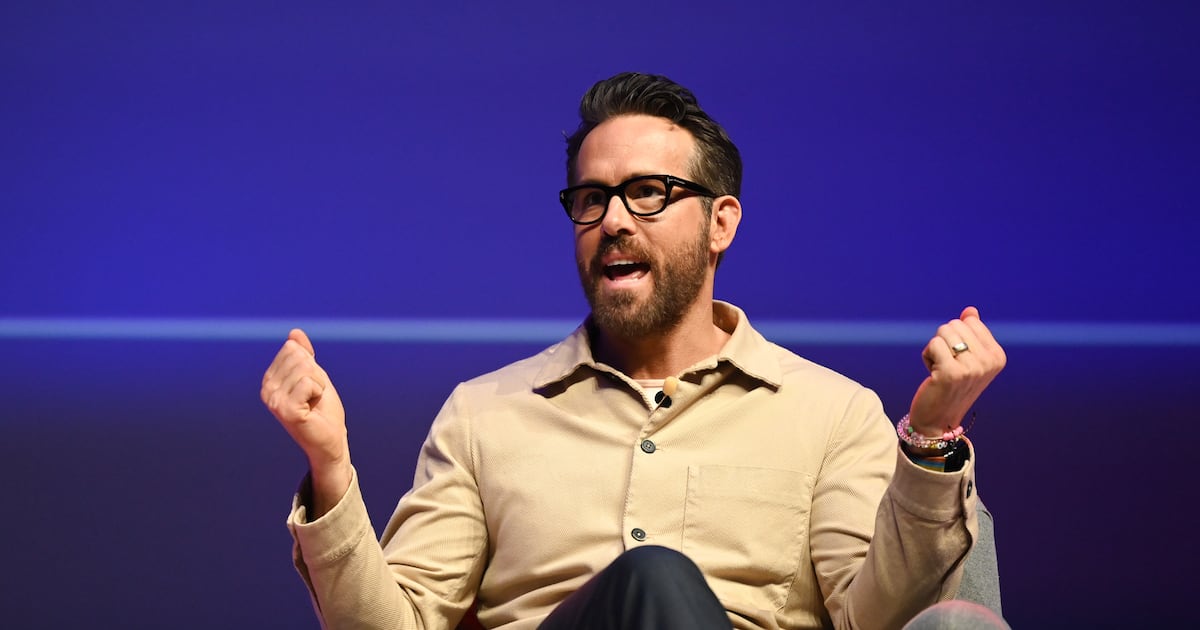
Ryan Reynolds has helped turn Wrexham into one of football’s great modern Cinderella stories, but the Hollywood actor and club co-chairman makes no pretence about being the all-knowing expert in football entrepreneurship.
Reynolds bought Wrexham with fellow actor Rob McElhenney in 2021, taking over a club steeped in history but marooned in the fifth tier of English football. Founded in 1864, Wrexham are the oldest football club in Wales and the third oldest professional club in the world.
What followed has been nothing short of extraordinary, as the club secured three successive promotions to the second-tier Championship, missing out on the end-of-season play-offs – and potentially reaching the Premier League – last season by just two points.
Their Welcome to Wrexham documentary series introduced the club to the world and, four seasons later, it has won eleven Primetime Emmy Awards, two Critics’ Choice Television Awards and made household names of its cast of players, coaches and supporters.
“We don’t know football, we know storytelling and that’s what we’re there for,” explained Reynolds to a packed audience at LIVEX in Abu Dhabi on Tuesday.
Speaking during a conversation entitled “Growth with soul, culture tourism and the cities people come back to”, Reynolds explained how a football club can help restore a community’s sense of identity and pride. “When you look at a town like Wrexham, which I’m involved with as a co-chairman of a football club, that’s a town that, in just six years, I’ve watched become liveable,” he said.
He recalled a time when people from the area would identify themselves as being from North Wales rather than Wrexham, but that has certainly changed since. “There’s a joy and a pride and a sense of ownership of that place now that is indelible,” Reynolds said. “It’s because they feel seen, as a community, no matter what.”
Wrexham’s history has long been entwined with industry, and Reynolds spoke about the vacuum left when much of that disappeared. Football became a conduit through which the city rediscovered its soul and was allowed to thrive.
“This is a town where oil, steel and coal left and they had nothing. And it was depression,” he said. “It was a kind of voided sort of sadness that I can’t even describe that has turned into this flourishing community.”
The resurgence has delivered a tangible economic boost. Reynolds told the audience that tourism revenue in Wrexham was now approaching £200 million annually. “When we arrived in Wrexham, we just listened and waited and patiently started to help the football club and then we noticed the community. The tide sort of covered both, the high tide raised both the club and the community,” he said.
“We didn’t go there thinking, ‘Oh, we’re gonna turn this community around.’ But we wanted to, but we didn’t know how. And just by listening and letting things happen organically and just being curious about the things, that people, the community, started to grow. And they felt seen.”
Welcome to Wrexham began as the story of Hollywood entering the football world but has since become increasingly concerned with the lives of those connected to the club and the lifetime bond between the community and its historic football club.
Reynolds recalled how, early on in production, the director struggled to find stories for the series and told him there were none. They happened to be standing with a vicar of a 500-year-old church in Wrexham when the clergyman excused himself.
When asked where he was going, the vicar “goes, yeah, just off to an exorcism!” Reynolds gets up and gestures comically with his arms, eyes wide open, referring to a story that a director struggling for content would do well to take an interest in.
A more touching story was that of Bailey, a young Wrexham fan he met during his first year at the club who later died aged 18 following an accident. His heart was donated to a man in need of a transplant who subsequently attended a Wrexham match with Bailey’s father.
“Wrexham won in the last minute, as they tend to do,” Reynolds said. “And we watched the man grab Bailey’s dad’s hand and slam it on his chest and say, ‘That’s your son. That’s your son’s heart that’s beating right now.’
“And it was just like one of those things where I couldn’t believe that we have the privilege to stand there in that town and tell these stories that they trust us. With their story and every single person that’s in the county has a story.”
Reynolds was equally reluctant to retrospectively cast Wrexham’s rise as the product of some brilliant master plan. Despite their success, he insists much of it began with a willingness to admit ,that they didn’t know what they were doing.
“It’s easy to say, ‘Oh, I saw it, I nailed it, I scaled it and here’s how you can too.’ You can intellectualise it later, you feel it in the moment,” he said. “I think you’re being disingenuous when people say, ‘Oh, I immediately recognised the playing field, and I know exactly what to do.’
“Most people I know who are really good at stuff or accomplished something have 80 per cent more stuff they’ve failed at because they walk into situations and say ‘I don’t know.’”
Five years after the takeover, Wrexham now boast a global following and have the English top-flight in their sights. “The pride people have when you go there, it’s just contagious,” Reynolds said. “If we invest in something that becomes the big beating heart of our community, whatever it is, the rest kind of grows. It starts to take care of itself.”