
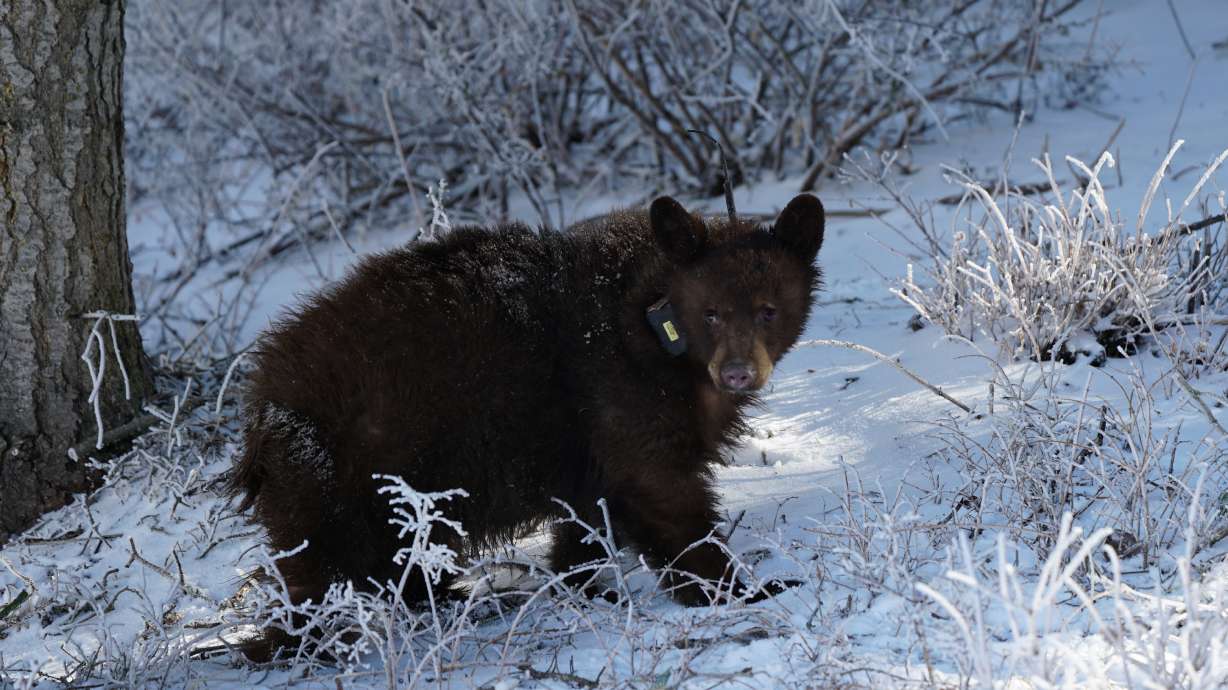
SALT LAKE CITY — The Utah Division of Wildlife Resources addressed online comments made in response of the management’s decisions regarding the number of black bears euthanized this year.
Statewide, DWR is dealing with nearly quadruple the number of bear issues this year compared to last year, according to DWR spokesperson Faith Jolley.
As of Sept. 25, DWR responded 317 times to bear issues within Utah. Out of the 317, up to 70 bears were euthanized for a variety of reasons, including incidents where a person was injured, a bear may have been determined to have a low chance of survival, or a bear repeatedly came into areas with people after being relocated.
The public’s response to the euthanized bears included several comments made on pages across social media asking others not to report bear sightings, including similar comments made on KSL’s social media posts.
Reporting a bear sighting within a populated area is important for the safety of the bear and residents in the area, according to Jolley.
“Black bears have injured several people and killed at least one individual in several other Western states this year,” Jolley said.
It’s also important for people to report bear sightings in case it’s the first time a bear has been seen in a populated area, according to Jolley.
“If a bear is reported on the first sighting, at times there are potentially other options, such as hazing the bear out of the area and ensuring any attractants are secured or removed,” Jolley said. “This is especially true when the encounter is in or near bear habitat.”
Why bears are wandering into populated areas
“To be clear, we have not and do not kill every bear that migrates into areas with people,” Jolley said. “We have relocated several bears this year that have migrated right back into areas with people — in search of food.”
A black bear attempting to get food out of a dumpster. (Photo: Utah Division of Wildlife Resources)
Throughout late summer and fall, crops become the main food source for black bears in Utah. This year, a late frost and ongoing drought conditions have made berry and hard mast crops difficult for bears to find, and Jolley said those crops have faced almost complete failure.
“This is the most difficult year we have faced as a state in regards to bear issues and also suitable habitat for black bears,” Jolley said.
Utah is not the only state facing issues with its bear population. Jolley said wildlife agencies in Colorado, New Mexico and other surrounding states are seeing similar issues with their bear populations.
“Relocating a bear under these conditions is moving a desperate, starving animal to areas where there aren’t food options,” Jolley said.
If a bear is left in an area open to food via trash cans, dumpsters or even fruit orchards, it can become difficult to keep that bear away from populated areas, according to Jolley. This can add to the safety concerns for pets and people in the area.
“We continue to ask residents to help black bears in Utah by making sure to keep a clean camp and to bear-proof your food and garbage, as well as not leave out trash cans if you live in the foothills or canyons,” Jolley said.
Utah faces problems with bear relocation and placement
“We continue to look for solutions for dealing with bears in urban areas, and we have successfully placed several bear cubs that were too small to survive on their own into AZA-accredited facilities across the country,” Jolley said. “However, placement is not always an option for these animals.”
One problem DWR faces is how Utah does not currently have certified rehabilitators capable of housing or caring for its bears. Zoos and other similar facilities can have limited space and may be unable to accept the bears either. Jolley said this problem is especially true in 2026 with other states facing similar bear population issues.
Signs placed to remind Utahns to store their food and keep their campsites clean. (Photo: Utah Division of Wildlife Resources)
“Utah is likely going to continue to experience bear issues, and public safety is going to remain a top priority,” Jolley said.
The Key Takeaways for this article were generated with the assistance of large language models and reviewed by our editorial team. The article, itself, is solely human-written.