

Hong Kong —
More than 500 people crammed into a sold out, standing-room-only concert hall in Hong Kong on a recent Monday night. At show time, the lights dimmed, and the crowd cheered — but a band didn’t appear on stage.
Instead, Astrid Jorgensen, a former high school music teacher and the founder of Pub Choir, spent 90 minutes teaching the crowd to sing Earth, Wind & Fire’s “September.” At the end of the evening, the crowd belted out the song.
“People really want to not just receive music but to make music,” Jorgensen told CNN before the show. “Those two things feel very different.”
Jorgensen has been running crowd-led concerts since 2017, when she held the first event in an Australian pub with just 70 people in attendance. Since then, she’s taken Pub Choir out of the pub and across the world, teaching hundreds of thousands of people to sing everything from “I want it that way” by The Backstreet Boys to Toto’s “Africa.”
There’s no audition, no long-term commitment and no talent required — audience members simply buy a ticket to get in. “Your weird voices are welcome. So what if you miss all the notes? It’s not a crime to sing out of tune,” she said in the show’s introduction.
On the night, attendees pick whether they’ll sing the low, medium or high notes, which come together to create a three-part harmony. They learn to follow a simple music-reading system Jorgensen created. She makes jokes and gently ribs attendees, resulting in an event that feels like a concert mixed with a stand-up show.
“Forget about your existential dread. Repress all of your anxiety for a few hours,” Jorgensen said during the show’s opener. “Your only job at this show is to try your best to feel better.”
It seems to be resonating with the stressed-out masses. Pub Choir is now on its biggest tour yet, visiting several cities in Asia, before heading to Europe. Jorgensen said she’ll teach about 70,000 people this year.

Other so-called pop-up or one-day choirs are cropping up across the world. In Singapore, members of the Sing Song Social Club meet regularly; in September attendees sang “All These Things That I’ve Done” by The Killers. Toronto’s Choir! Choir! Choir! — which advertises itself as “a show where you can BE the show” — is touring Canada and more than 20 towns and cities in the US. And New York-based Gaia Music Collective, which hosts regular drop-in choir sessions, is currently on a tour that will take it to Europe, Canada, the US and Mexico.
“This format built around the idea that you can show up, learn a song with a room full of strangers, and then leave is definitely growing in popularity,” said Arla Good, the co-director of The SingWell Project, an international research network and community initiative based at Toronto Metropolitan University that studies the benefits of group singing. “You don’t have to be a good singer to have a good time here, and I think that’s a really important piece.”
Pub Choir participants agree. “I don’t sing sing, but it doesn’t matter here,” Pauline Wong told CNN at the show in Hong Kong, adding that she normally only sings karaoke, a popular social pastime in the city. “I just really want to have fun.”
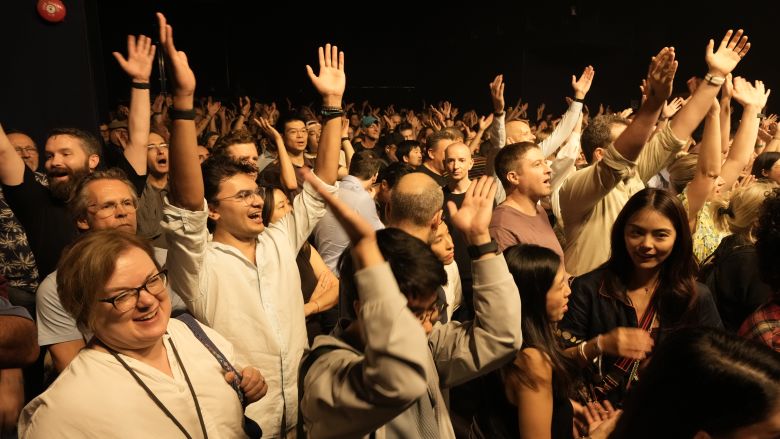

Jorgensen asks people to put their phones away for the night. “You were never gonna watch the video [play] back anyway,” she told the crowd. Adding “you don’t have the storage space on your phone, your battery is low, let it go.”
She thinks the break from doomscrolling is part of the appeal. “I think we are sorely craving analog experiences, and I think it’s a very quick antidote to that,” she explained to CNN before the show.
Singing has wide-ranging benefits from soothing the nervous system to providing a moderate physical workout.
Some studies suggest doing it in a group appears to elevate mood in a way that solo singing doesn’t. It also “brings people together meaningfully … more than other group activities can,” said Good. The act of singing requires moving around 100 muscles in the face and throat, and doing it together causes people to synchronize their head movements and breathing patterns, according to Good.
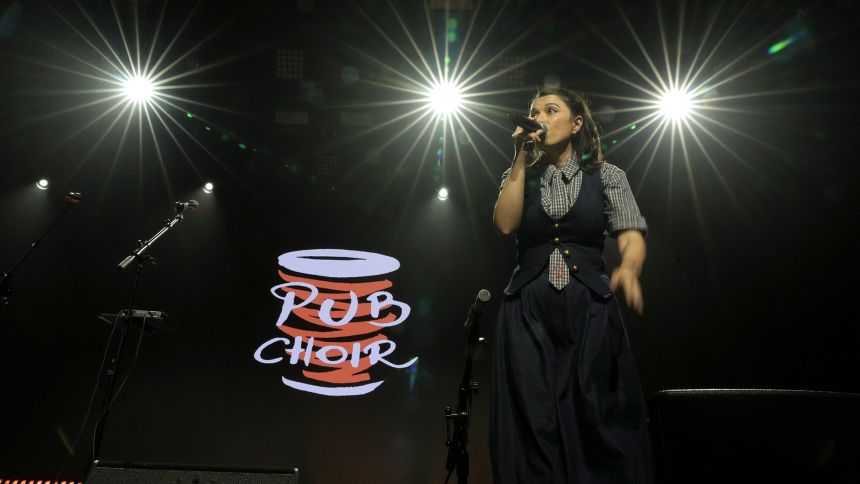
When people move in the same way at the same time — a phenomenon described as movement synchrony — they “experience this intangible thing of ‘I don’t know where I end, and you begin. We are all this one unit,” she said.
Good said that for much of human history, singing was a way to connect and cooperate. But in more recent times, “it became the performer and the audience … that only the good singers have access to singing.”
Now, people are taking back singing for themselves. Group singing’s ability to bring people together — even if they can’t sing in tune — could help explain why it’s taking off around the world. “It might not necessarily be my particular show,” said Jorgensen, “But just the idea that we can connect with each other, we can agree about something, we can make something positive together.”