
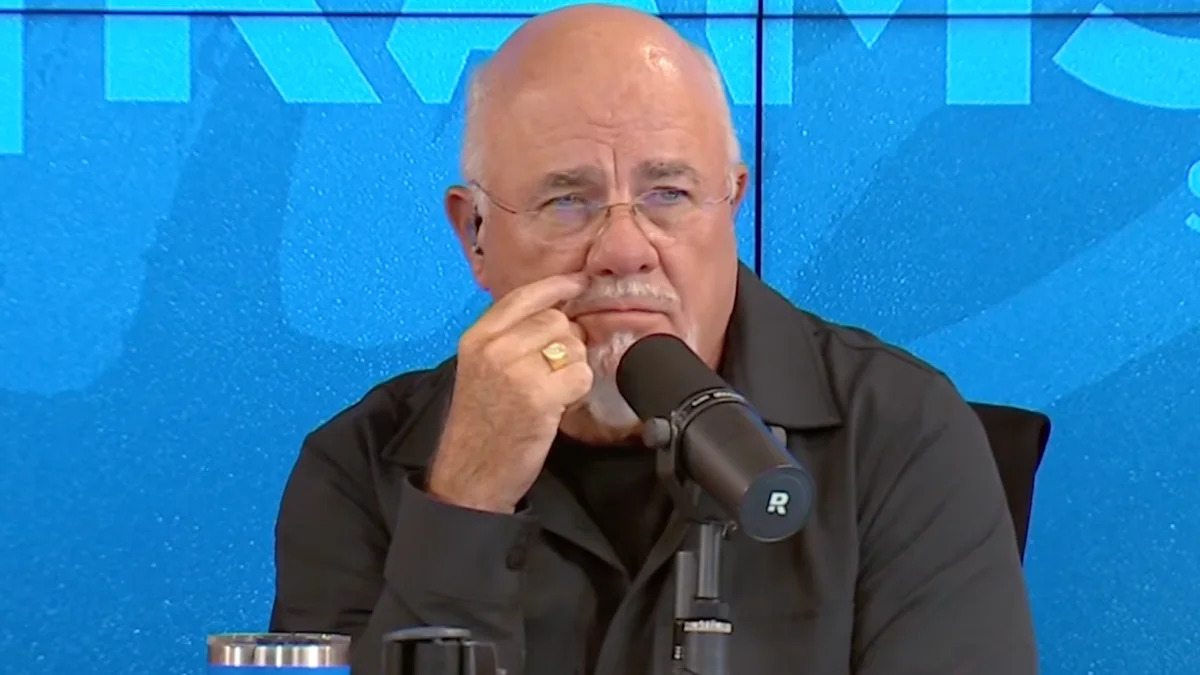
 Photo courtesy of The Ramsey Show
Moneywise and Yahoo Finance LLC may earn commission or revenue through links in the content below.
Kate’s parents are in their late 70s. Her father has spent his career in ministry, and the couple has never accumulated much wealth. They have a modest home and two cars, all paid off, and remain deeply committed to spreading their faith. They also regularly donate to Christian ministries.
But they’ve told their kids they don’t have enough money to retire.
Top Picks
When Kate of Sioux Falls, S. Dak., called into The Ramsey Show, she explained that her parents believe they’ll be raptured before they die, effectively treating the Second Coming as their retirement plan. They’re also private and somewhat embarrassed about their finances, making direct conversations nearly impossible (1).
Dave Ramsey, a Christian himself, agreed with the theology in principle, but not the financial strategy.
Ramsey said it was “very clear in scripture that we’re not going to know the date or the time” of the Rapture. “Given that, we have to plan as if we’re going to be here. That plan works if we’re not here or if we’re here. Their plan only works if we’re not here.”
Then, Ramsey explained why he thought they were being secretive about their finances.
“They’re ashamed,” he said. “They know they haven’t done a good job with money. And it bothers them.”
The Rapture expectation, he suggested, has become an emotionally convenient excuse for what’s ultimately a financial planning failure.
“We didn’t do a good job … blame it on The Rapture.”
Ramsey’s recommendation
Rather than pushing for a financial intervention that almost certainly won’t work, cohost Rachel Cruze put the odds of changing a 78-year-old’s financial mindset at around 2% (1).
Instead, Ramsey recommended a subtle approach focused on meeting basic needs. He told Kate and her siblings to check in regularly without triggering defensiveness. Make sure property taxes are paid, the refrigerator is stocked and the utilities are on. Bring groceries under the guise of having extras. Share part of a bulk meat purchase. Drop off eggs from a friend who has chickens.
“Subtly poke around without getting them on a full plan like they actually should be,” he suggested.
The good news in Kate’s case is that her parents own their home and vehicles outright, so their housing and transportation needs are secure. That makes day-to-day financial challenges more manageable.
Kate also raised concerns about her parents’ ongoing donations. Ramsey was realistic about that.
“I just don’t think there’s much we can do about that,” he said, adding that unless the parents specifically ask for input, there will be no change.
If they do, he suggested gently examining whether the organizations they’re supporting are spending donations responsibly, while making sure their own basic needs are met first.
A situation far more common than it seems
Although Kate’s parents’ approach to retirement may seem extreme, the underlying problem is surprisingly familiar: They’re putting off financial planning because there will always be a reason to deal with it later.
According to data from the 2026 AARP Financial Security Trends Survey, 60% of Americans over the age of 50 are either somewhat or very worried they’ll be financially secure throughout their retirement years, while 69% say prices are rising faster than their income and 36% worry they’ll have enough money to cover basic expenses like food, housing and transportation (2).
Among survey respondents who haven’t yet retired, 38% reported having less than $50,000 in retirement savings. However, just 6% of respondents said they believed $50,000 was enough to keep them financially secure in retirement.
Meanwhile, 46% of Americans think they won’t be financially prepared for retirement, according to a 2026 Northwestern Mutual survey (3). That level of uncertainty suggests the importance of having a plan before retirement is suddenly right around the corner.
Getting started as early as possible can make a significant difference.
A good place to start is by looking at debt. Baby boomers aged 61 to 79, for instance, had an average debt balance of $92,619 as of June 2025, according to Experian (4). If you’re carrying expensive credit card or other non-mortgage debt, paying it down can free up money that can eventually be redirected toward savings.
Build an emergency fund
Once that debt is under control, you might want to consider building an emergency fund that covers three to six months of essential living expenses. Dave Ramsey considers this one of his foundational “Baby Steps” toward financial stability (5).
Other financial experts like Suze Orman work with an even more rigid structure. Orman advises retirees to consider keeping three to five years of living expenses (6), giving them more breathing room during market downturns or unexpected expenses.
A high-yield account like a Wealthfront Cash Account can be a great place to grow your uninvested cash, offering both competitive interest rates and easy access to your money when you need it.
A Wealthfront Cash Account currently offers a base rate APY of 3.55% through program banks. With a new client boost and direct deposit incentive, referred clients can earn up to a 4.55% APY.
That’s 10 times the national deposit savings rate, according to the FDIC’s August report.
With no minimum balances or account fees, as well as 24/7 withdrawals and free domestic wire transfers, your funds remain accessible at all times. Plus, you get access to up to $8 million FDIC Insurance eligibility through program banks.
Get into the habit of saving
Doom spending isn’t unique to Kate’s parents. Nearly 1 in 5 Americans reported doom spending — making impulsive purchases driven by anxiety or pessimism about the future — in 2025 (7).
The trouble is that spending today can leave you with fewer options tomorrow. And Americans are already saving a smaller share of their income than they once did. The personal saving rate averaged around 10% between 1970 and 2000 (8).
By July 2026, it had fallen to just 3% (9).
The problem is that spending everything today leaves tomorrow with very little to work with.
Start investing small
If you’re approaching retirement with less saved than you’d like, it doesn’t necessarily have to be another reason to give up. Starting with what you can afford and focusing on making it consistent can make a big difference.
Over time, even relatively modest contributions can benefit from compound growth. For instance, investing $500 a month could grow to nearly $100,000 over 10 years, assuming a 10% annual return (10).
Apps like Acorns allow users to invest spare change from everyday purchases automatically — helping them steadily build wealth without having to think about every market move.
All you have to do is link your cards, and Acorns will round up each purchase to the nearest dollar, investing the difference — your spare change — into a diversified portfolio of ETFs managed by experts at leading investment firms like Vanguard and BlackRock.
Over a lifetime, a little bit of consistency can go a long way.
What’s more, if you opt for the Acorns Gold plan, you can get access to Acorns Later, a retirement investment account that offers a 3% match on new contributions for the first year. The Acorns Silver plan offers a 1% match on new contributions during your first year.
With Acorns, you can invest in an ETF built and managed by experts with as little as $5 — and, if you sign up today, Acorns will add a $20 bonus to help you begin your investment journey.
Utilize your government benefits
Your personal savings aren’t the only source of retirement income you can draw on. If you’ve spent decades working and paying into Social Security, those benefits can become an important part of your retirement strategy.
As you’re nearing retirement, it’s about time to start thinking about how to access government benefits that you’ve paid into all your working years. The Social Security Administration notes the estimated average monthly retirement benefit for retired workers is about $2,087 as of August 2026 (11). That won’t replace an entire paycheck for most retirees, but it can provide a predictable stream of income throughout retirement.
The key is to understand how those benefits fit into the rest of your retirement plan.
If you’re looking for more guidance on how to incorporate these government benefits into your retirement plan, AARP can help. This senior-focused organization provides tools and insights that can help you fine-tune your Social Security strategy so you’re not leaving money on the table.
AARP can also help you choose the right Medicare plan and uncover other government benefits that could make retirement easier.
But membership perks go well beyond advice. Members gain access to a broad suite of cost-saving perks — from healthcare-related discounts on prescriptions and dental services to savings on travel, leisure and insurance products.
Sign up with AARP today to get 25% off your first year.
Plan for healthcare expenses
Healthcare is one retirement expense that’s particularly difficult to ignore — and particularly easy to underestimate. A 65-year-old retiring in 2026 can expect to spend an average of $185,500 on healthcare and medical expenses throughout retirement, according to Fidelity Investments (12).
That’s a substantial amount to leave out of your calculations. Planning for these costs in advance can help keep one unexpected medical bill from derailing your retirement plan.
Platforms like HealthCare.com can help consumers shop for coverage by connecting them with Medicare plan options available in their area. In fact, more than 5 million customers have already used HealthCare.com to help find health insurance coverage.
Simply enter your ZIP code to explore available options. If you need help comparing coverage and prices, you can speak with a licensed insurance agent who can answer your questions and help you find a plan that fits your needs and budget.
Once you’ve chosen your coverage, HealthCare.com lets you enroll the way you want — online or over the phone, so you can complete the process however you prefer.
Feeling overwhelmed? Consult an expert
Retirement planning involves more than just deciding how much money to save. You may need to coordinate investments, Social Security, taxes, insurance, healthcare costs and withdrawals.
If all of this starts to feel like a lot, getting professional guidance could be helpful. A financial advisor can help you build a retirement strategy and determine how different sources of income and savings might work together.
You could even see better returns. Research from Envestnet found that clients working with financial advisors who focus on financial planning, asset selection and allocation, investment selection, systematic rebalancing and tax management saw 3% higher average returns (13).
For those looking for some professional help, Advisor.com can connect you with a financial professional who can tailor a strategy to your goals.
Here’s how it works: Simply enter a few details about your finances, and Advisor.com’s AI-powered matching tool will comb through its roster and connect you with a qualified expert best-suited for your unique needs. Their network also comprises fiduciaries, meaning they’re legally required to act in your best interests.
Finding the right advisor isn’t always easy — there’s no one-size-fits-all solution. That’s why Advisor.com lets you set up a free initial consultation, with no obligation to hire, to see if they’re the right fit for you.
– With files from Emma Caplan-Fisher.
What To Read Next
Get Warren Buffett’s best investing lessons, free. Join 250,000 readers getting Moneywise’s sharpest money reporting every week. Subscribe and we’ll send you our guide to the ideas that built Buffett’s fortune as a welcome gift.
Article sources
We rely only on vetted sources and credible third-party reporting. For details, see our editorial ethics and guidelines.
@TheRamseyShow (1); AARP (2); Northwestern Mutual (3); Experian (4); Ramsey Solutions (5); Suze Orman Media (6); CNBC (7); The Economist (8); Federal Reserve Bank of St. Louis (9); Acorns (10); Social Security Administration (11); Fidelity Investments (12); Envestnet (13)
This article provides information only and should not be construed as advice. It is provided without warranty of any kind.