
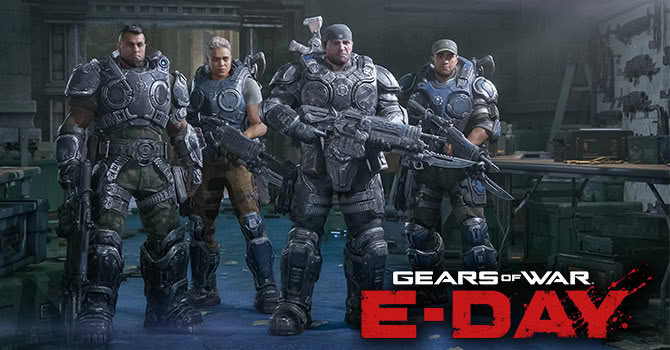
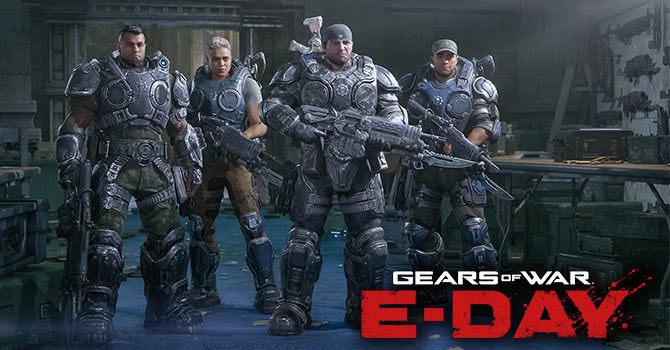
IntroductionGears of War has been one of Xbox’s biggest series for twenty years with over 40 million games sold. It all started with Epic Games, which made the first three games, then Microsoft bought the rights in 2014 and gave them to The Coalition, who have been making every Gears game since.
“E-Day” is a prequel. It’s set fourteen years before the first game, on the day the Locust Horde came out of the ground and started killing everyone, which the series has always called Emergence Day. You play Marcus Fenix—a version that’s a lot younger than the version we know—and Dominic Santiago is next to you. The world is going its normal way when the game starts, so you play in a city that’s just starting to fall apart, full of people having the worst day of their lives—and then shit starts hitting the fan.
Under the hood the game runs on Unreal Engine 5 with DirectX 12, using Nanite for geometry and Lumen for lighting. It is one of the first games to support NVIDIA RTX Mega Geometry, which helps improve details on ray traced shadows while managing performance cost. While previous GoW games were lacking when it came to upscaler support, this one finally has the full set: DLSS, FSR and XeSS are all present, and there is frame generation on top, NVIDIA up to 6x, Intel up to 4x.
This review will evaluate the performance of Gears of War: E-Day across a wide range of contemporary graphics cards, compare image quality settings, and analyze the game’s VRAM usage to provide insight into the hardware requirements needed for an optimal experience.