
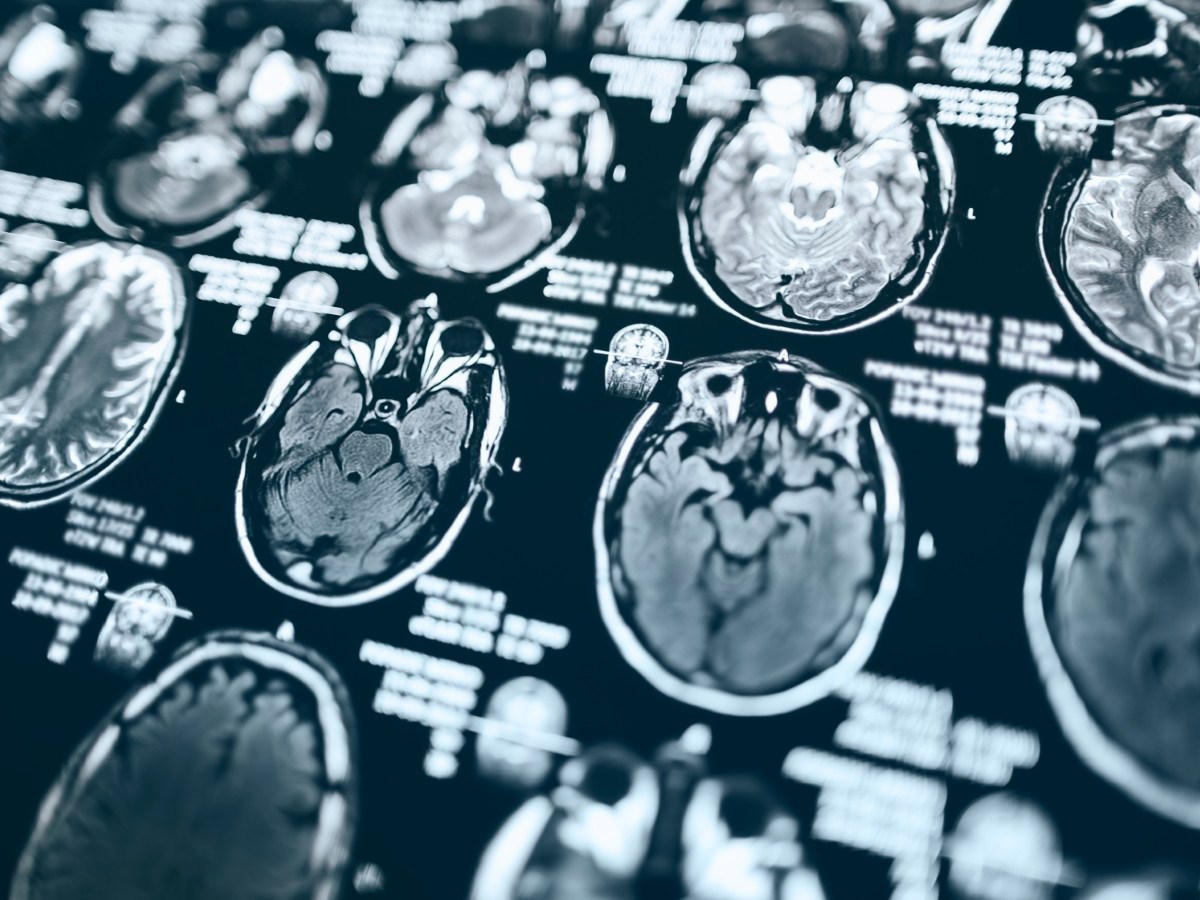
Aspirin could be associated with a significantly lower risk of developing dementia among older adults with a particular set of genetics, a new study has found.
Researchers at Monash University, Australia, found that low-dose aspirin was associated with a 70 percent lower risk of dementia among those with specific genetics that influence platelet count.
The study was published in the journal of the Alzheimer’s Association: Alzheimer’s and Dementia on September 24.
Read More on Health
The platelet is the smallest component of the human blood—a cell fragment with the primary job of stopping bleeding when injury occurs. When a blood vessel is damaged, platelets cluster together to form a plug, then a clot, to stop blood loss.
Researchers have previously estimated that 42 percent of Americans over the age of 55 will eventually develop dementia, a condition associated with an ongoing decline in brain functioning, resulting in a wide range of symptoms.
 What The Study Found
The researchers analyzed genetic data from the ASPREE Trial (Aspirin in Reducing Events in the Elderly), which included more than 13,500 participants to find out if genetics could influence how aspirin changed dementia risk. They ranked participants according to their platelet-related genetic score.
The results showed that 1 percent of those with the highest platelet counts, who also took aspirin, developed dementia. Meanwhile, 3.3 percent of those taking a placebo went on to develop the disease. This is equivalent to roughly a 70 percent lower risk.
“I think the finding points towards the possibility of a much more personalized approach to dementia prevention,” lead study author Dr. Peter Fransquet, who is also a research fellow at Monash University’s School of Public Health and Preventive Medicine, told Newsweek.
“For example, aspirin wasn’t shown to prevent dementia when the overall ASPREE trial population was analyzed,” he said. “However when we looked at people’s genetic makeup, we identified a sub-group with a specific genetic signature who appeared to benefit from aspirin use.”
He said that while the finding still “needs to be independently confirmed,” it suggests that “genetics could help us identify people who might benefit from existing preventive treatments more than others.”
However, it also found that aspirin notably increased risk of serious bleeding within the group. Among those taking aspirin, 4.4 percent experienced major bleeding, compared with 2.1 percent of those taking the placebo.
“Like any medication, the benefits and harms need to be weighted up against each other,” Fransquet said.
“Next steps would involve confirming the finding, and better understanding the underlying biological relationship between aspirin, platelet count and dementia risk,” he said. “We need replication in other populations and ultimately potentially also a dedicated clinical trial designed to test whether aspirin reduces dementia risk more broadly in people with this genetic profile.”
He also emphasized that, while these findings are “exciting,” they are “not sufficient to change recommendations regarding aspirin use. We also must highlight the increased bleeding risk related to aspirin use. If you are concerned about dementia risk, it is best to talk to your doctor.”
How Could Aspirin Affect Risk?
Fransquet said that there is a “long-standing relationship known between aspirin and platelets,” but it is not yet known how this relates to dementia.
While platelets are most commonly known for having the ability to stop bleeding, they are also recognized as doing a lot more than that, he added, explaining they are also “involved in inflammation, blood-vessel function, and there is also evidence linking platelet activation with amyloid biology in the brain.”
He said that aspirin reduces the ability of platelets to activate and clump together, and so “in people who are genetically predisposed to particular platelet characteristics, aspirin may reduce some of these vascular or inflammatory processes.”
“However, that remains a hypothesis arising from our findings rather than something our study has directly demonstrated,” he said. “But there is definitely an important relationship between platelet biology and dementia risk that needs to be better understood, which could lead to improved preventive or even therapeutic approaches.”
What Does This Mean For Dementia?
Fransquet said that if the findings hold up upon deeper investigation, “the fact that aspirin is already cheap and widely available could make personalized dementia prevention a real possibility.”
“My reaction to these findings is that they are promising and provide an interesting direction for investigating how commonly used medications may influence different disease processes, particularly dementia,” Dr. Thomas Holland, a physician scientist at Rush University, told Newsweek.
What was interesting, he said, was the finding that “platelet biology may play a role in dementia risk,” although he noted that this is “only a proposed mechanism rather than a proven explanation.”
However, he emphasized that aspirin is “by no means a benign medication,” and that the findings “do not indicate that anyone should start aspirin, at any dose, without discussing the decision with their physician or other qualified healthcare clinician.”
Overall, he said the findings “reiterate the idea that dementia prevention is unlikely to be a one-size-fits-all approach,” and that the study is an “important piece of the larger dementia prevention puzzle.”
Reference
Fransquet PD, Yu C, Tran C, et al. (2026) Platelet count polygenic scores may modify the effect of aspirin in primary prevention of dementia. Alzheimer’s and Dementia: The Journal Of The Alzheimer’s Association. https://doi.org/10.1002/alz.71817
Contact Newsweek editors on this story: Marc Vargas and Emma Lee-Sang