

The story also looked at eight other out-of-state nursing home companies, mostly from New York and New Jersey, with questionable records.
Jehlen is requesting a meeting with Dr. Robbie Goldstein, commissioner of the Department of Public Health, about his agency’s nursing home oversight. Rep. Marjorie Decker, a Cambridge Democrat who chairs the Joint Committee on Public Health, said she is sending the commissioner a letter with a long list of questions about why it hasn’t used legal tools it had to more deeply vet these nursing home operators.
In an interview with the Globe Wednesday, Gov. Maura Healey stood by her health commissioner.
“I have total confidence in Commissioner Goldstein in this moment, in particular, where healthcare is being ripped away from millions of Americans,” she said, after an event at MIT. “We are so fortunate to have Robbie Goldstein here in Massachusetts to protect people. And I have great confidence in the team.”
She also said that she cares deeply about the plight of the state’s nursing home residents.
“It’s really important to me that everyone who has a loved one in a nursing home or is thinking about putting a loved one in a nursing home has the comfort, has the assurance that their loved one is going to be well cared for,” Healey said.
Within hours of the Globe report, the Healey administration addressed one thing that was the focus of much of the legislators’ anger — the failure of the administration to implement a 2024 law that expanded the vetting powers of the state.
That law gave broader authorities for the Department of Public Health to investigate the out-of-state records of nursing home operators — covering everything from poor performance to finances — before granting them licenses. Many of the out-of-state operators buying up homes in Massachusetts have troubling records in other states. Mirlis, for example, owned nursing homes in Connecticut with dismal quality ratings before he began buying homes in Massachusetts.
Healey’s staff on Monday announced that the administration would finally take action on that law, passed two years ago, by adopting regulations that would allow DPH to put the law in effect. The state’s Public Health Council is scheduled to vote Oct. 14 on these long-awaited regulations.
DPH commissioner Goldstein had acknowledged to the Globe that he had been aware of the poor performance of Mirlis’s RegalCare chain even as it continued to acquire more homes. But he said his powers to take action against Mirlis and other questionable operators were limited because state law didn’t give regulators express permission to look at applicants’ broader national records.
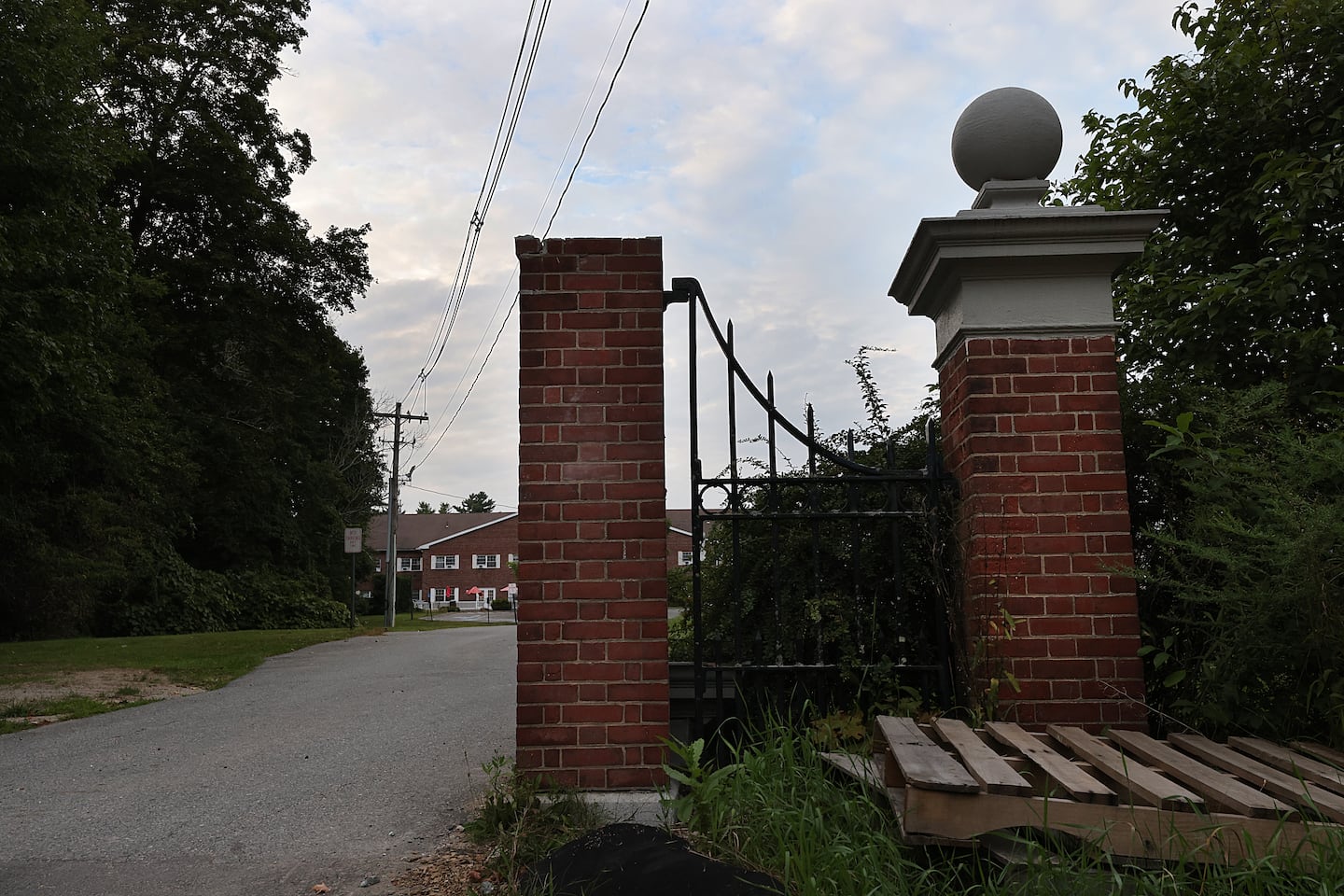 A missing stone topper on an entrance pillar at RegalCare in Taunton, Sept. 17.Suzanne Kreiter/Globe Staff
The Globe found little evidence of meaningful vetting of nursing home operators in the past few years, including their performance within Massachusetts. The care at RegalCare homes in this state began to deteriorate almost immediately after Mirlis bought the homes in the wake of the pandemic. And yet state regulators have continued to allow him to buy more facilities here — three in the last six months alone in Sudbury, Whitinsville and Wakefield.
The Globe’s review of the existing laws found that DPH was never prohibited from looking at a company’s out-of-state record in reviewing applicants, even if the new law spells out wider authority.
The state’s health department has not denied an application to buy a nursing home in at least seven years.
Republican gubernatorial nominee Mike Minogue, the former chief executive of Danvers-based biomedical device company, Abiomed, weighed in on the Globe report, calling it more evidence of Healey’s “failed leadership.”
“When laws are passed to give state agencies more resources to protect vulnerable people, they should be used, not ignored,” Minogue said in a statement.
In an an interview with the Globe, he said if elected, he would push for outside auditors to ensure the health department and other agencies are more accountable and that bad nursing home operators are weeded out.
“We can get rid of the people that are the bad actors, that are costing us more money, wasting our tax dollars, and most important, not giving great care to our vulnerable older people,” Minogue said.
Rep. Thomas Stanley, a Waltham Democrat who co-sponsored the 2024 law granting the health department expanded oversight, said he has been deeply frustrated at the department’s slow implementation of that legislation.
“We are providing DPH and the regulators all sorts of tools to take care of these problems that are identified, yet we still have a sense of a lack of urgency in implementing them,” he said.
Sen. Julian Cyr, a Provincetown Democrat who co-sponsored the law and previously worked at DPH for six years, said the findings reflected an alarming pattern.
“We have predatory providers who are fleecing the public purse and providing unacceptable care to the residents living in their facilities,” Cyr said.
Mirlis did not respond to most of the Globe’s questions, including evidence that he fabricated educational credentials. He also did not answer questions about his finances, though he explicitly denied he has private equity funding. He broadly defended his chain’s performance, saying RegalCare strives for the highest level of care and works with DPH to correct any problems that arise.
Rep. Decker said the state should examine nursing home buyers’ records and financial practices, including whether or not they have private-equity backing. All nine chains identified by the Globe reported on federal disclosures that they had no such backing.
“The banning of private equity alone is not going to solve the issue itself,” Decker said. “If it’s not private equity, are we clearly looking at these owners who are using these acquisitions to extract more money?”
Jen Benson, the state director of AARP Massachusetts, called the Globe’s findings “deeply concerning” and urged stronger enforcement.
“The state must provide strong oversight, enforce protections for residents and hold facilities accountable when health and safety standards are not met,” she said. “Older Massachusetts residents deserve quality care and to be treated with dignity.”
Kay Lazar can be reached at kay.lazar@globe.com Follow her @GlobeKayLazar. Neena Hagen can be reached at neena.hagen@globe.com.