
Federal Reserve Vice Chairman Philip Jefferson struck a more cautious tone than several of his colleagues this week, acknowledging that inflation has remained too high, but urging that as bond markets send long-term yields higher, the central bank should watch and assess whether inflation will come down in a timely manner.
“Since our September meeting, yields across the term structure have increased further, a sign that investors are reassessing the evolving macroeconomic landscape,” Jefferson said in a speech on Thursday at the University of Virginia in Charlottesville. “My colleagues and I will need to come to our own judgment, which may take more time.
“I will continue to assess whether underlying trends suggest that inflation will return to target with sufficient speed. With more data in hand, such trends may lend themselves to better discernment, as may the appropriate stance of monetary policy.”
While several Fed officials have sounded more certain this week about the need for further rate increases, Jefferson and another key Fed leader are signaling patience.
New York Fed president John Williams said on Tuesday that, after raising rates in September, he sees “no need for urgency” and that “we have time to gather more information.”
As with Williams, Jefferson’s comments are likely to feed into markets’ new expectations that the Fed will not raise rates again later this month, and instead wait until its meeting in December.
Read more: How the Fed rate decision affects your bank accounts, loans, credit cards, and investments
Jefferson noted that the economy is being buffeted by a cascade of shocks, including rising energy prices, the surging AI build-out, and changes to trade policy. But he said the Fed doesn’t have the “luxury” of considering each shock in isolation.
“We must consider how this cascade might affect the entire economy when setting policy to achieve our dual-mandate objectives,” he said.
Looking ahead, Jefferson said any future adjustments to interest rates should be determined by carefully examining trends in the data, the evolving outlook, and the balance of risks to inflation and full employment.
He said he supported the decision to raise rates last month because he saw it as “an important step to ensure longer-term inflation expectations remain well anchored and to validate the public’s confidence that we will achieve our 2% inflation objective in a timely manner.”
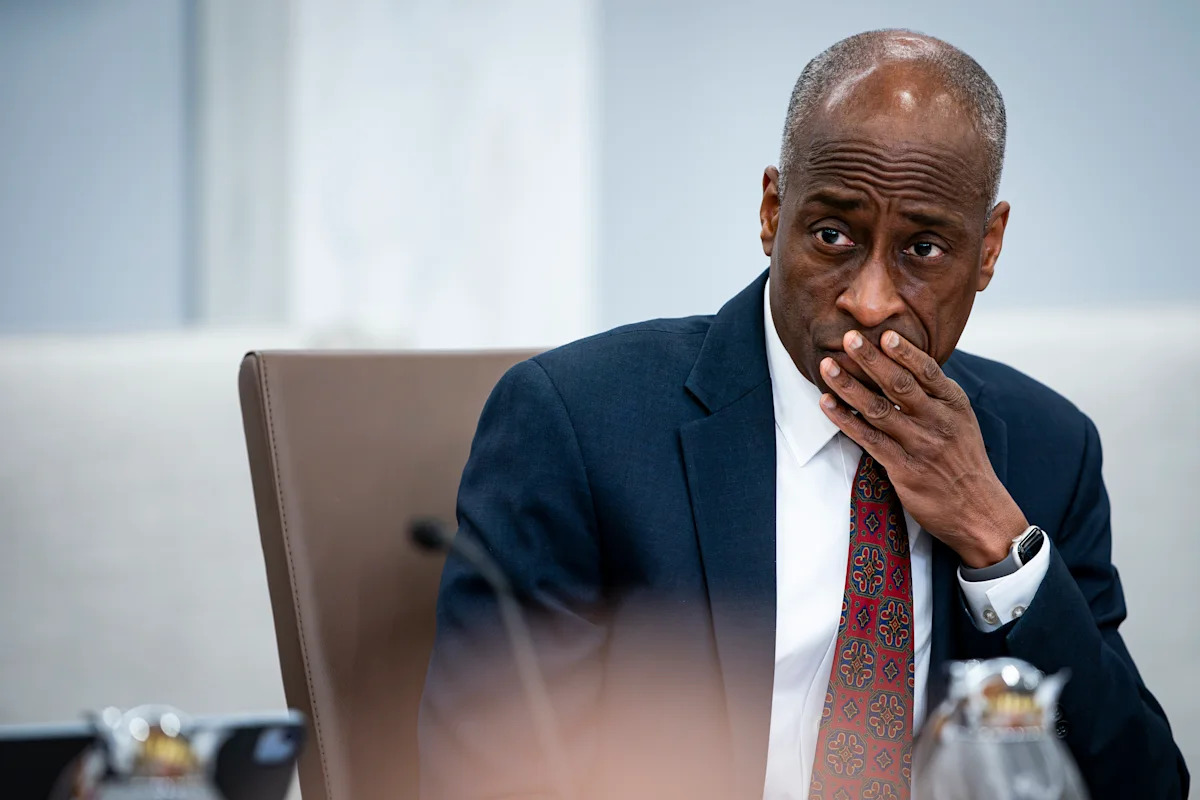
 Philip Jefferson, vice chair of the Federal Reserve System, during the Federal Reserve Board open meeting on March 19, 2026, in Washington, D.C. (Al Drago/Getty Images) · Al Drago via Getty Images
He sees upside risks to inflation because of geopolitical developments and stronger-than-anticipated aggregate demand. He said he expects inflation to be elevated in the short run before retreating as the effects of energy and other price shocks fade. He added the caveat that he is concerned about the risk of higher energy prices leading to a persistent rise in inflation more broadly.
Jefferson sees the economy as likely to show continued resilience, despite higher prices, and he anticipates investments in AI will continue to support growth this year. He said he expects near-term real GDP growth to remain roughly the same as in the first half of the year.
He expects the economy to add jobs and says if the AI build-out supports even stronger economic growth than he expects, the unemployment rate may fall further, resulting in a tighter job market.
Markets initially priced in high odds of a rate hike at the Fed’s next meeting on Oct. 27-28. On Monday, traders saw a 70% chance of an October rate hike. By Thursday, those odds dropped to around 26%.
Jennifer Schonberger is a veteran financial journalist covering markets, the economy, and investing. At Yahoo Finance, she covers the Federal Reserve, Congress, the White House, the Treasury, the SEC, the economy, cryptocurrencies, and the intersection of Washington policy with finance. Follow her on X @Jenniferisms and on Instagram.
Click here for the latest economic news and indicators to help inform your investing decisions
Read the latest financial and business news from Yahoo Finance