
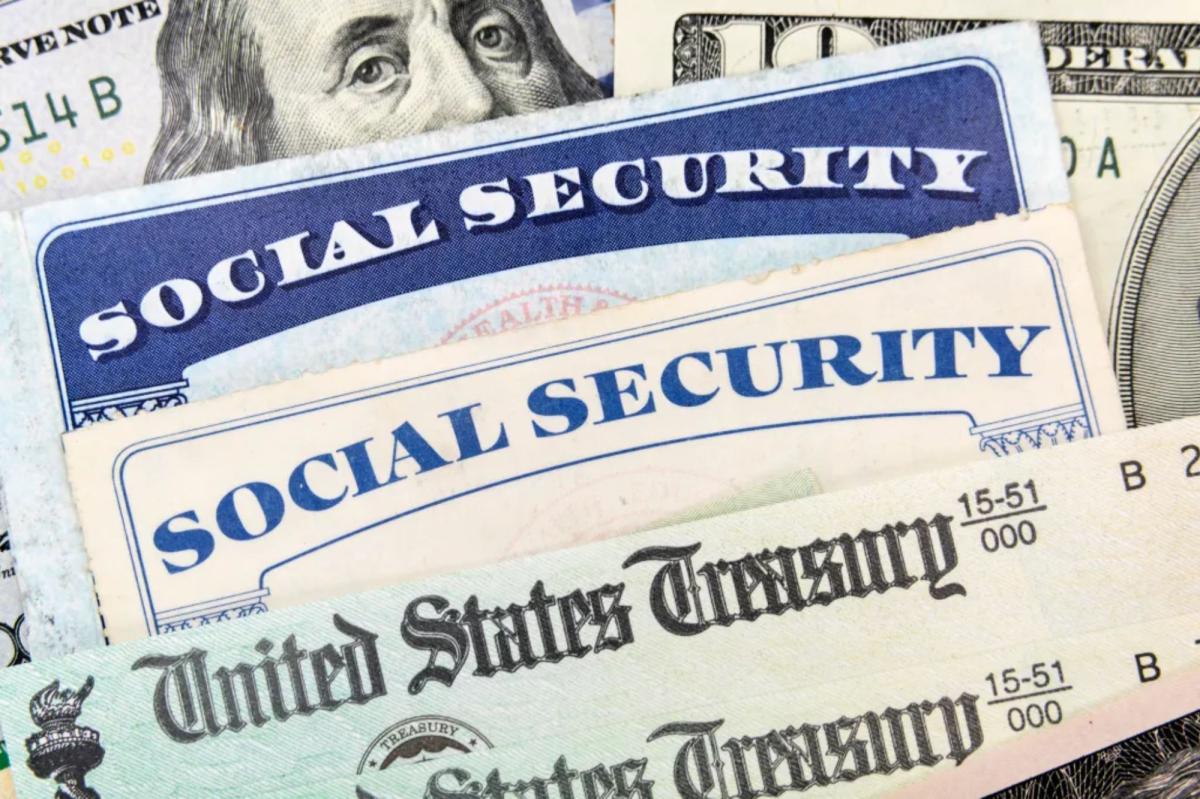
Social Security recipients can prepare for a bigger payday.
Advocacy group The Senior Citizens League estimates the 2027 Cost of Living Adjustment (COLA) will hit 3.5% — the highest it’s been in four years.
That would bring the average Social Security check to more than $2,000 for the 70 million Americans on Social Security and Supplemental Security Income.
The Social Security Administration will confirm the 2027 cost-of-living adjustment on Oct. 14, following the Bureau of Labor Statistics’ release of September’s Consumer Price Index (CPI).
The annual COLA increase is meant to keep retirees’ check in line with inflation and rising expenses. Prices for August were up 3.4% compared to last year, according to CPI data.
 Federal projections suggest that a key funding source for the Social Security system could run out by 2032. trekandphoto – stock.adobe.com
The adjustment reflects the difference between the average CPI-W during the third quarter (July through September) of the current year and the same period from the prior year.
The Senior Citizens League estimates the 2027 COLA could reach 3.5% – though the final figure depends on September inflation numbers. A 3.5% bump would increase the average monthly benefit by $67.90, bringing it from $1,940.08 to $2,007.98.
A 3.5% adjustment marks a slight 0.1 percentage point dip from TSCL’s prior projection, yet remains above the 2.8% increase in 2026 and the 2.5% shift in 2025.
“The biggest thing we’re watching with the COLA announcement coming are short-term shocks to the economy that push inflation way up or down in the next 30 days,” said TSCL executive director Shannon Benton.
For the first time, AARP has released an advance COLA forecast ahead of the official announcement. Rich Johnson, vice president for financial security at the AARP Public Policy Institute, explained that early estimates provide families extra time to adjust budgets strained by persistent price increases.
A Nationwide Retirement Institute survey highlights that 74% of Social Security recipients have modified their finances as inflation outpaces benefit gains. Furthermore, 51% reported scaling back on discretionary purchases, while 38% cut spending on everyday essentials like groceries and prescriptions.
The AARP Public Policy Institute emphasized that early projections aim to help households better manage tight budgets amid ongoing inflationary pressures.
The payment calendar for late 2026 will also feature minor schedule adjustments. For the October 2026 to January 2027 cycle, SSI benefits will go out on Thursday, Oct. 1, and again on Friday, Oct. 30 (since Nov. 1 falls on a Sunday). As a result, beneficiaries will receive two payouts in October and none in November.
A similar shift occurs in December, as the Jan. 1, 2027 payment will be distributed early due to the New Year’s Day holiday.