
Each time I update the syllabus for Human Genetics and Genomics, I ask myself the same question: How will I engage my students in science communication?
Josh Smith
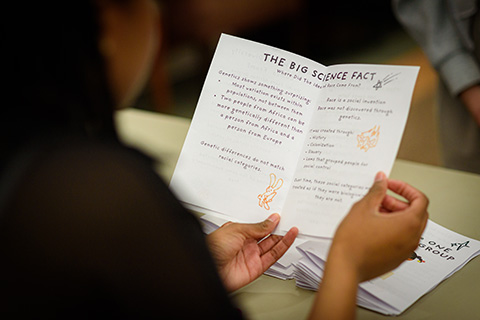
A spread inside the zine created by undergraduate student Tinaye Makasi titled “Black ≠ One Genetic Group” at Earlham College’s Spring Academic Fair.
One year, with support from an American Society for Biochemistry and Molecular Biology Science and Communication Grant, my students created a DNA display for our campus museum. Another year, we hung infographics about direct-to-consumer genetic testing companies around campus.
This year, I wanted to try something a bit different. Growing distrust of information on social media, combined with my desire to design an assignment that students would complete without artificial intelligence, led me to zines. Originally created by science-fiction fans and artists to share their work, zines are self-made, self-published booklets often distributed for free or discovered in unexpected places.
In my human genetics course, I explore not only genetic diseases but also how genetics has shaped ideas about race and genetic determinism and enabled preimplantation genetic testing. Students listen to podcast episodes and read books and articles on these topics before discussing them in class.
Josh Smith
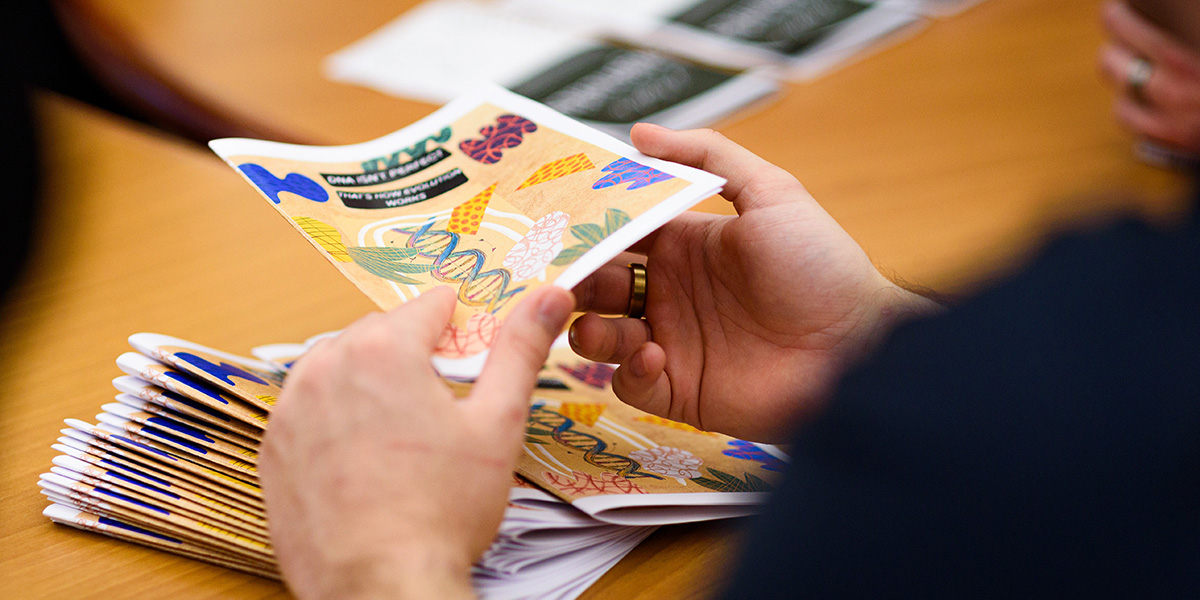
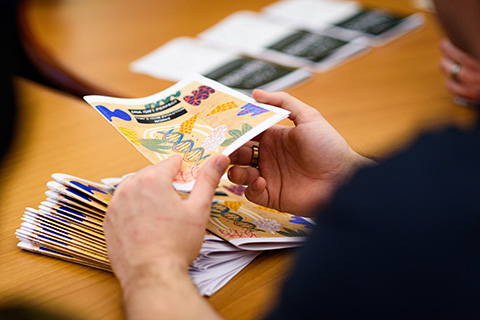
Undergraduate student Caleb Reddington holds a stack of the zines he created, titled “DNA Isn’t Perfect – That’s How Evolution Works,” at the 2026 at Earlham College’s Spring Academic Fair.
Two resources are particularly helpful: the book “What’s Real About Race?” by Rina Bliss and the podcast “In Those Genes” by Janina Jeff. These experiences prepared the students for the assignment: Create an eight-page zine that debunks a common genetics misconception. I kept the guidelines purposefully broad so students could choose their own topics and bring their personal aesthetics to the project.
None of my students knew what a zine was when they started the project, and I had never made one either. For help, I turned to Kate Goodpaster, co-owner of Oblivion Cinema and Arts, a local art studio. Kate spoke to my class about using zines to break down barriers to scientific information, reducing technical language and reaching a target audience. She also addressed the all-important practical question: Which page goes where so the zine prints in the correct order?
As the students worked, I fretted. Had I given them too much freedom, provided too little support or asked them to create something too unconventional for a genetics course? I should not have worried – Earlham students always rise to the occasion.
I was blown away by what the students created. I was especially happy to see each student bring a distinct personality to their zine’s design. Some students tackled genetic determinism by highlighting epigenetics and asking “It’s in your genes … or is it?” Others discussed ancestry testing, including one zine titled “You’re Probably Not Related to Pocahontas.” A few shared facts about complex conditions such as Down syndrome and Type 2 diabetes.
Josh Smith
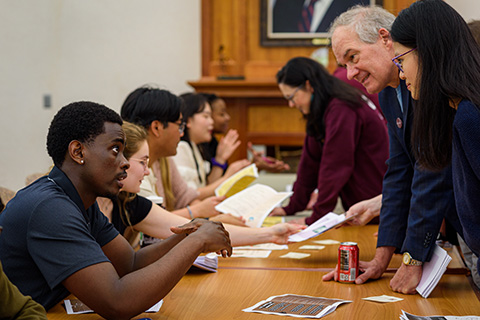
Undergraduate student Jesse Musinguzi describes his zine titled “Let’s Talk Genetics and Justice” to fellow students and to Earlham College President Paul Sniegowski at the 2026 Spring Academic Fair.
I was especially proud of the students who took on genetic racism, creating zines such as “Let’s Talk Genetics and Justice,” “The ‘Whiteness’ of Genetic Databases” and “Breaking the Rules of Race – How We Created Race as We Know It and How It Affects Science.” We distributed the zines during a packed session at Earlham College’s Spring Academic Fair and at Kate’s shop on National DNA Day, April 25.
To evaluate such varied projects, I drew on ungrading principles and focused on the creative process. I asked students to reflect on what they had learned while creating their zines and propose their own grades. I reserved the right to adjust those grades based on my observations of their effort and finished work.
The project reminded me that effective science communication does not need to look like a journal article or classroom presentation. By giving students room to choose their message, audience and visual style, I watched them turn complex and sometimes contentious genetics topics into accessible stories. I encourage other educators to consider what their students might create when given the freedom to communicate science in an unexpected form.