
The spookiest month is packed with things to see in the dark night skies

It’s the start of a supernatural season, and this month is packed with astronomical events to check out.
Related video above: Artemis II reveals a stunning view of the Milky Way
This month, we’ll have plenty of chances to view the inner planets in the night sky and two separate chances to experience a meteor shower. We’ll also have our last chance to observe the cosmic basket of stars that is our very own Milky Way Galaxy, and finish off the month with a Hunter’s Moon.
Read below for the full list of astronomical events in October.
Oct. 4 — Saturn at opposition
This is the perfect time of year to spy the ringed planet. Saturn will be at opposition, which means it lies directly opposite the sun, rising during sunset and setting during sunrise. Saturn should be visible in the sky near its opposition and until its next solar conjunction, which is when it passes behind the sun in the sky. Its next solar conjunction is April 7, 2027.
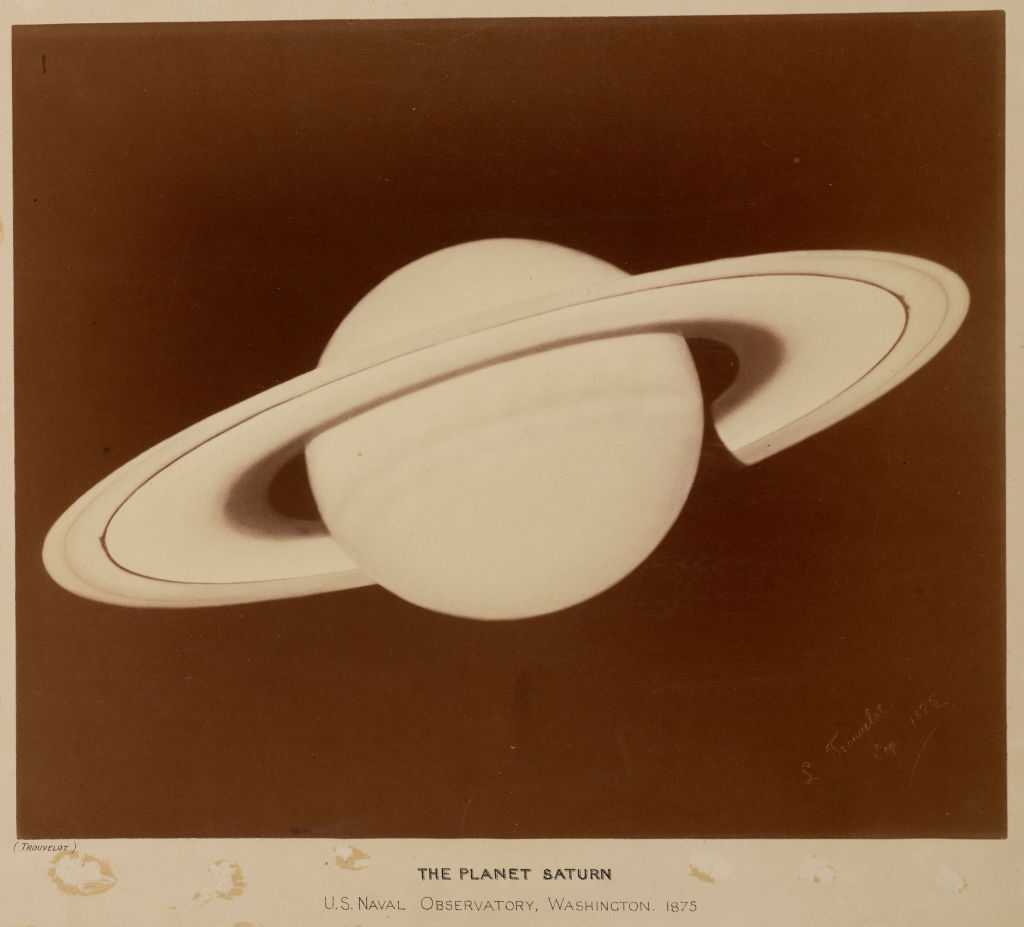
Saturn will be visible with the naked eye, appearing as a bright, yellowish “star” that does not twinkle, just below the constellation Pisces. If you’d like to catch the planet’s rings, that will require a telescope.
Science & Society Picture Library
Photograph showing an 1875 pastel drawing of the planet Saturn made by the French artist, Étienne Léopold Trouvelot (1827-1895).
Oct. 6 — Moon near Jupiter
Since the moon is the most prominent object in the night sky, it makes it super easy to find other objects nearby. This month, the king of planets nestles right next to the moon for a single morning — just look to the east in the pre-dawn sky and you should see a steady, cream-colored dot right next to the moon. If you look up from there, you should also be able to view Mars, just above the constellation Cancer. Bonus: if you make it out the morning of Oct. 5, Mars will instead sit closest to the moon.
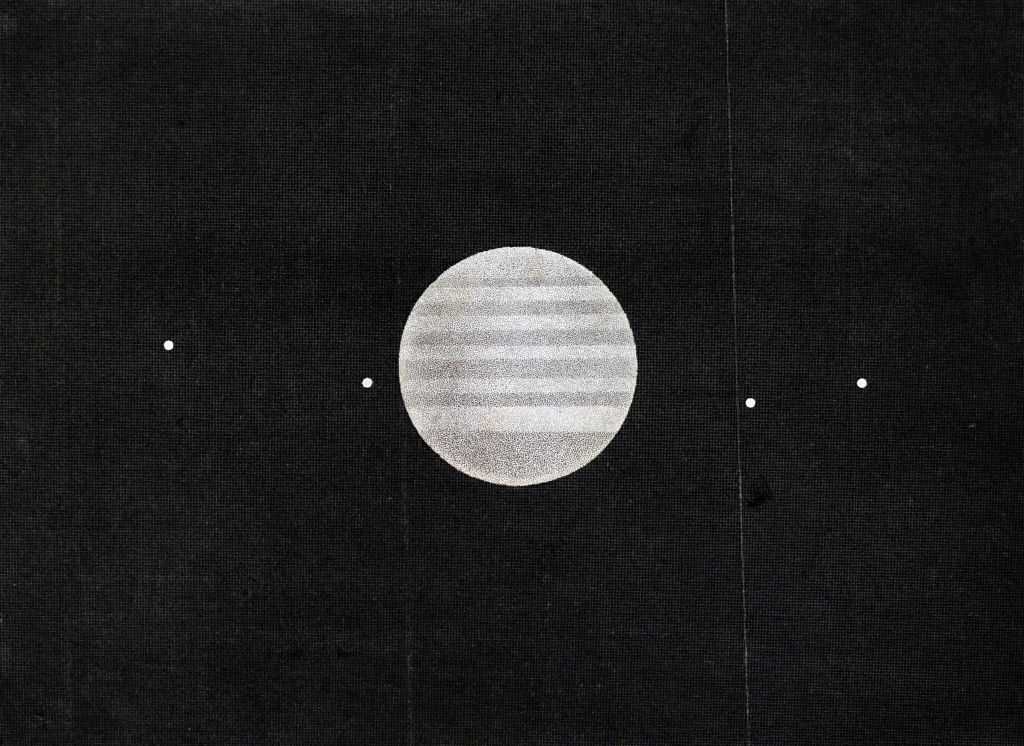
Both Jupiter and Mars can be observed without equipment. However, if you would like to try to see some of Jupiter’s moons or even its Great Red Spot, you’ll need a basic telescope.
Universal History Archive
Engraving depicting the planet Jupiter and some of its visible moons. Dated to the 19th century.
Oct. 8-9 — Draconid meteor shower
The Draconids are one of two annual meteor showers that fall in October. They are named for their radiant, or the point in the sky that they seem to originate from, the constellation Draco. The Draconids were previously called the Giacobinids, after the comet that causes the meteor shower, 21P/Giacobini-Zinner. In 1985, this comet also became the first to ever be explored by a space probe.
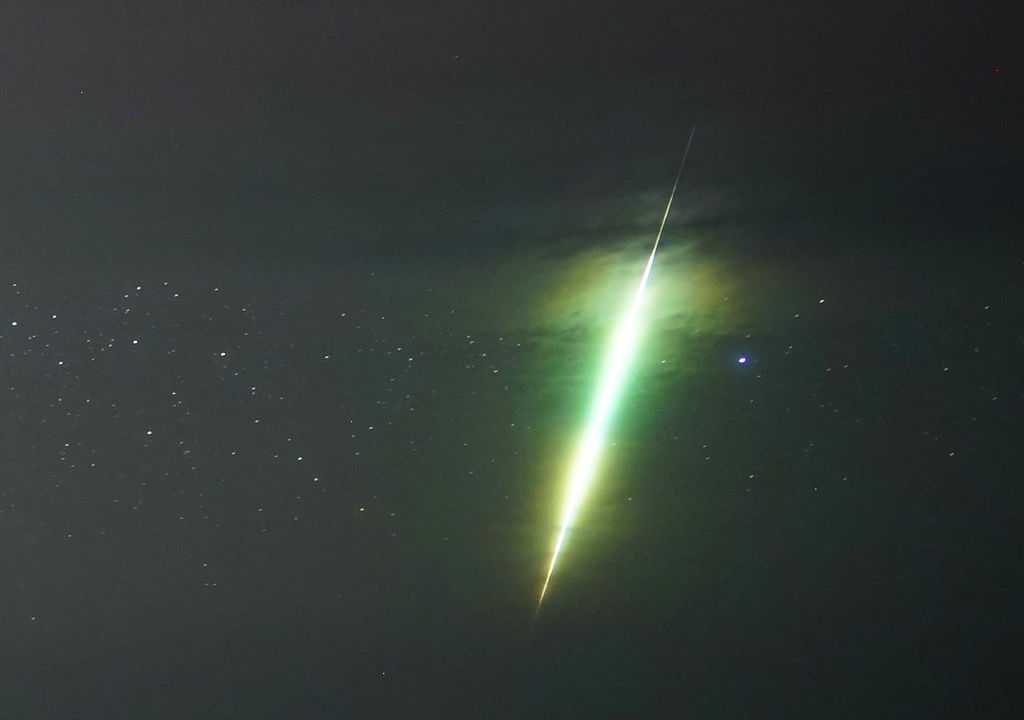
The Draconids are an occasional shower, according to NASA, and usually quite faint. Historically, they have been known to produce stunning meteor storms, which is when a comet throws off more than 1,000 meteors per hour. This has happened very rarely and inconsistently, with the next major Draconid meteor storm predicted for the year 2098, making the dragon a fickle beast. Still, if you find a good spot on a clear night, you may be able to catch a few streaks in the dark.
Owen Humphreys – PA Images
A fisherman watches a meteor during the Draconid meteor shower over Howick Rocks in Northumberland on Sunday Oct. 10, 2021.
Oct. 10 — New moon (and the Milky Way core)
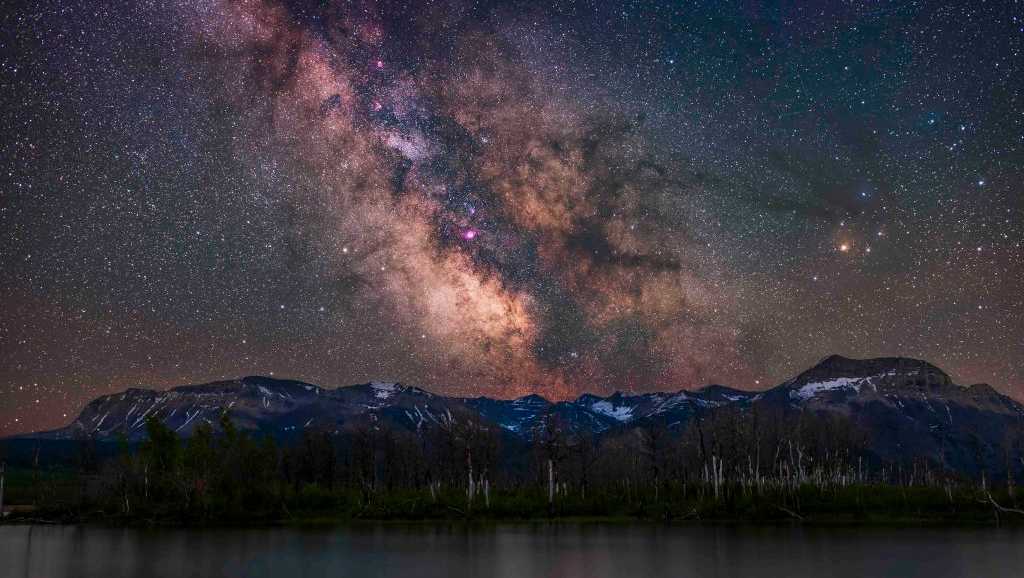
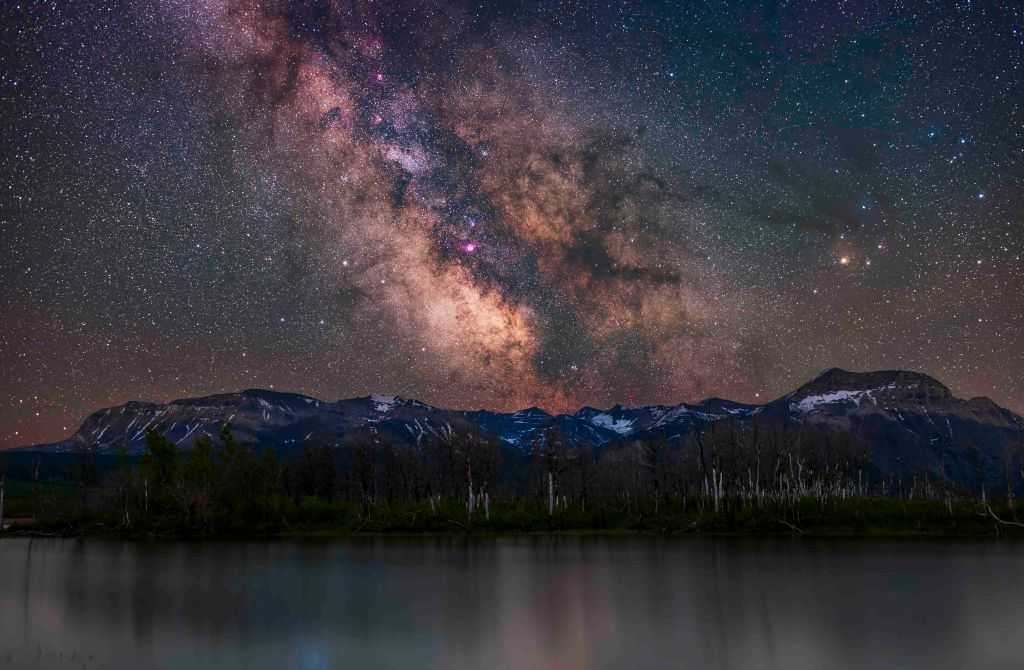
A new moon means a clear night, which means ideal conditions for stargazing. And that’s a good thing too, since this will be the last week to get a glimpse of the core of our Milky Way. It’s a stellar spread of many of the stars in our galaxy and appears as a brilliant crack in the night sky. The core should be visible shortly after nightfall, and you’ll have a few chances to try and catch it between Oct. 8-13. You can use this map to find a dark sky zone in your area for peak viewing conditions. Catch the core before it disappears from view for the winter.
VW Pics
The galactic core region of the Milky Way over Maskinonge Pond and Sofa Mountain at Waterton Lakes National Park, Alberta, Canada, on an early June night.
Oct. 12 — Mercury at greatest elongation east
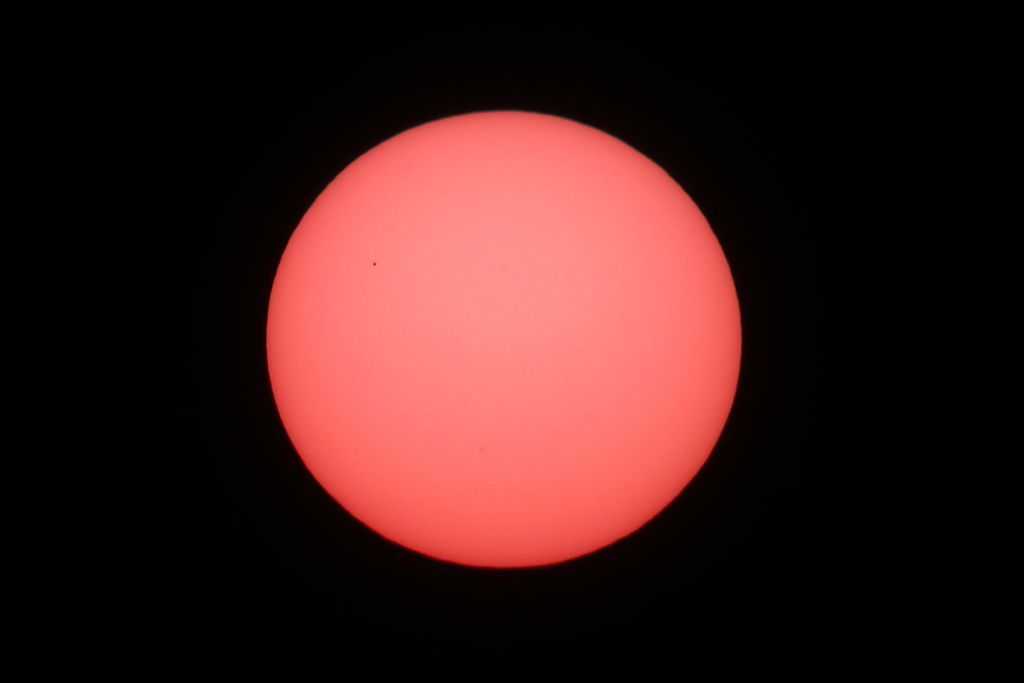
About every four months, we get a new chance to spot Mercury in the sky. Mercury can be challenging to view since it’s an inner-system planet that sits very close to the sun. The best chance to see it is during its greatest elongation, or the farthest distance from the sun from our perspective. Coming up is its greatest elongation east, meaning it will be farthest from the sun in our evening sky. We will have a quick chance to view Mercury shortly after sunset in the southwestern sky, just above the horizon and just beneath the constellation Libra.
Anadolu
Picture shows the sun, as the smallest and least explored terrestrial planet of the Solar System, Mercury (seen as a small dot) transits between the Earth and the sun in Van, Turkey, on Nov. 11, 2019.
Oct. 21-22 — Orionid meteor shower peaks
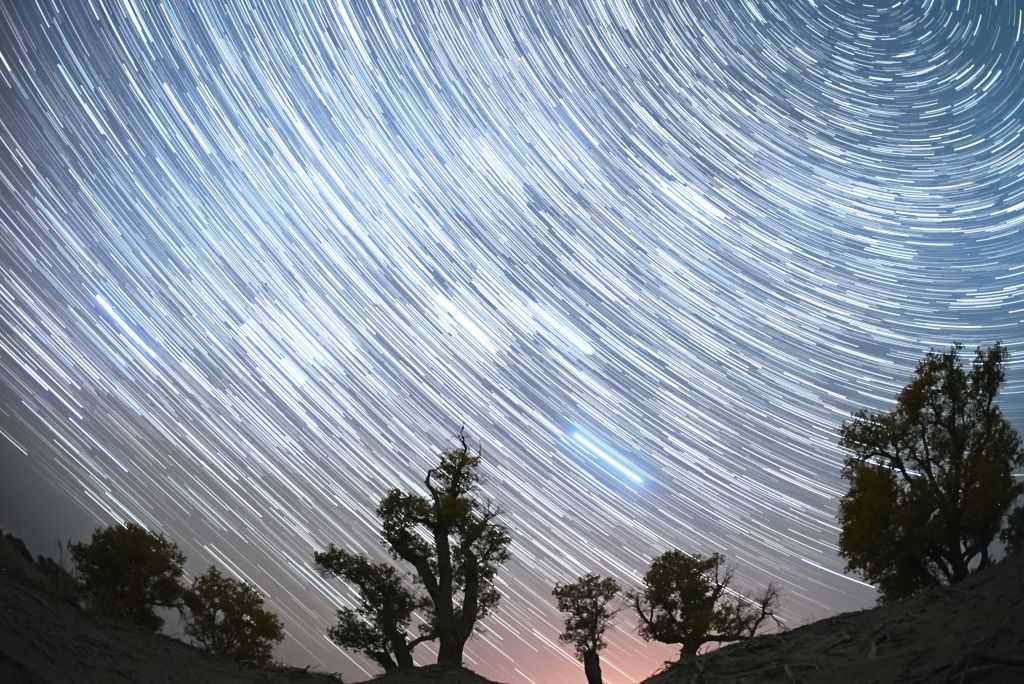
The second annual meteor shower of October, the Orionids are a more dependable shower than the Draconids. The Orionids’ radiant is the constellation Orion, specifically its bright star Betelgeuse. The meteors of the Orionids come from the debris of the comet Halley, which passes near Earth about every 76 years, but delivers two meteor showers to Earth’s atmosphere per year — the Orionids in the fall and the Eta Aquarids in May.
The Orionids are known to be bright and fast, and the fall weather usually makes for ideal conditions to view them. According to NASA, the Orionids can show up to 20 meteors per hour on a good night. The evening and early morning of Oct. 21-22 is just the peak — you may be able to see this shower anytime from Oct. 2 to Nov. 7.
VCG
The Orionid meteor shower lights up the night sky over a desert on Oct. 22, 2023, in Yuli County, Bayingolin Mongol Autonomous Prefecture, Xinjiang Uygur Autonomous Region of China.
Oct. 26 — Hunter’s Moon
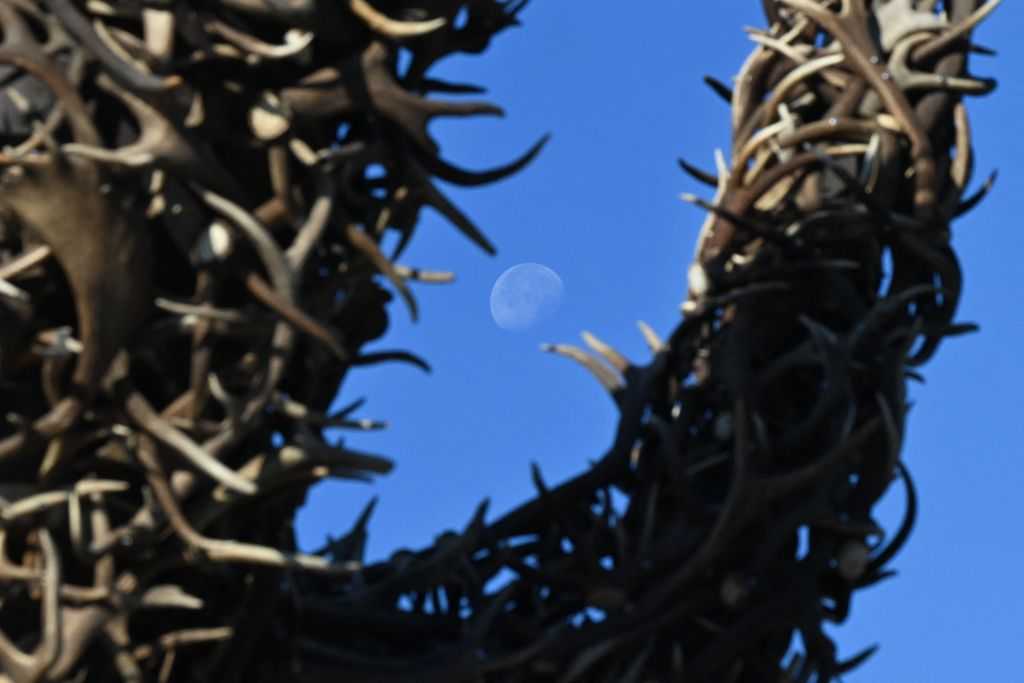
The full moon of October is known as the Hunter’s Moon. According to The Old Farmer’s Almanac, the name “reflects the seasonal shift from gathering crops to preparing meat for winter,” and was predominantly used in Anglo-Saxon cultures.
The Hunter’s Moon has some overlap with the Harvest Moon, sometimes being one and the same, depending on the seasonal cycle. For some American Indigenous peoples, the October full moon is the Harvest Moon (Cherokee, Passamaquoddy), while other native nicknames for the moon make mention of specific seasonal harvests. Other Indigenous names for the moon include the Falling Leaves Moon (Abenaki, Anishinaabe, Arapaho, Lakota), the Moon of the Wildcat (Choctaw), the Moon When the Birds Fly South (Cree), the Big Chestnut Moon (Creek), the Wilted Moon (Shawnee), and the Big Wind Moon (Zuni).
ATTILA KISBENEDEK
The moon is seen behind a 15-meter-high sculpture of the Hungarian totem animal miracle deer, made of more than 10 tons of fallen antlers by Budapest-based artist Gabor Szoke Miklos, during the opening of the “World of Hunting and Nature Exhibition” at the Hungexpo Congress and Exhibition Centre in Budapest on Sept. 25, 2021.