
The California Nurses Association estimates total missed pay in the tens of millions of dollars.
Oct 6, 2026
Updated 3:51 pm PT
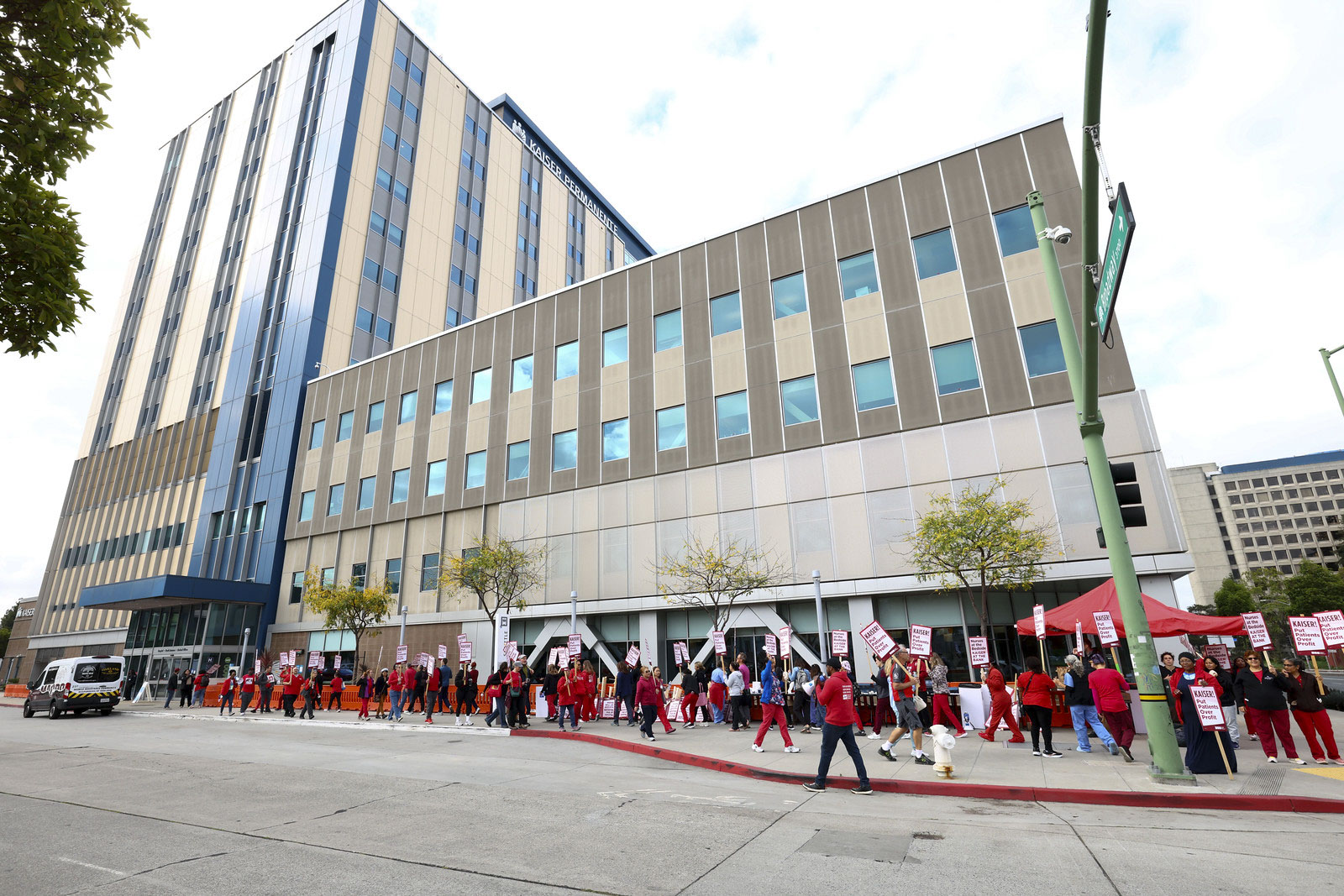
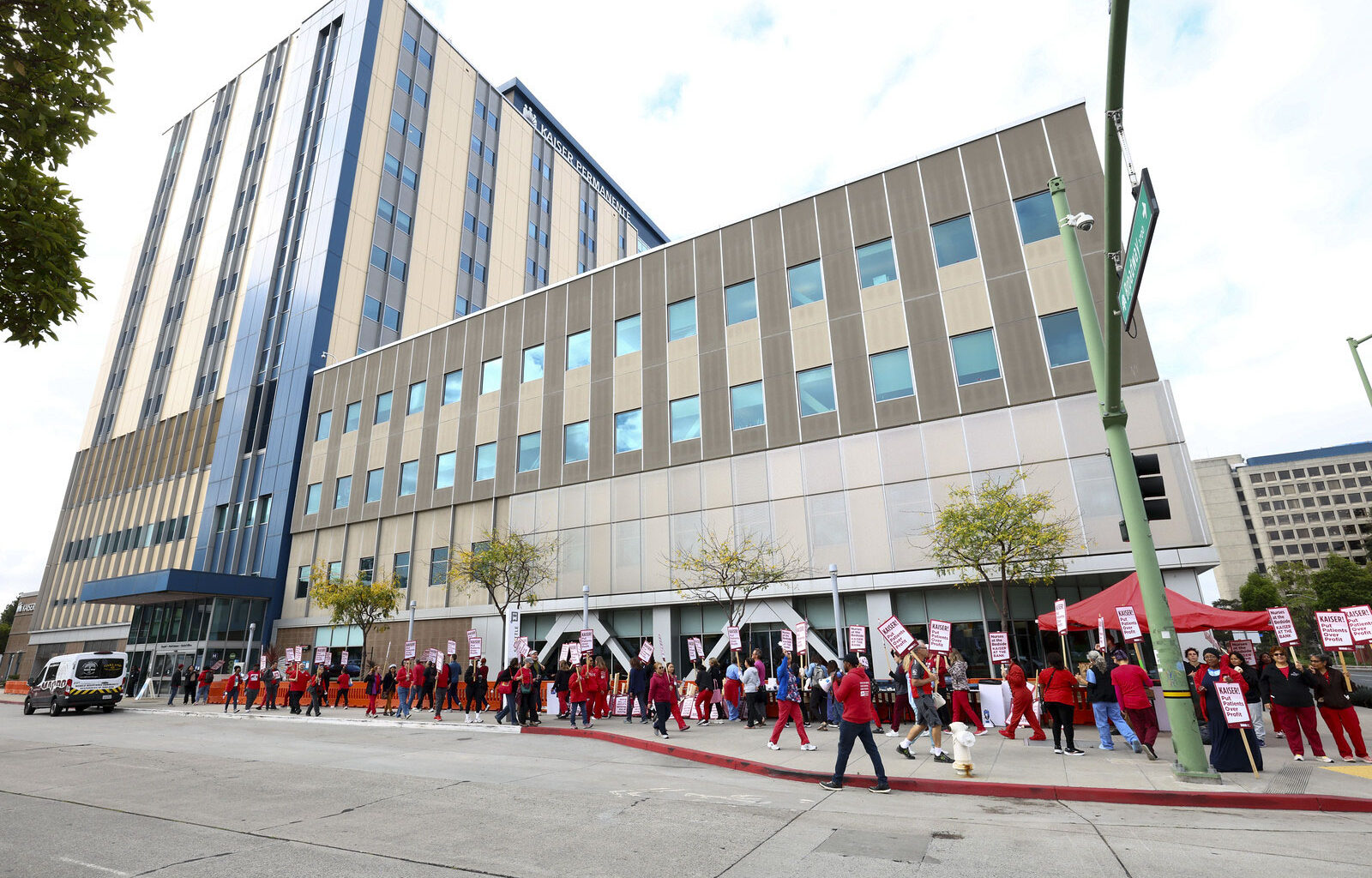
Dozens of nurses staged what they called an “informational picket” outside Kaiser Permanente Oakland Medical Center on Sept. 1, 2026, to demand better staffing levels and limits on AI. (Courtesy of California Nurses Association)
Kaiser Permanente must pay more than 1,100 registered nurses owed wages that could total tens of millions of dollars after a systemic payroll error, according to the union that represents the nurses.
The California Nurses Association celebrated Monday an arbitrator’s resolution of the years-long dispute as a “historic victory against wage theft.” Union President Michelle Gutierrez Vo, an adult family nurse at Kaiser Fremont Medical Center, said it took years of advocacy and research to understand the scope of the problem and get the company on track to fully remedy it.
“The issue really is that we gave Kaiser all of the information that we gathered that was accurate and even then Kaiser refused to correct it,” an incensed Gutierrez Vo, a registered nurse for more than 25 years, told KQED. “It’s taking an arbitrator to really force Kaiser to do right by our nurses.”
“All of these years, they’d rather pay expensive lawyers to not pay the nurses that work super hard. That’s just unethical and immoral and it’s very disappointing,” she added.
The union, which represents about 23,000 nurses at 22 Kaiser facilities, said members first alerted the company to an underpayment issue, dating back to at least 2021, after Kaiser changed its human resources software. It’s unclear how much retroactive pay each impacted nurse is now set to receive.
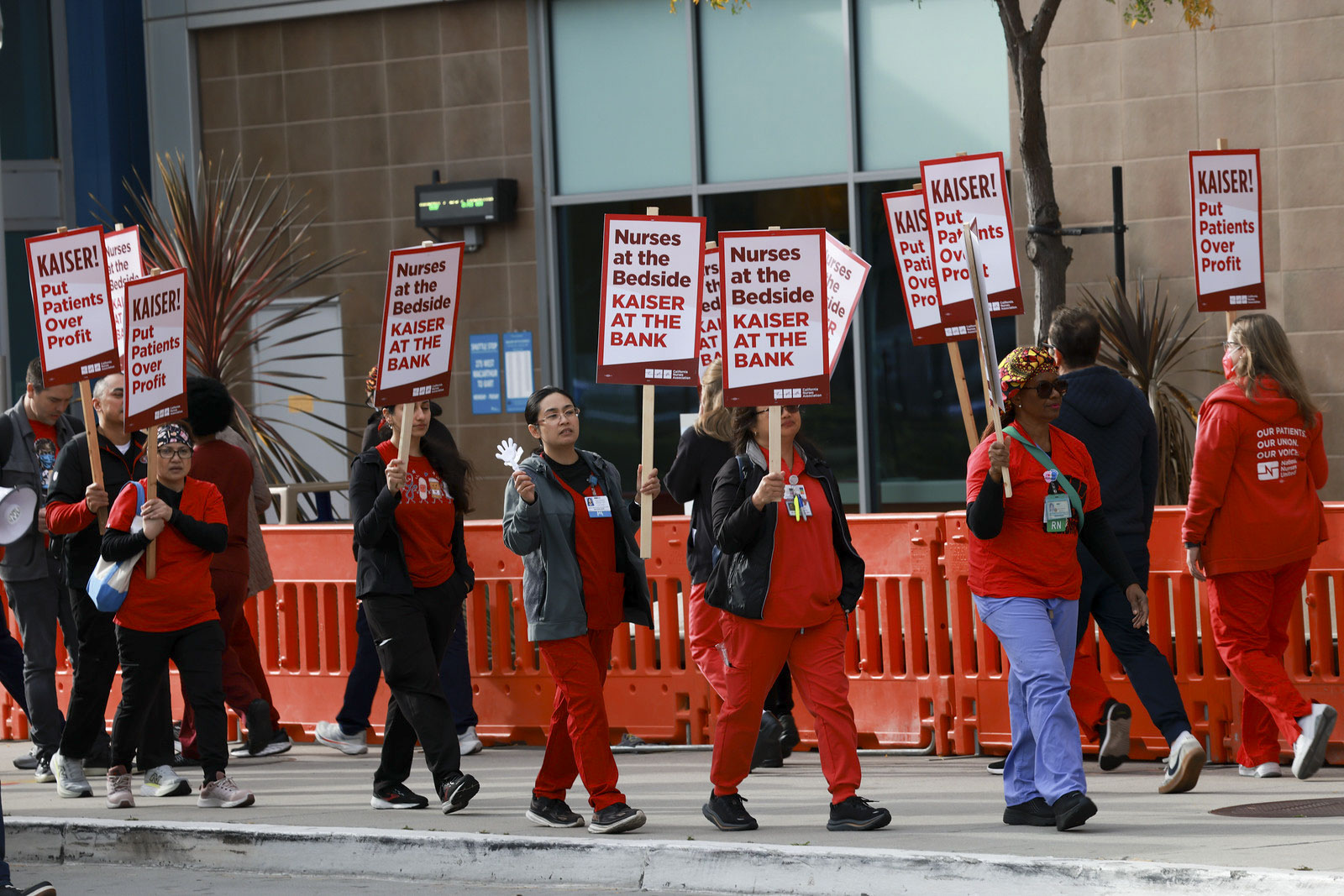 Dozens of nurses staged what they called an “informational picket” outside Kaiser Permanente Oakland Medical Center on Tuesday to demand better staffing levels and limits on AI. (Courtesy of California Nurses Association)
In a statement, Kaiser said it disagrees with the union’s characterization but will honor its obligations under the arbitrator’s decision, reached in a grievance process outlined in their labor contract. California’s largest private employer, with a workforce of 183,000 in the state, declined to disclose more information about the payroll problem that shorted its nurses, or whether additional, non-nurse employees were also impacted.
“Our nurses are among the most skilled and dedicated in the country, and we are committed to ensuring every one of them is paid accurately and in full accordance with their contract,” a company spokesperson said in a statement. “We will reach out directly to every affected nurse promptly.”
As early as June 2022, union representatives notified Kaiser that it failed to advance several staff nurses to higher pay rates agreed to by years of experience and other factors. The issue appeared to be ongoing and widespread, the union warned in following years, with about 600 nurses eventually reporting paycheck errors.
By December 2024, a Kaiser payroll audit identified 1,142 nurses who were paid less than they should have been, while 1,813 were paid more than warranted by the contract. The company, which did not attempt to recoup money from employees paid an incorrect higher salary, took steps to place all the impacted employees in the appropriate salary bracket.
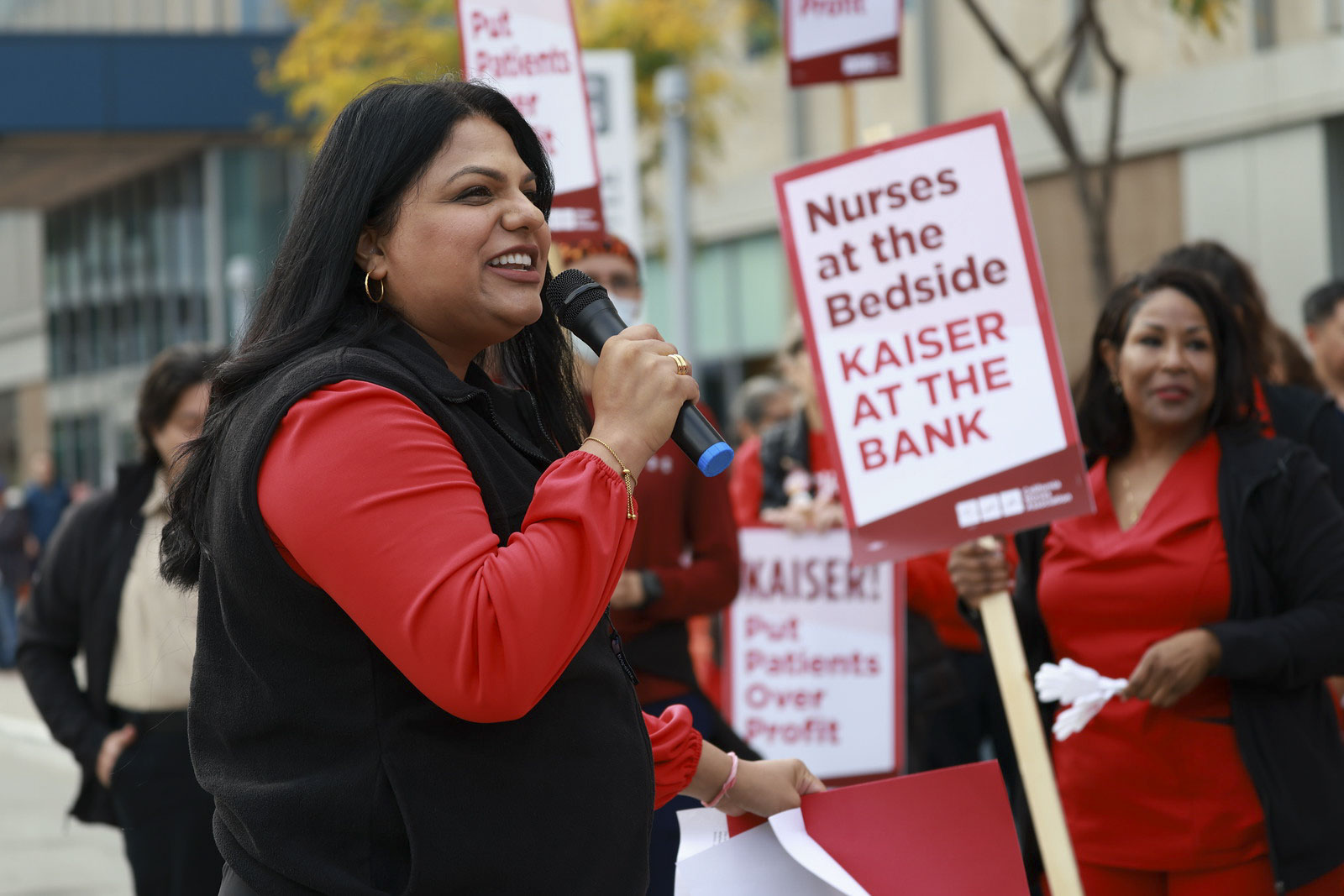 Dozens of nurses staged what they called an “informational picket” outside Kaiser Permanente Oakland Medical Center on Sept. 1 to demand better staffing levels and limits on AI. (Courtesy of California Nurses Association)
Logan noted that the fact that it took such a lengthy, laborious process for Kaiser to agree to compensate its employees with owed wages points to more contentious labor-management relations at the company, which was once known for its collaborative approach to unions. The industry has become increasingly consolidated, and driven by profit-seeking corporations in recent decades.
“Kaiser should be the easiest company to remedy this kind of problem, if it was just an honest mistake,” he said.
Kaiser said its nurses are among the industry’s best-compensated. One of the employee groups impacted, Staff Nurses II in Northern California, often earn more than $100 per hour before overtime and premium pay. That’s roughly 7% above market for comparable roles at other health systems, according to the company, one of the nation’s largest nonprofit health plans and providers.
The news that Kaiser nurses are set to collectively recover millions of dollars comes as the employer negotiates a new contract with the California Nurses Association. Top union demands focus on staffing levels, wages and more say over the use of artificial intelligence in patient care.
Gov. Gavin Newsom recently signed into law a union-sponsored bill that limits the use of A.I. in clinical decisions. AB 1979 by Oakland Assemblymember Mia Bonta requires a health facility or physicians’ office to take reasonable steps to ensure that nurses, doctors and other licensed healthcare professionals decide a patient’s care.
In contrast to for-profit health care systems, Kaiser does not have shareholders and invests most of its earnings into patient care, its operations and facility upgrades. The Oakland-headquartered company, which has expanded in recent years to eight states and the District of Columbia, earned $127.7 billion last year, spending most of that revenue in operating expenses. Kaiser reported a net profit of $1.4 billion, more than double what it generated in 2024.