
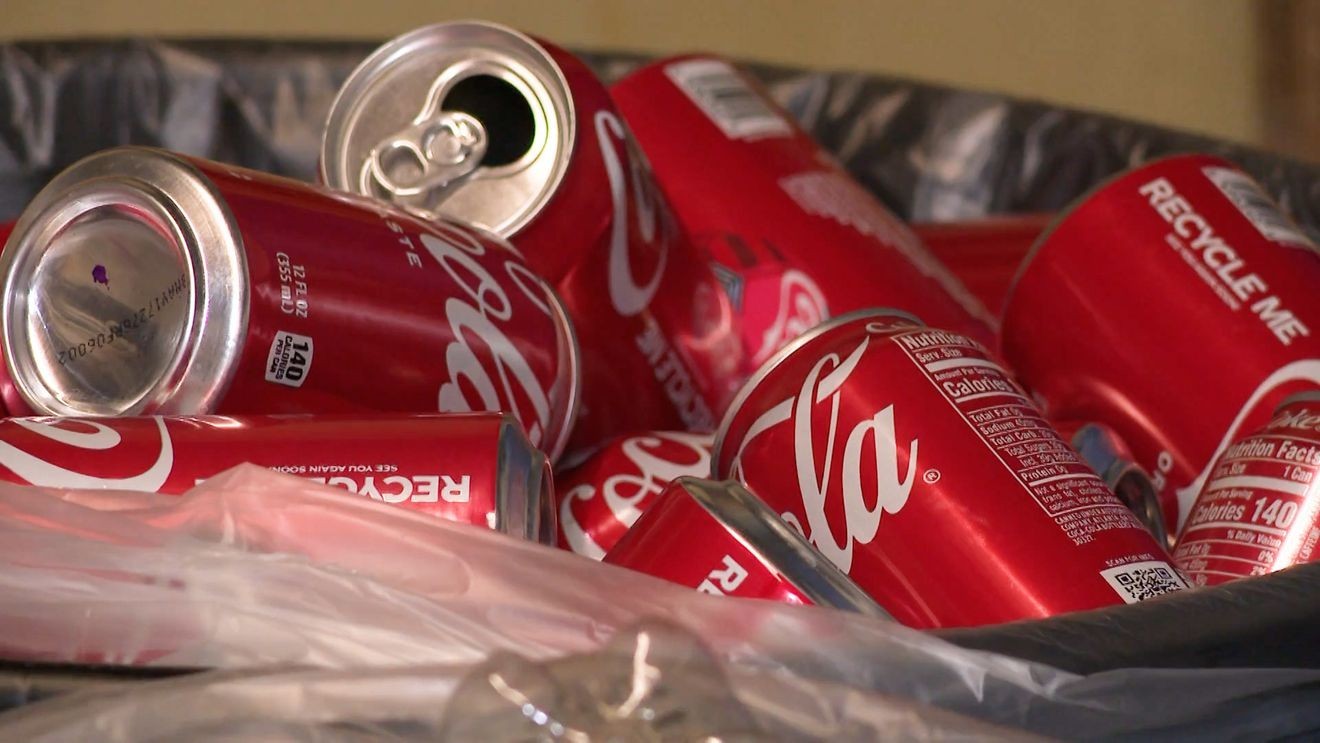
PORTAGE, Mich. — Michigan’s bottle and can return law turns 50 this year, and some stores say it’s time to recycle differently.
A new survey found most retailers want to change the law, moving the returns off their property or eliminating them altogether.
Vidya Mann runs Long Lake Liquor and Market in Portage.
By law, she’s required to put time and labor toward returns.
“Every day I put in like an hour or two just sorting out cans,” she said.
Like every other retailer selling them, she gives back a dime for each one, and like many others she has a room in the back with hundreds in plastic bags.
“They have to be emptied,” she said about the return rules for customers. “Cleaned. We only accept what we sell here.”
But not as many people return their cans today as they did in 1976.
Less than 70% of them were brought back last year.
It’s why a growing number of local retailers are pushing back against the lost space and germs from returned cans.
A survey from Midwest Independent Retailers Association (MIRA) found over 90 percent of stores don’t want to handle recycling at all.
MIRA has suggested a ‘comprehensive recycling’ system, meaning returns would go to drop-off centers rather than stores.
The group has even floated moving away from deposits entirely.
As a small business, Long Lake can’t afford the sorting machines at big-box stores and loses money on bottle returns.
“If they could do it, like go away, that’ll be great. But I do realize there is waste and, you know, we don’t want it ending up on the street.”
However, the bottle law has also become an unintentional fundraiser.
The Kalamazoo Animal Rescue started collecting can donations just before COVID and found it to be one of their biggest sources of income.
Treasurer Sandy Haynick says doing away with return deposits would put a huge deficit in the rescue’s mission, and prevent spay and neuter procedures for hundreds of animals every year.
“That eliminates 20 to $30,000 of our income, which is around 5% of our annual budget,” she said. “So as a nonprofit, we rely on that source of income heavily.”
She calls it a convenient way for people to give charitably without opening their checkbooks.
“You’ve already paid the 10-cent deposit on all your cans that you’ve purchased,” she said. So it’s an easy way to donate.”
So far none of the legislation introduced this year would end the current bottle return law in the statehouse.
MIRA says it’s now talking to lawmakers to see if they’re open to a change.
“It’s only 10 cents at a time, but it really does add up in a big way,” Haynick said.