
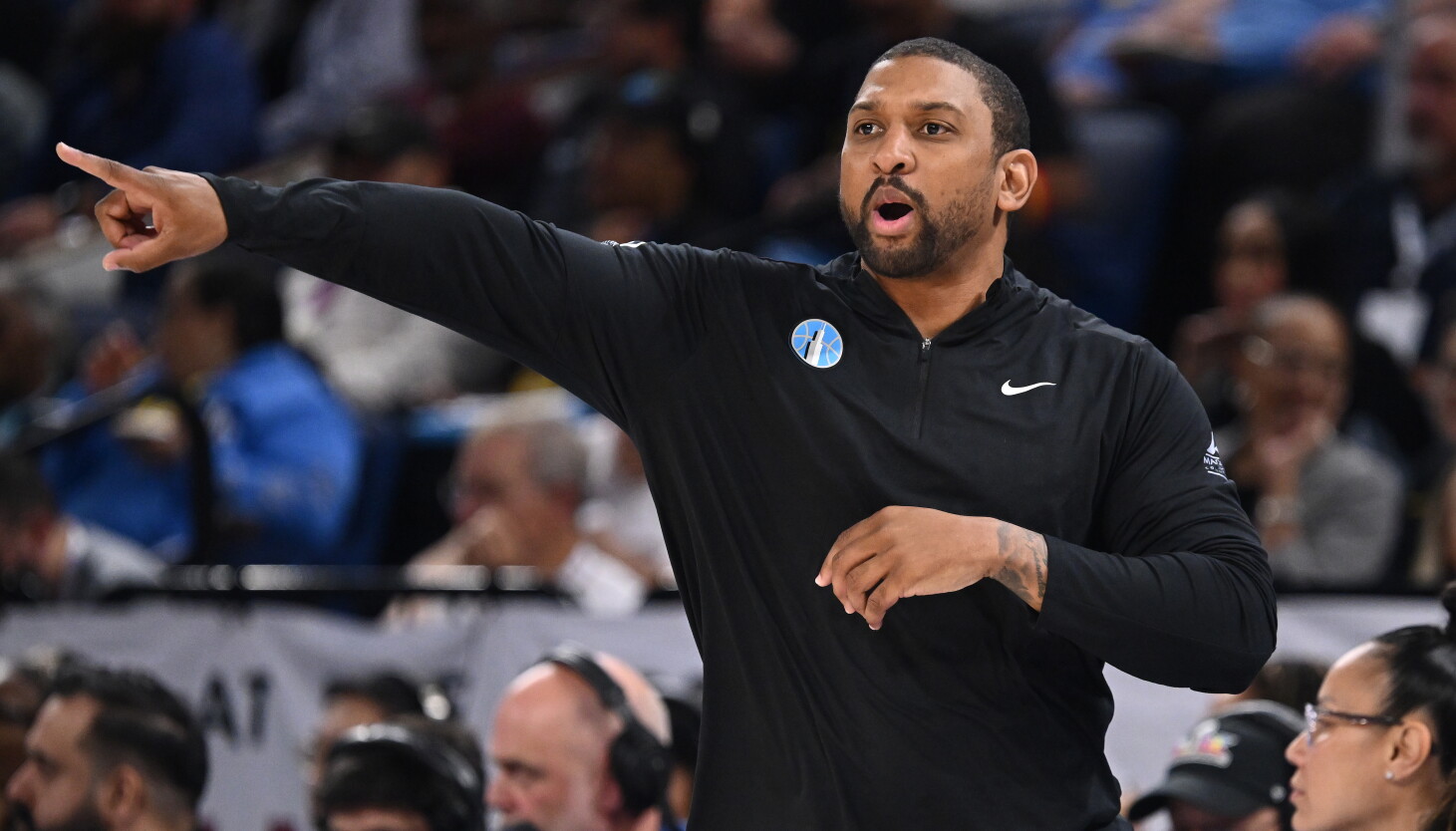
I imagined the collective groan, the dissatisfied emojis in the Sky fan group chats at last week’s news that coach Tyler Marsh is coming back for a third season.
Marsh has been a tough sell for Sky fans still wounded by the abrupt firing of Teresa Weatherspoon in 2024 and now thoroughly unimpressed by the two losing seasons that followed.
Why does Marsh get such a long leash when the patience for Weatherspoon, a Hall of Fame player, was so thin?
To temper some of this angst: Marsh’s return in 2027 does not mean the Sky have decided he is the coach of the future.
There was considerable disagreement, according to multiple sources, about whether to keep him. In his exit interview, general manager Jeff Pagliocca said Marsh’s youth, combined with all the injuries, meant it would be unfair to give him the boot. Taken as a whole, his comments sounded more like punting the decision to next year than committing long-term.
So I’ll keep front and center the question that I’ve thought about most this past year: Is Marsh a good enough coach for this team?
I should know by now, right? After watching 88 games over the last two years, attending dozens of practices and straining to listen to his huddle speeches, I should be able to tell how good he is.
But I can’t. And I think that’s OK.
I do feel confident that he has the potential to be a strong leader in this league.
He’s trusted by two of the best coaches, Becky Hammon and Natalie Nakase, which speaks volumes. He’s committed to the collective struggle and purpose of the WNBA. He’s humble in the truest sense of the word.
If you’ve heard these points already, it’s because I think Sky fans, many of whom have followed the league since the beginning, will appreciate them. So I slip them in here and there, trying to interrupt their certainty that he just ain’t got it.
It usually works for a moment. I’ll see appreciation, a softening flicker across their faces. But it subsides the moment the team loses another game. His hesitation to call timeouts during opposing runs. The team’s inability to close games. Then the fury, the indignation, returns.
And I get it. Sports give us a release for big emotions, sweeping conclusions. They offer the satisfaction of issuing collective judgments. This coach is good. This one is bad. This player is underrated. This one is a flop.
Plus, this is Chicago: We want a winner, not just a good guy.
I just think we should acknowledge how hard it is to know whether someone is a winner before they’ve, you know, done the winning.
What about when they’re still developing? When they’re in a muddled situation?
With Marsh, I get that his reputation and fit for the WNBA aren’t enough to establish his potential as a head coach. He could be a great leader of women who’s still better suited to being an assistant.
I do think he’s got some head coaching chops. He’s a talented designer of plays, especially for young center Kamilla Cardoso. I like his offensive system, based on ball movement and pace. I like that his players give him props for being transparent and collaborative.
On the flip side, I think he needs to be bolder, more willing to put his stamp on a given game, on the organization, on the locker room. What exactly are his players learning from him? How is he molding them? I see those answers more clearly from Hammon, Nakase and Cheryl Reeve.
Where I’m most hung up, though, is on the fit for this particular organization. Sometimes I think he might be a better fit for the Storm, Sun or even the Mystics, where development is the priority. He loves to talk about how growth isn’t linear, how his young players deserve grace and patience.
But the Sky’s defining characteristic at this point is their rejection of the concept of a multiyear rebuild. The team is expected to finish in the top half of the standings every year, but without the runway franchises often give themselves to accumulate draft assets and develop young players.
That’s a tough needle for anyone to thread.