
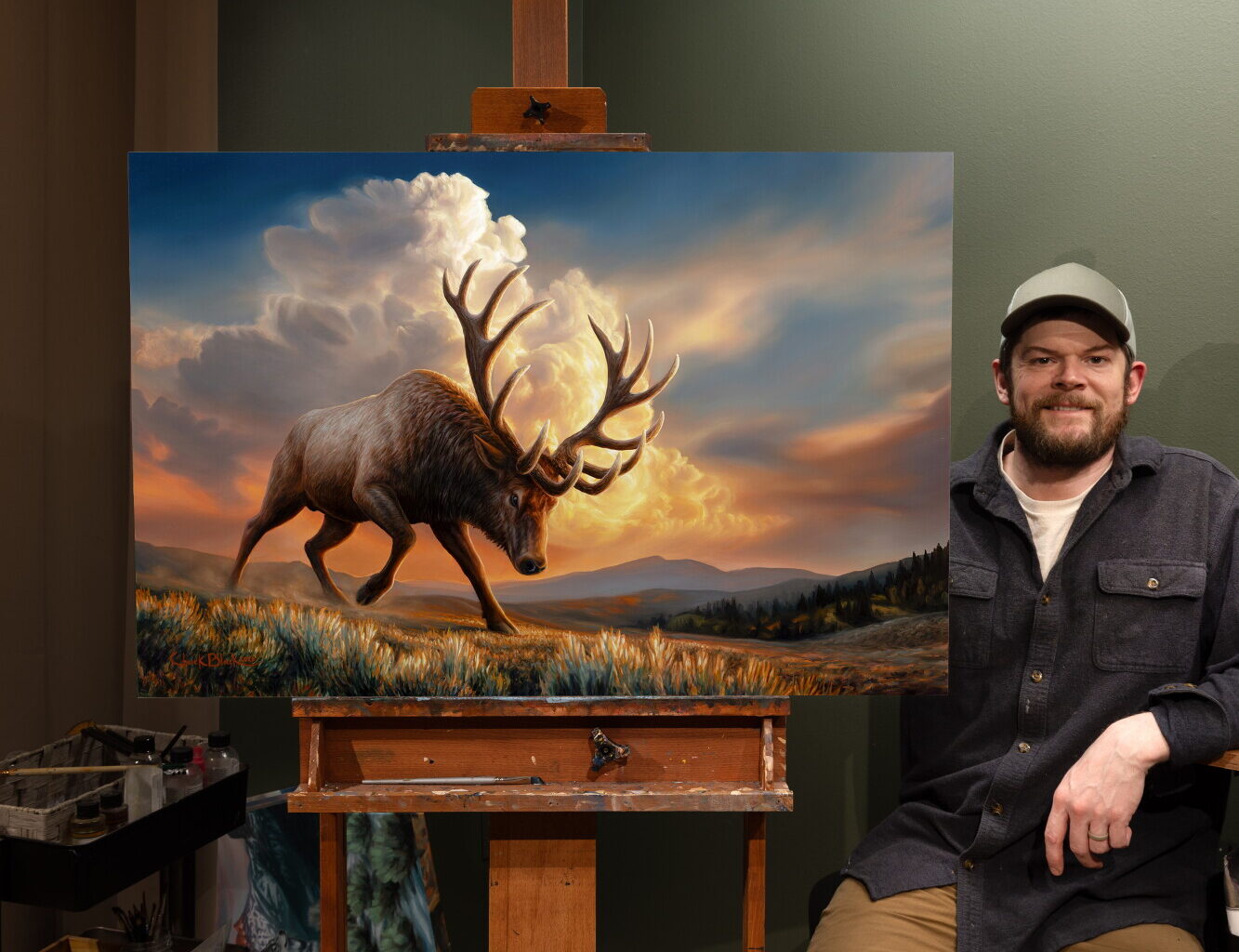
GRAND FORKS — From an early age, Chuck Black seemed destined to play a part in telling the stories of wildlife.
Growing up in Stillwater, Minnesota, under the tutelage of parents who respected the outdoors, planted positive seeds in his upbringing. He’d get outside and hunt wildlife with his dad and enjoy other aspects of the outdoors, which instilled within him an appreciation for the landscape and the critters, large and small, that inhabit it. Eventually, he decided to pursue a degree in wildlife biology.
To do that, he moved to Grand Forks and attended the University of North Dakota, where he earned his degree in 2010. Thereafter, he worked several years for various state and federal wildlife agencies, deepening his appreciation of the natural environment and its wildlife. That, in turn, influenced another aspect of his life: his art.
Black had been sketching wildlife for years, but the charcoal pencil eventually turned into other artistic mediums such as acrylic and oils. It is in oils that he’s made a name for himself, including winning the 2023 Federal Duck Stamp Competition for his oil painting of a northern pintail, a colorful adaptation he titled “Graceful Anticipation.” The art became the official duck stamp for 2024-25.
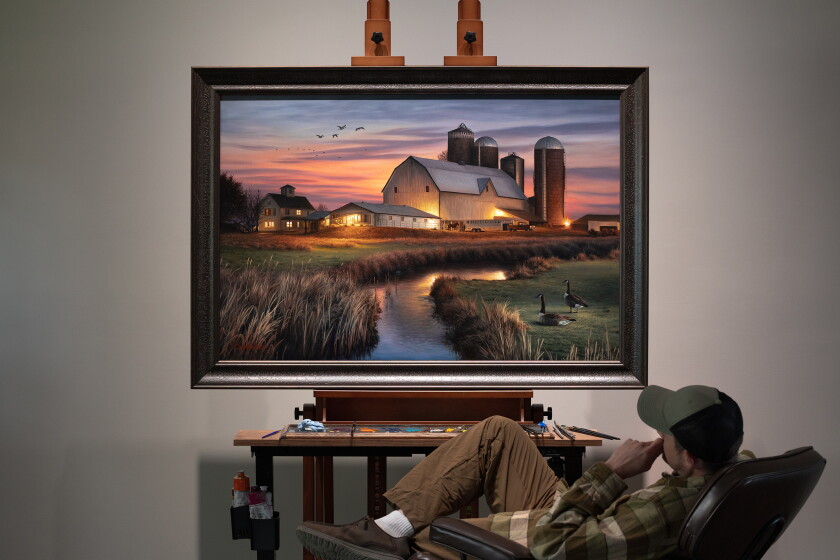
Chuck Black studies a finished painting of the harvest season.
Contributed / Chuck Black
Recently, Black, who now lives in Manhattan, Montana, returned to Grand Forks to receive the UND Young Alumni Award and to talk with students about his art, conservation and wildlife.
Telling the story of nature
Black, who left field work in 2015 to devote time to his art, is a meticulous and detailed artist who contemplates much about what he wants to convey in his oil paintings.
Basically, it’s about the human and wildlife connection, he told students at a casual forum discussion on Oct. 2 hosted by Susan Felege, UND professor of wildlife ecology and management, at Starcher Hall.
“I love wildlife in many different ways, but I’m really interested in how we connect as people to them and nature and our surroundings,” he said.
He told the students that besides his paintings of wildlife in their natural surroundings, he also tries to make this connection in his art of old farms and homesteads, places where people and wildlife often intersect.
Black is saddened by the many farmsteads across the landscape that are disappearing or being replaced by more modern buildings, and so he tries to preserve them through his landscape paintings.
He told students he often asks himself why animals are in his paintings and why has he depicted them the way he has.
“I think basic composition is the foundation of visual storytelling, and then whatever you’re passionate about beyond that is the story you want to tell,” he said. “As humans, storytelling is the only thing that is going to get us emotionally involved.”
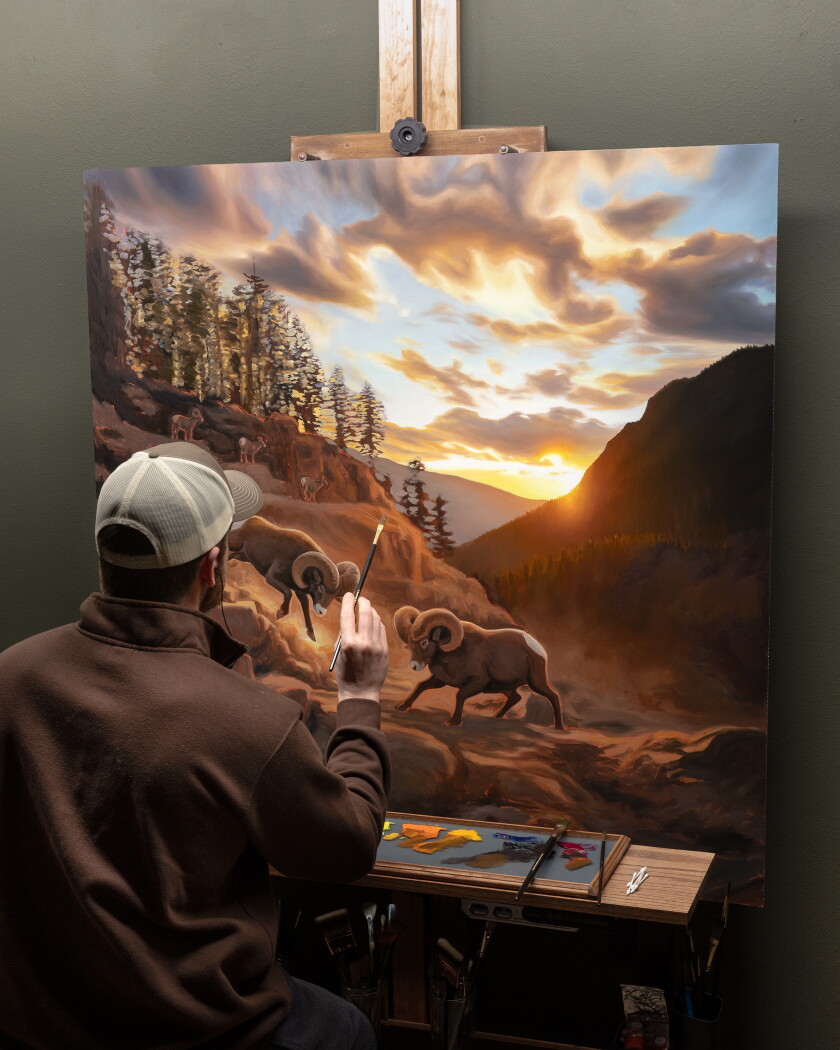
Chuck Black works on an oil painting of rams in the wild.
Contributed / Chuck Black
Black said he’s created at least 1,000 paintings to date, maybe more, and tries to tell a story in each piece of art, whether it’s depicting two rams bucking heads, an elk getting ready for a charge or the connection between a bear and her cub amid a scenic backdrop. Others include bison on a snowy landscape with a sun dog in the sky, a lighted cabin on a mist-covered lake and a thunderstorm on a prairie landscape.
If, as a student at UND, he could have peered into the future and seen his work now, he would have been amazed, perhaps saying, “how did I do that?” he told the students. “It just slowly gets easier.”
But, he told the Grand Forks Herald, it’s not all natural talent. A lot of work has gone into his development as an artist. Even now he spends a lot of time composing his work, starting with capturing photos of scenic landscapes and wildlife and then using computer tools to compose how he wants his painting to look.
When the composition is ready, he’ll do a light outline before applying elbow grease to the painting project. He also pays careful attention during the painting process, seeing if there are ways he may improve the trees or the fur of an animal. If he has to redo part of a painting, he doesn’t have to restart the project; he just adds more paint and refines the section he wants improved.
With a dozen or so students in attendance during the forum, Black highlighted several other points of his career and artistic processes, telling the students that dreams can become reality if the time and effort is put into achieving one’s goals.
He is living proof.
Although it took him years, Black eventually transitioned to full-time art and he and his wife, Erica, who also was present during the UND discussion, this summer purchased their first home from the sales. It’s a dream that came true for the couple.
During the class discussion, students asked questions about what he considers most when posting on social media (his audience) and his philosophy about conservation (its importance cannot be stressed enough).
But it was the storytelling topic that seemed to resonate with students most — perhaps not surprising, since as Black said himself, it is not the art but the stories they convey that impact us most.
Roxanne Gasperetti, a second-year Ph.D. student from Milwaukee, Wisconsin, wants to do much the same thing that Black has been doing — combine research with art and through it teach people important lessons about wildlife and conservation. She said it was enlightening to discuss storytelling in art.
Her specialty is waterfowl and parasites, the theme of her thesis, a subject that is “kind of a niche topic,” she said. “So learning from this forum was important to me.
“It was awesome to hear his perspective about the mixture of wildlife biology and art, having those two worlds meet. Also, how using your art can convey things that are important to you, like conservation, and telling those stories through your work.”
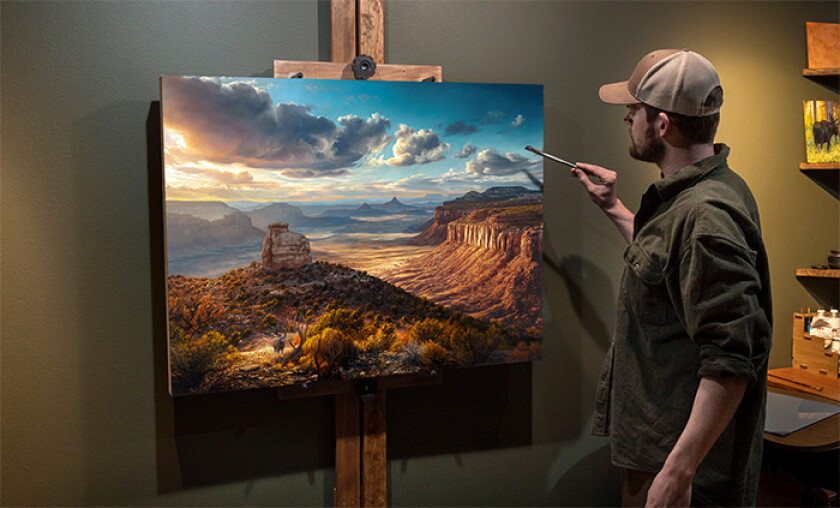
A landscape painting in the making by Chuck Black.
Contributed / Chuck Black
Felege, who encouraged students to ask questions, said: “I don’t think that can be overly emphasized,” noting she enjoys experiencing the “steps” of effective storytelling.
Another story Black tries to convey in his work is the daily life of animals and what they go through in all seasons of the year.
Having worked for various state and federal wildlife agencies, Black had the chance to get up close and personal with many wild animals. The experiences impacted him deeply.
“I spent a lot of my wildlife career with big game animals, and I think that gave me a huge perspective change,” he said. “It’s one thing to hunt and fish. You have your prizes at the end of the trip if you’re lucky. But it’s another thing to work with a living, breathing animal and then release it back into the wild. To really experience a true wild animal, to be able to work with them hands on, I think is very much a life-changing experience.”
Those experiences prevent him from posting harvest shots on his social media pages, he told the students, because he doesn’t want the animal to be remembered that way. There is more to its life than a kill shot.
“Working with wild animals in the field just got me to think more about what the animal goes through in their daily life. Being able to use the modern technology we have, such as GPS tracking collars and all of these systems I was fortunate to work with, to track their lives and see what they do day to day, I really started to think about the story of the animal, their lives and their life story. I think that just gave me a deeper connection.”
Black said winning in the duck stamp competition prompted a sigh of relief, one that has allowed him to better hone his focus on the kind of wildlife artist he wants to be in the years ahead. However, he will be able to enter the duck stamp contest again next year, something he plans on doing.
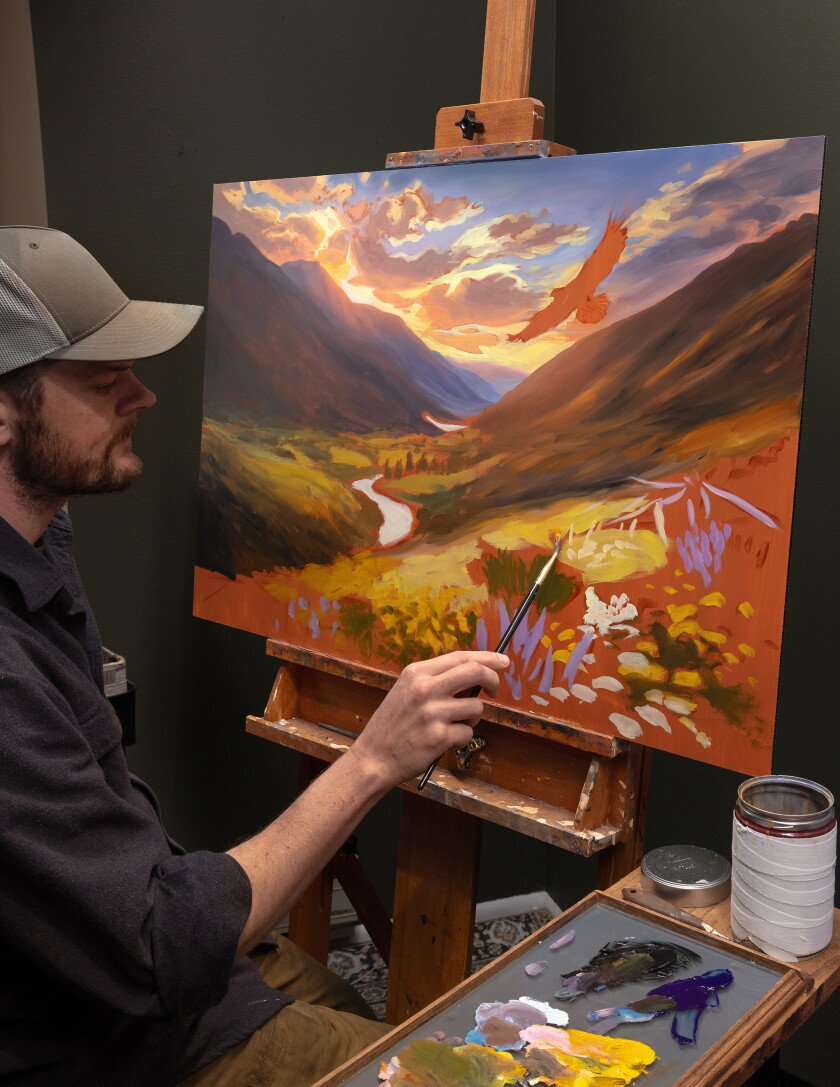
Chuck Black works on an eagle painting.
Contributed / Chuck Black
Besides that — and now being in his newly purchased home — Black has a lot of other projects he’s already planned. He just needs to get to them.
Wining the duck stamp competition “made me shift gears back to this subject matter of conservation,” he said. “I feel like the last couple of years I’ve been trying to work out in my mind, and also on canvas, what that really looks like, what it translates to. The last couple of paintings I’ve finished, I really feel like I’ve been able to hit the nail on the head with everything that I thought I wanted, at least in my processes and how I spend my time as an artist.
“So now the next goal is to spend the next few years really executing all of the tasks to get the work done. Basically, just relaxing and enjoying life and getting the work done is sort of the goal now.”
To learn more about Chuck Black and his work, visit his online studio at
.