
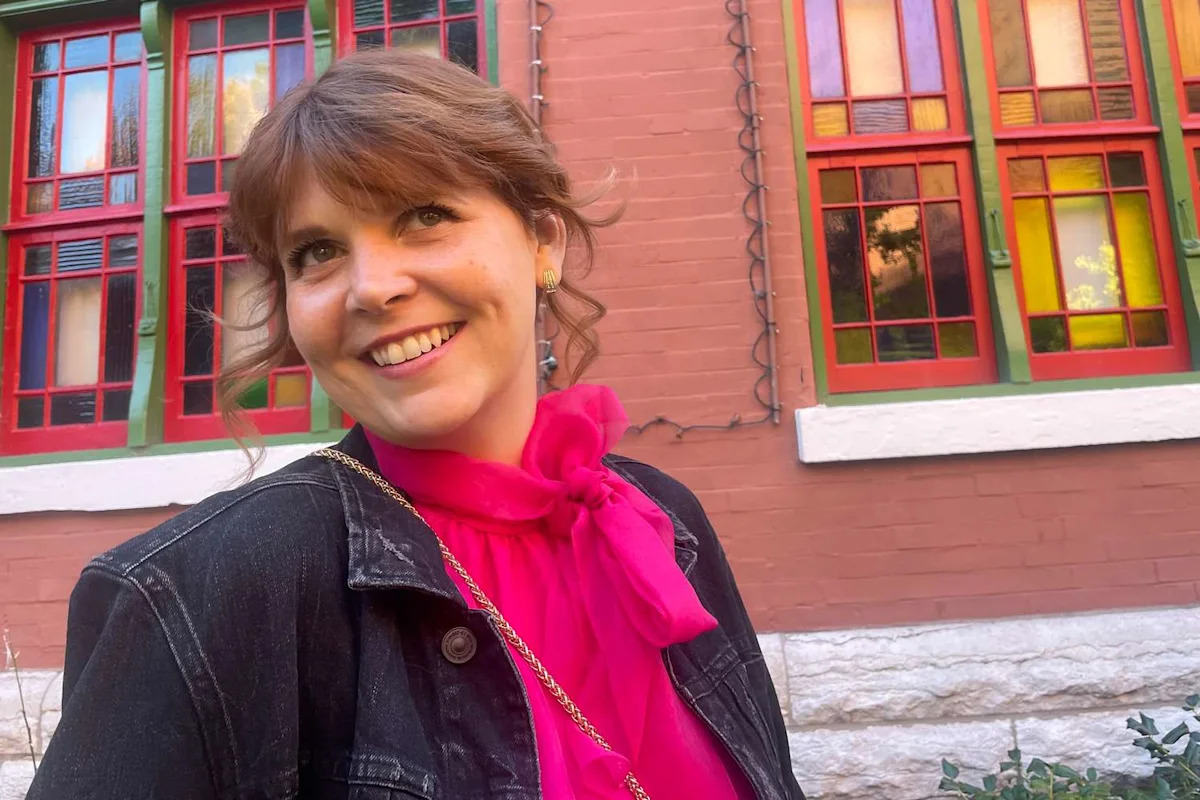
Comedian Annie Bond was 25 when her then-boyfriend felt a lump in her left breast.
She led a healthy lifestyle, went to the doctor annually and had no family history of breast cancer — or any major medical issues, for that matter. “I got my tonsils out and that’s about it,” she recalls.
At her annual gynecologist appointment, Bond brought up the lump to her doctor. “They told me, ‘Oh, you’re so young. You have no family history, nothing to worry about,'” she recalls. “I’m like, ‘Okay, great.’ Who am I to not believe a doctor?”
A few months later, her primary care physician recommended she get an ultrasound on the lump, but her insurance denied it. Still, the doctor repeated what she’d previously heard: that she was too young for breast cancer, and it was likely nothing to worry about.
Then things took a turn. “I started getting pretty numb around that area and I felt like my armpit was swelling,” Bond says. The lump grew larger and had become visible to the naked eye, and she started feeling fatigued.
Her doctor pushed her insurance company for the ultrasound, which quickly led to a breast cancer diagnosis. “After about a month of doing every scan you can imagine on your body, I found out that I had stage four breast cancer,” Bond recalls. “My oncologist at the time told me that it was incurable, that I had two to five years to live, and that’s if I was lucky.”
Trusting Her Gut
Annie Bond with her dog
Credit: Courtesy of Annie Bond
Bond became a “regular” at the hospital, spending just about every day there. A nurse was the first to communicate to her about her fertility rights, and how treatment could change any future plans. Then 26, Bond wasn’t yet sure if she wanted to have children. “The oncologist I had at the time, he hadn’t brought that up to me at all: That chemo could kill half my eggs, and that all of these other things could affect my fertility,” she says. When she asked the oncologist about it, he told her it was too dangerous to freeze her eggs. “His exact words were, ‘I’ll fire you as a patient if you do that,'” she recalls. “He didn’t explain any of it.”
Bond says the encounter was “weirdly a good thing,” as it pushed her to make the decision to leave his care. “I probably wouldn’t be alive if I’d stayed there,” she says. “But it led me to getting a second and a third opinion.”
Finding the Right Treatment
Bond found her oncological match at City of Hope Cancer Center in Duarte, California. “That doctor is appropriately named Dr. James Wiseman. Wise Man, come on,” she jokes. “But he was very up-to-date with research.”
She learned that because she had Luminal A HR positive/HER2 negative breast cancer, it was slower growing. Medication worked to slow the cells from multiplying, and she took a shot to lower her estrogen levels, which can also slow the growth of cancer cells. “And from just that medication, my tumor shrunk — without IV chemo, anything like that,” she says.
Bond also needed additional surgeries and treatments, including a lumpectomy, liver resection and radiation. Eventually, she got her ovaries removed as well, which was a turning point. “Once I got my ovaries out, after that, it just felt like everything’s going okay.”
A Positive Outlook
Annie Bond
Credit: Courtesy of Annie Bond
Because of the nature of the disease, “remission” is technically not possible. But it’s been 11 years since Bond was first diagnosed with metastatic breast cancer, and she hasn’t had any active tumors in nine years.
Because Bond’s cancer thrived off of estrogen, cutting off that supply was essential. It also meant putting her body into menopause in her 20s. Now 37, she says, “I feel like I’m reaching the age where people say, ‘Oh, [are you experiencing] perimenopause?’ And I’m like, ‘Wait, what happened to ‘You’re too young’?” she jokes.
Despite being tumor-free, Bond lives with chronic disease. “I still get scanned all the time. I’m still on medication, which also has lots of side effects and is very expensive,” she says. “But I don’t actively have any tumors in my body and I haven’t in a long time.”

Annie Bond
Credit: Courtesy of Annie Bond
Now an outspoken advocate for those going through breast cancer, she shares memes and advice on social media. “It’s so great now that we have things like social media and these online communities where within the breast cancer community, we educate each other all the time,” she says.
She also credits the Breast Cancer Research Foundation for being inclusive of metastatic cancer patients, a group that often feels underserved in the conversation and research. “I look at a big organization like BCRF that has emphasized stage 4 research, and that has always wanted to work with me and my community,” she says.
One of her pinned videos on Instagram is a breast self-exam how-to. “When I meet people who I know who don’t know a lot about breast cancer and don’t have a family history, I often ask them, “Are you doing self-exams? Would you know if something was abnormal if you did one today?’ ” she says.
For Bond, that’s what it means to take care of yourself. “I think the initial instinct is always to feel guilty or shameful that they haven’t done it yet,” she says, but instead, she recommends they reframe it: “‘ Oh, I could just start now.’ “
Read the original article on People