
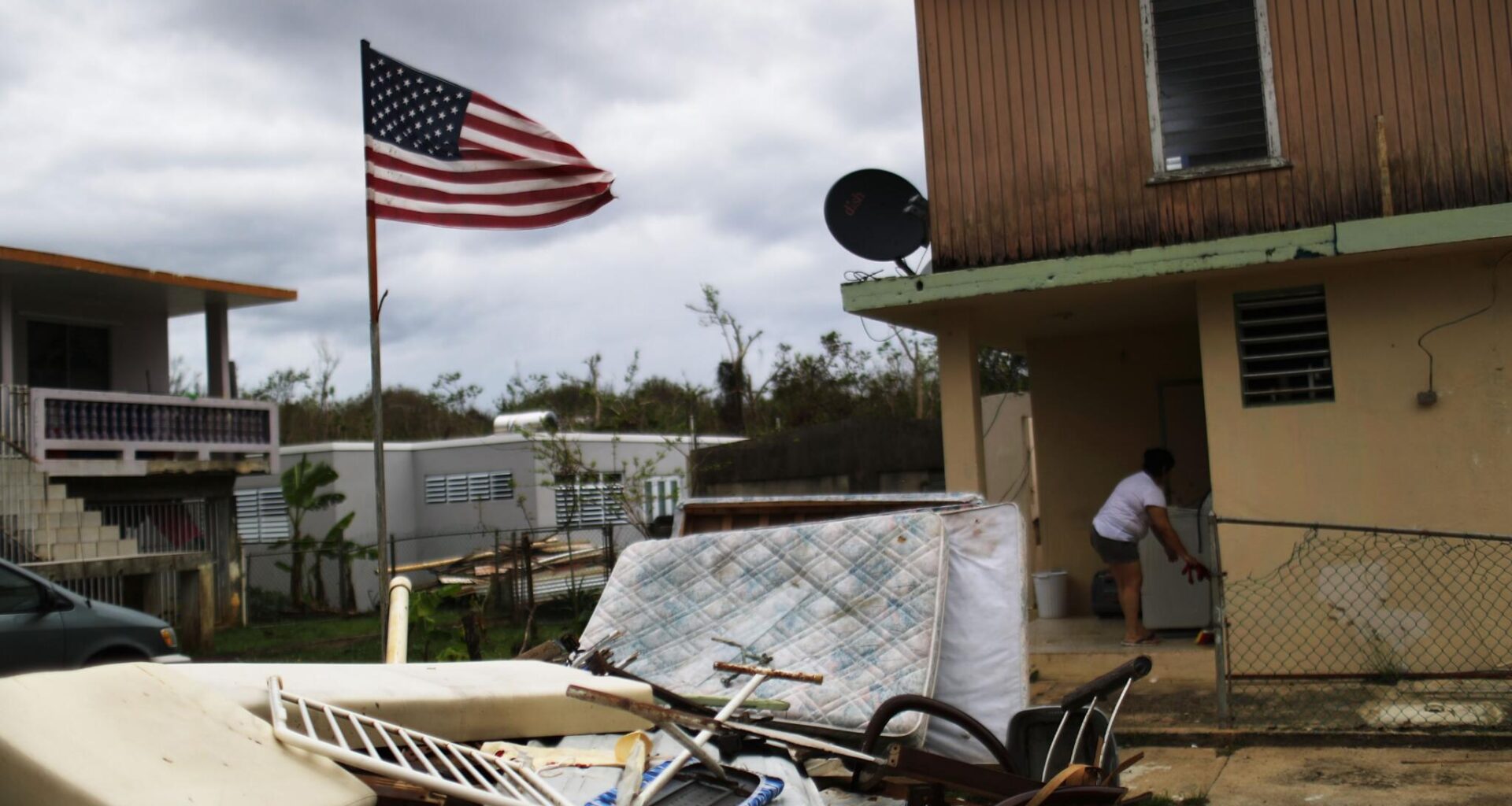
Since 1898, when the United States took control of Puerto Rico after Spain’s defeat in the Cuban-Puerto Rican War of Independence, the archipelago has occupied a contradictory place in the American political order: part of the United States, yet not fully included in its democracy — officially an unincorporated territory, but effectively a de facto colony for 128 years.
In 1917, Congress extended U.S. citizenship to Puerto Ricans through the Jones-Shafroth Act. But that citizenship arrived without voting representation in Congress, without a vote for president while living on the island and without the equal political standing citizenship is supposed to guarantee. More than a century later, Puerto Rico remains trapped in that unresolved bargain: American enough to serve in the military, pay many U.S. taxes, migrate to the U.S. and belong, but not American enough to share fully in the power that governs it.
For those of us whose lives and work are tied to Puerto Rican communities here in the United States, that contradiction is very real. As our president talks about protecting “the meaning and value” of being an American, as our nation once again debates birthright citizenship and as we approach a pivotal mid-term election, Puerto Rico reminds us that we must ask ourselves two questions: Who is American? And what does that entitle you to?
For Puerto Ricans, that question extends beyond citizenship on paper to the realities of daily life. This month, more than 180,000 customers in San Juan and six other municipalities began rotating through 48-hour stretches without running water. Officials warned that outages could stretch to 72 hours. Roughly a quarter of the island is experiencing severe drought, and another third is in moderate drought.
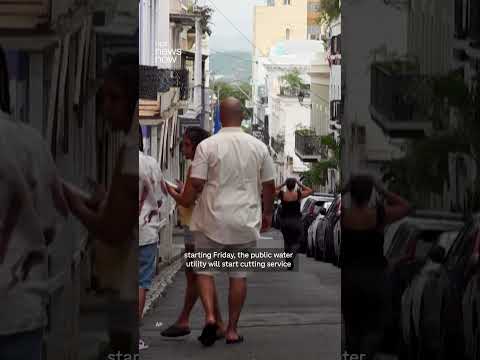 Load YouTube video
A large and growing number of Puerto Ricans believe the crisis has been deepened by the ineptness, negligence and underinvestment of the Puerto Rico Aqueduct and Sewer Authority (PRASA), which has struggled with leaks and breaks, including the North Coast Super-Aqueduct (NCSA) rupture earlier this summer. According to PRASA, up to 65% of the water it produces is lost through leaks before reaching homes.
This crisis should not be understood only as a natural disaster or a temporary failure of local administration. It is also a continuation of Puerto Rico’s colonial status and the contradiction of American citizenship without equal political power. Puerto Rico relies on federal resources and is subject to federal policies, yet its residents have no voting representation in Congress and cannot vote for president. The result is a political relationship in which Puerto Ricans live with the consequences of federal decisions while having limited power to shape those decisions or demand accountability when essential systems fail.
Puerto Ricans are not foreigners waiting for America to decide whether they belong. They are Americans living in a U.S. territory. Yet when disaster strikes, Puerto Rico has repeatedly had to fight for the urgent response other Americans take for granted.
We saw this after Hurricane Maria in 2017, which killed nearly 3,000 people and caused an estimated $90 billion in damage. Congress eventually approved tens of billions in recovery funds, but a federal watchdog later found officials slowed the release of billions more, citing concerns about the island’s fiscal management — a discriminatory practice not applied as harshly to hurricane-hit states including Florida, Missouri and Texas. A 2025 RAND Corporation analysis projected that, at the current pace, Puerto Rico’s recovery from the disasters of the past decade could stretch to 2051.
The roughly 3.2 million Americans who live on the island cannot vote for president, and Puerto Rico has no senators and no voting representative in the House. Its lone delegate, the resident commissioner, can introduce legislation and sit on committees, but has limited voting privileges. Statehood wouldn’t guarantee faster disaster recovery, but it would mean Puerto Ricans would be fully represented in Congress and could vote for the president who oversees federal disaster responses.
Citizenship without equal political voice is an uncomfortable concept. It should be.
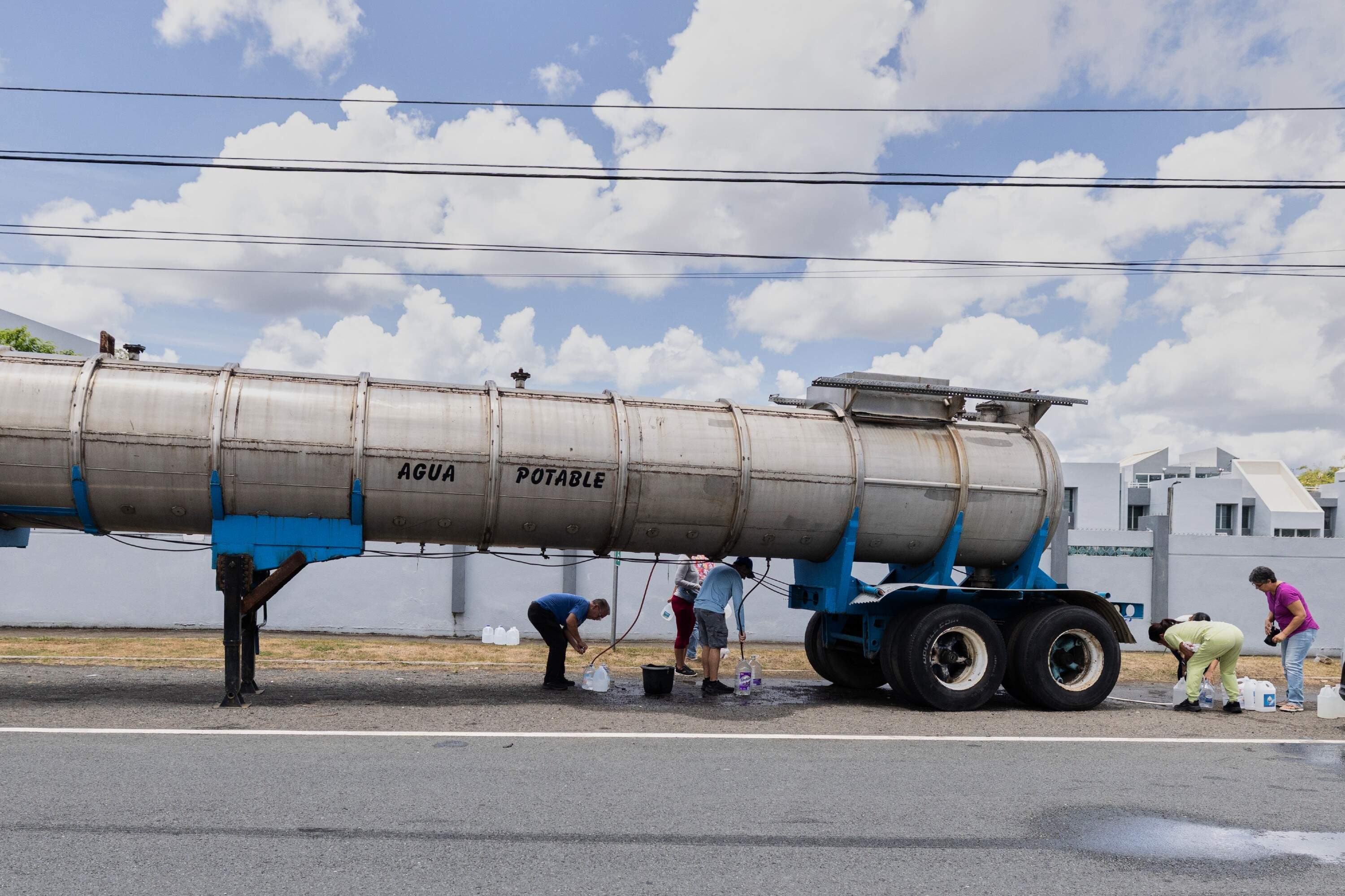 A water tanker truck marked “Agua Potable” is parked roadside as residents fill containers with water amid ongoing rationing, in San Juan, Puerto Rico, on Aug. 5. (Alejandro Granadillo)
Here in Boston, we see Puerto Rican communities claiming their place in American life every day. Events like Embrace Massó ¡Con Salsa! and Inquilinos Boricuas en Acción’s historic Festival Betances remind us that Puerto Rican culture is not peripheral to the American story. It is part of the story, carried by people who have long helped shape this city and this country.
But celebration is no substitute for representation.
Puerto Ricans are a noble people. They celebrate each other’s victories and share in each other’s pain and suffering. They love their families and country deeply. In spite of being tired of the day-to-day grind of surviving another blackout, hurricane, earthquake, water shortage, economic setback and political trauma, they remain resilient. As Puerto Rico confronts another crisis, we should ask: What does America owe its citizens when those citizens lack the political power other Americans enjoy?
The answer should not depend on whether a hurricane makes national headlines, whether reservoirs reach crisis levels or whether Puerto Rican communities happen to be celebrating in Boston this week.
Citizenship should mean more than legal status. It must be a promise that when Americans need their government, their government responds with urgency — regardless of the political status of the place they call home.
Puerto Ricans have been Americans for more than a century. It is time to stop treating their citizenship as though it comes with an asterisk.