
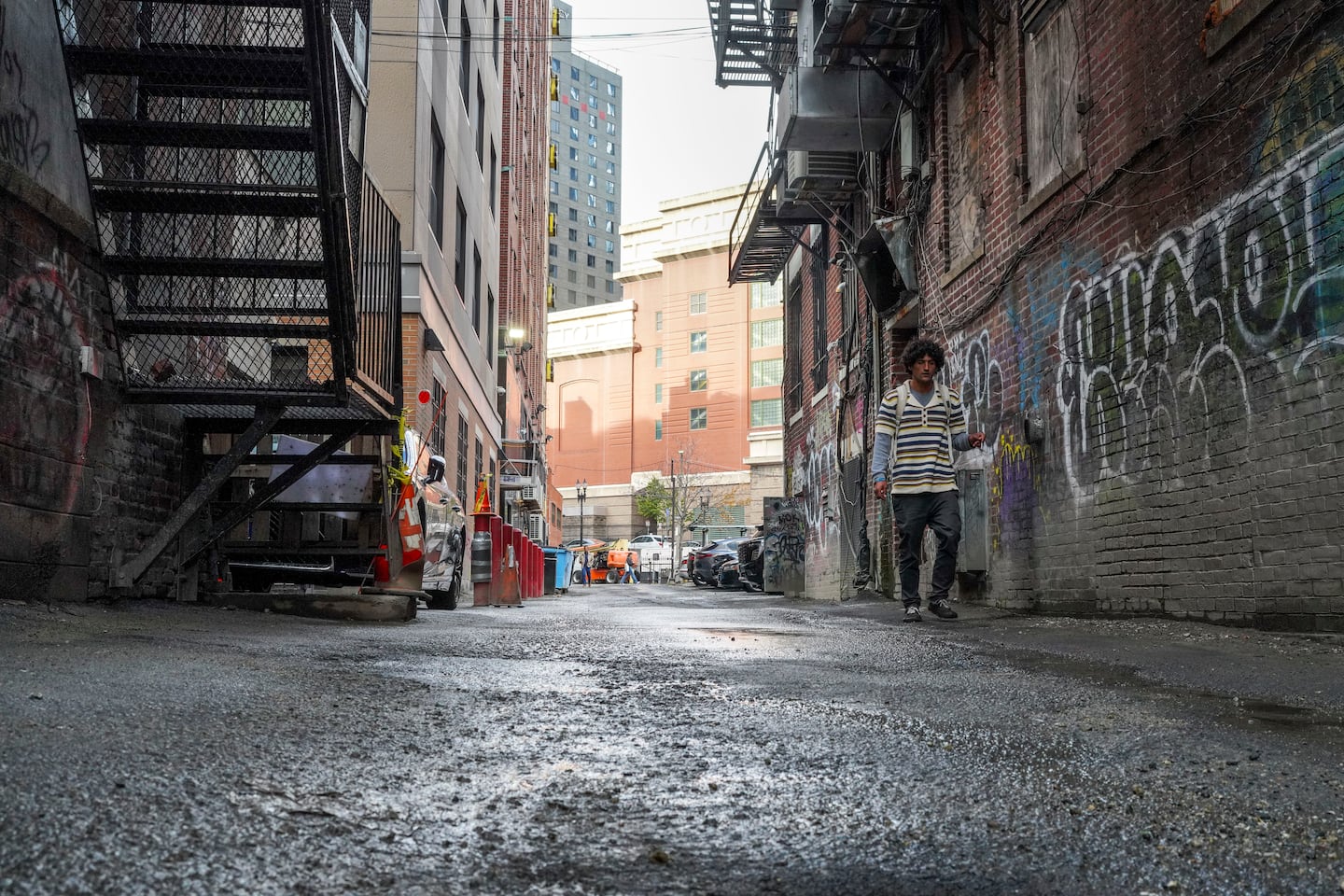
After a Boston Globe front-page story, crews cleared a storm drain in the alley of gravel, pumped water out, and then injected bacteria into the underground drainage pipe to eat away any restaurant grease build-up in the line, according to abutters. Now, the rain-fueled pool has shrunk exponentially.
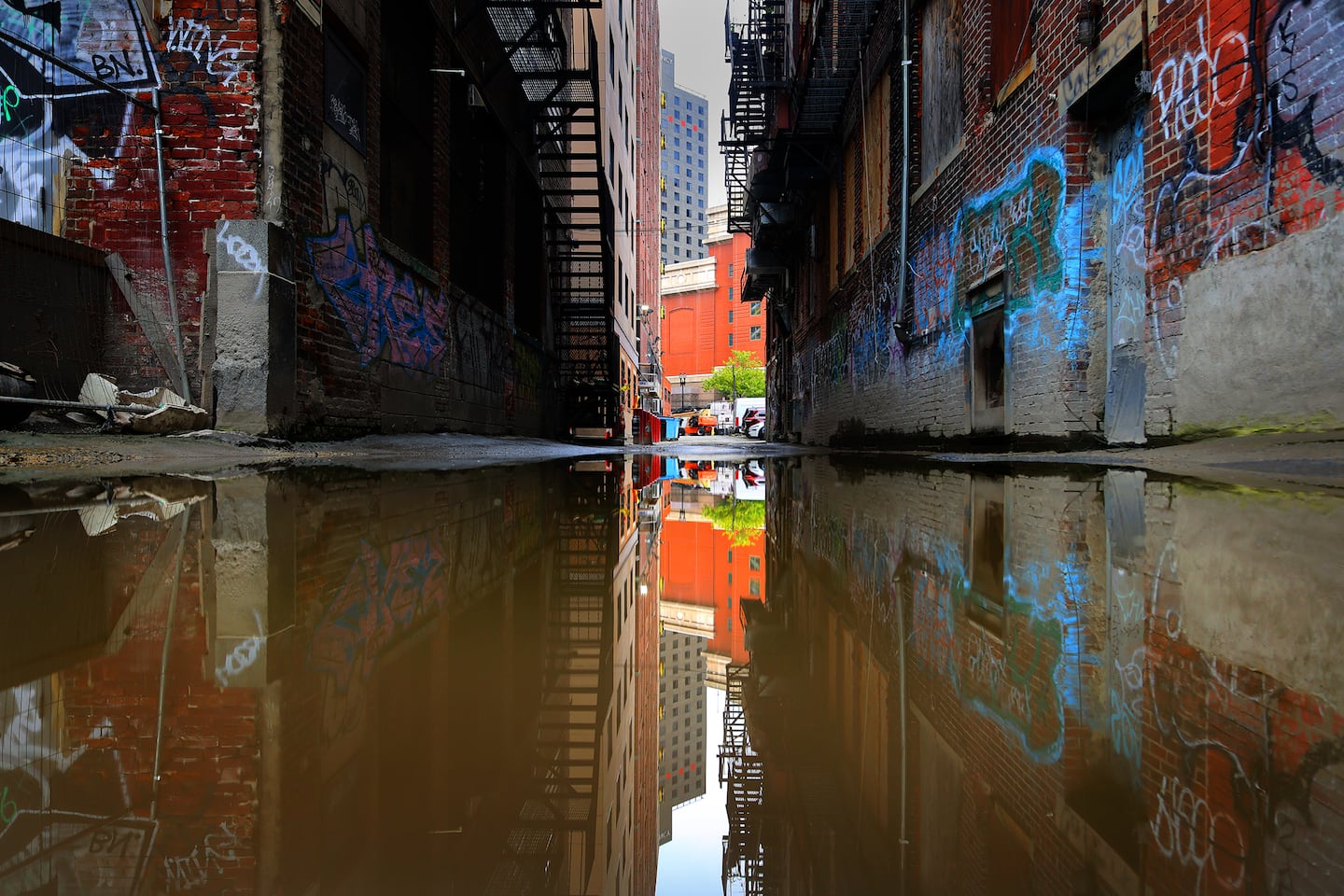 The puddle last month.Lane Turner/Globe Staff
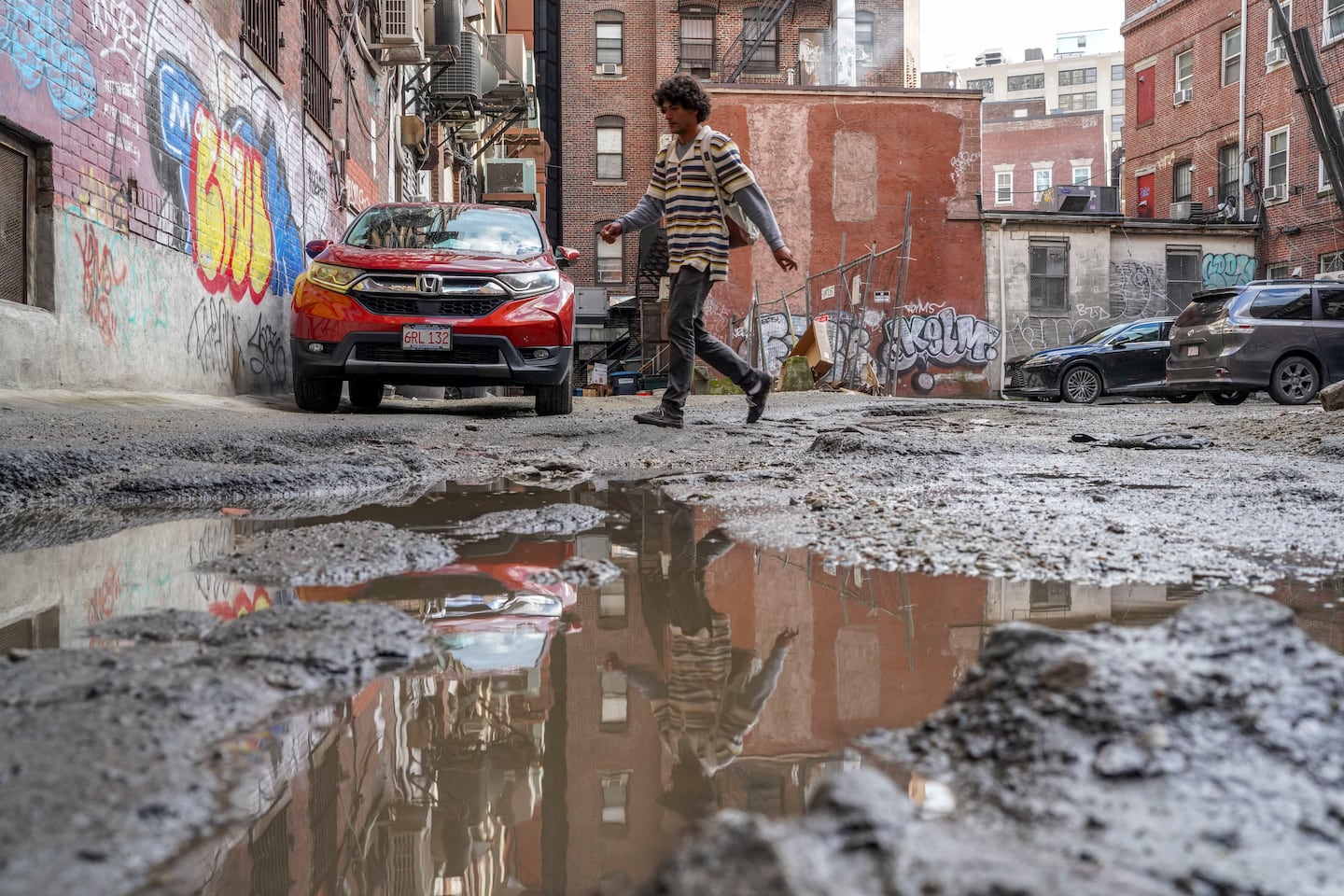 The puddle on October 14.Meleck Eldahshoury for The Boston Globe
It used to be 30 paces long, but after a recent rain it was maybe four. And Friday morning’s showers only filled small, disconnected divots in the pavement with water.
“They are so happy,” said Baolian Kuang, a community organizer in the neighborhood of residents who have complained of mosquitoes and mildew caused by the puddle for years. “They finally see something happen.”
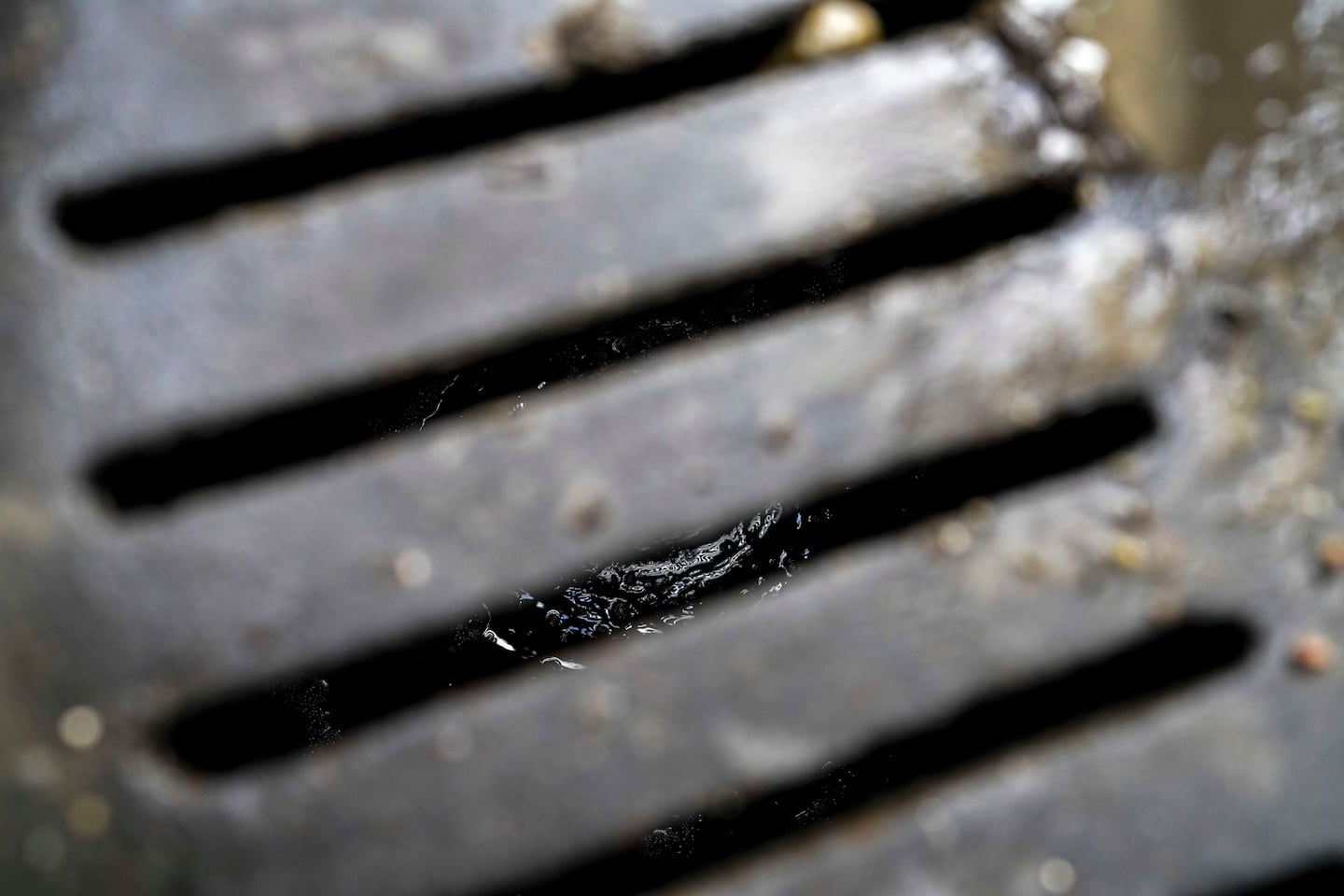 Water drained through a sewer grate after the city of Boston intervened.Meleck Eldahshoury for The Boston Globe
Jodi Wang, whose father Xin Wu Wang and runs Taiwan Cafe, which overlooks the alley, said no one did anything about the huge pool for years. In a neighborhood that has a lengthy history of political marginalization, it was another oversight to shoulder.
Now, residents are sharing photos and videos of workers in high-vis vests pumping mud and water out of the alley, revealing that, yes, a drain did exist at the bottom of the puddle, along with deeply rutted pavement.
“The City has taken steps to address those concerns in close coordination with residents and property owners, including multiple site visits by the Boston Water & Sewer Commission to clear debris from an existing catch basin and improve drainage,” said a city spokesperson in a statement.
The spokesperson continued, “While these efforts have provided important temporary relief, we will continue to partner with property owners on long-term solutions that improve quality of life for Chinatown residents and businesses, and we will enforce accountability for the neighborhood public health impacts when a private alley is not properly maintained.”
For some in the neighborhood, which is among Boston’s poorest, the puddle came to represent something much more than brownish-green water and clouds of mosquitoes in what is otherwise an urban canyon.
Chinatown has weathered neglect and sometimes outright hostility from government authorities for generations. Carved up by highway construction and saddled with a red light district decades ago, Chinatown is currently burdened by bad air quality and targeted by casinos. Temperature-wise, it’s the city’s hottest neighborhood.
The puddle swamped Ping On Alley, also known as Alley of Peace and Security, a historic spot where Boston’s first Chinese immigrants pitched their tents in 1875, according to a nearby plaque. Until the 1950s, a communal roasting oven, used by residents and restaurants alike, was located here.
Since the 19th century, the plaque informs passersby, “this site has been central to the lives of a growing Chinese community.”
Nowadays, Ping On Alley, which is a private way with public access, is more eyesore than historic tourist destination, with the huge puddle long anchoring the urban decay.
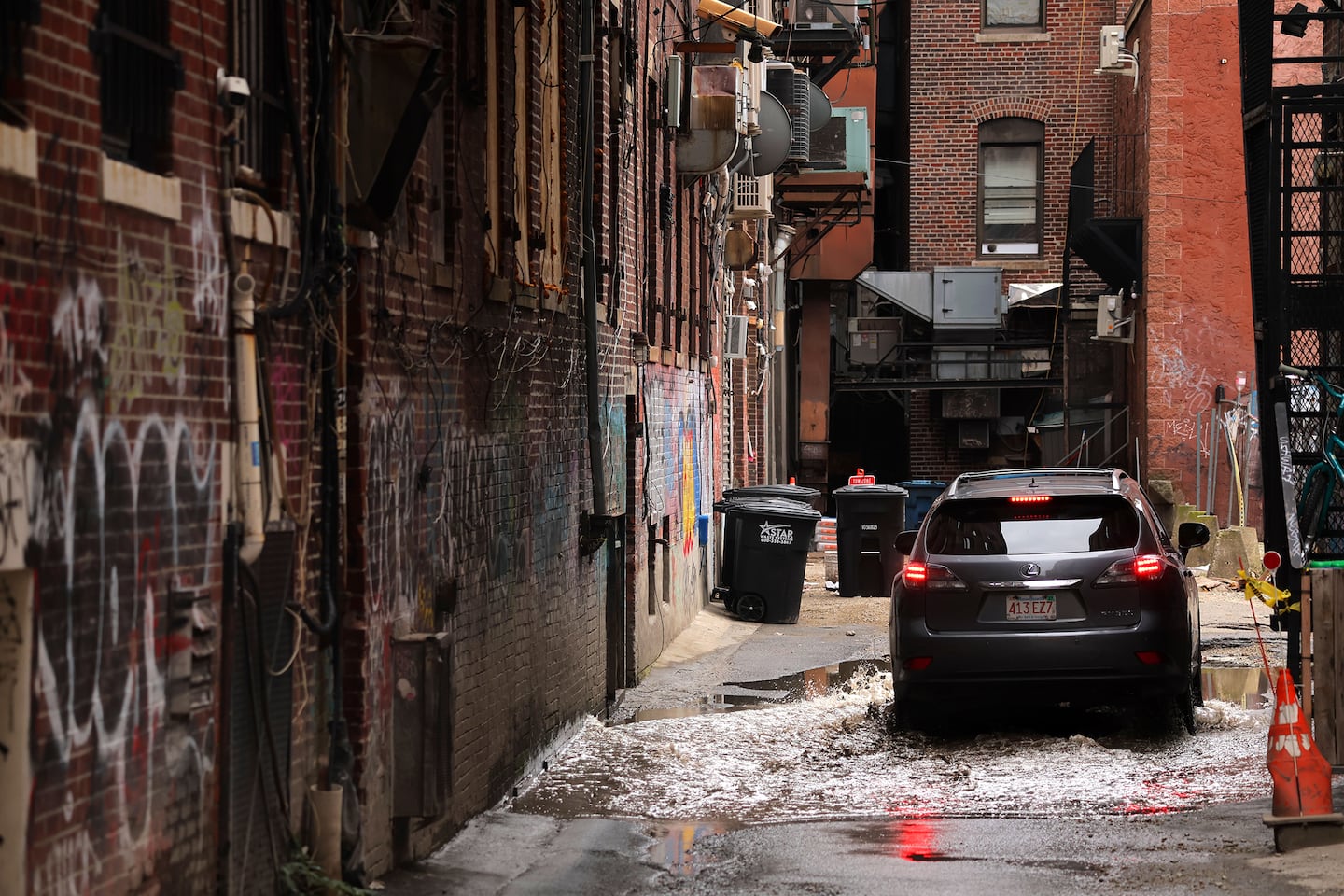 The puddle last month.Lane Turner/Globe Staff
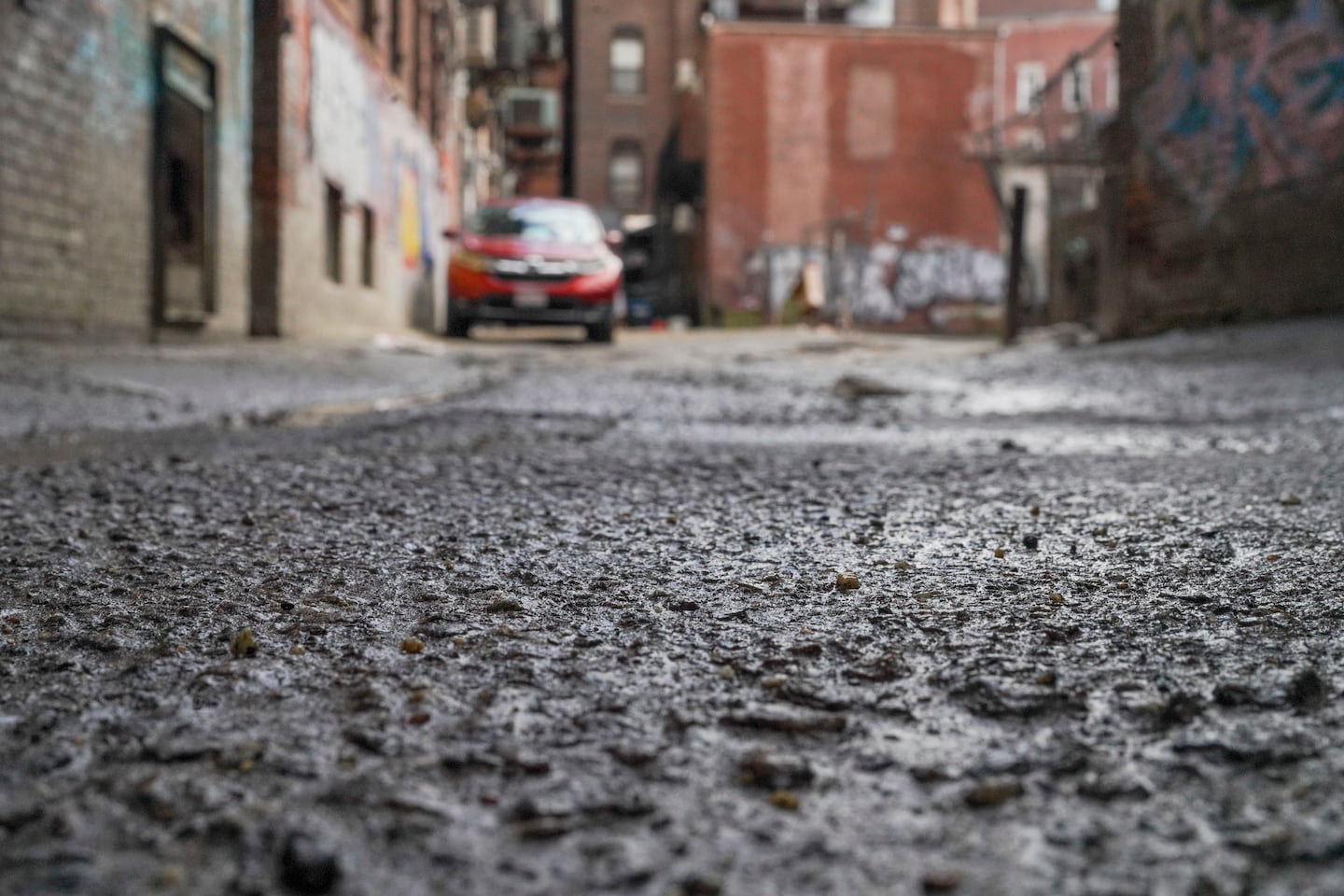 The alley on October 14. Meleck Eldahshoury for The Boston Globe
For years, Wang’s father would drive through the puddle each day.
“Any major rainstorm, it would be just be a big puddle again,” said Wang. “It’s just something that happens, you get used to it.”
But Wang is among those skeptical about whether a permanent solution has been found.
“The jury’s still out,” he said this week.
One abutter, Wilson Lee, agrees that the most recent unclogging of the drain, while welcome, is a temporary fix. There are at least a dozen abutters, said Lee, who are planning to hire a civil engineer to examine the alley’s drainage line.
Lee praised city authorities for bringing together the various abutters, a cooperative effort that he said was a difficult thing to pull off.
If there is damage to the drainage infrastructure, the group plans to fix it and split the cost of the job, he said.
“It’s obviously something we want to get done right,” he said.
Globe correspondent Bryan Hecht contributed to this report.
Danny McDonald can be reached at daniel.mcdonald@globe.com. Follow him @Danny__McDonald.