
Across Los Angeles County, human cases of West Nile virus have reached a 10-year high, data shows. And while the South Bay has typically been somewhat safe from the virus, health officials say, it represents around 25% of human cases – nearly all of which have progressed into a neuroinvasive disease.
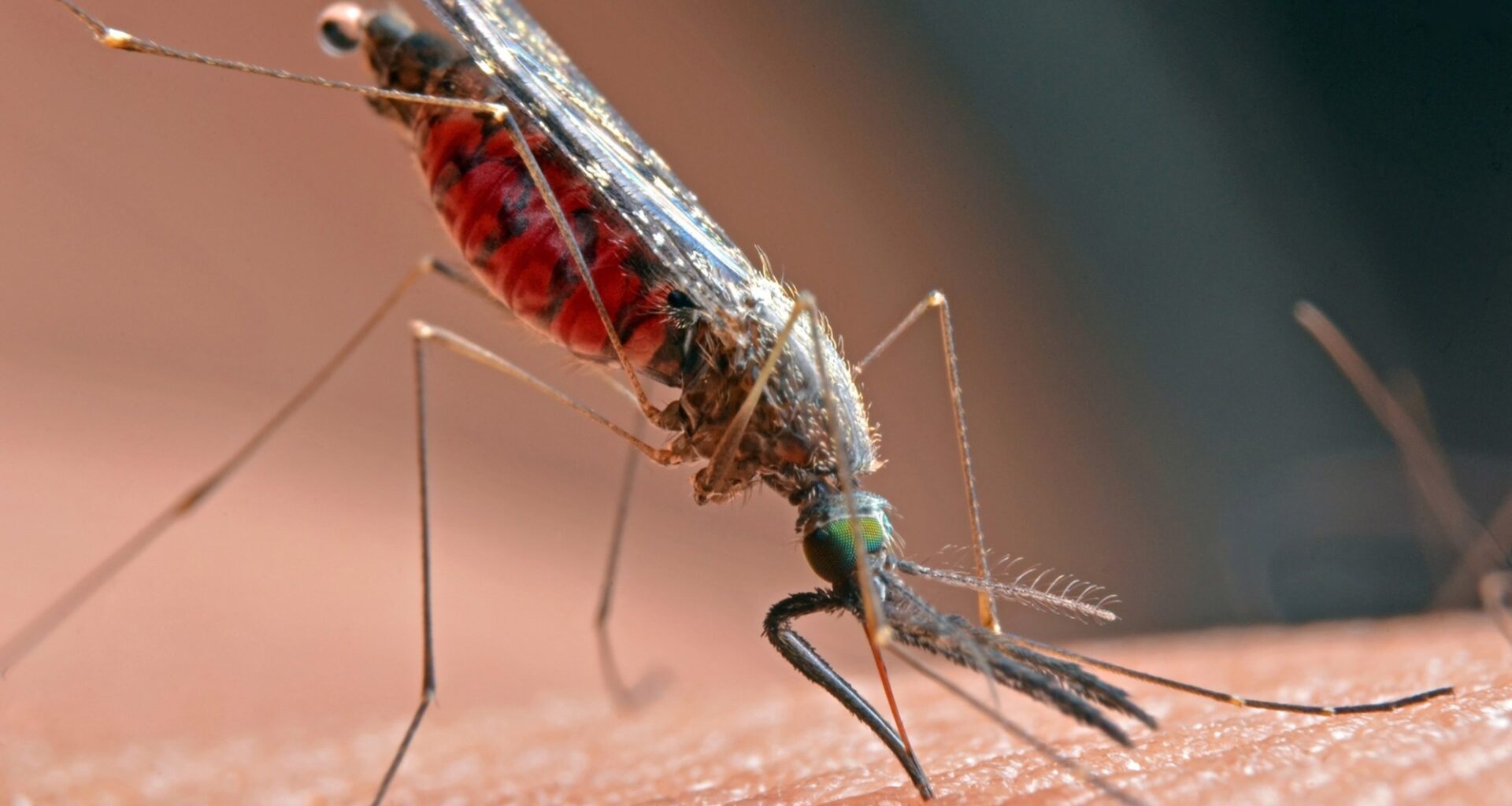
West Nile virus originates in wild birds and is transmitted through mosquitoes. So if a mosquito bites a bird who has West Nile virus, the mosquito will then spread the disease to the next warm-blooded creature, often humans.
In California, West Nile virus is endemic, meaning that for the past 23 years, at least one human has contracted the virus annually. Since the first detection in 2003, more than 8,000 people have contracted the virus, with more than 400 deaths, according to the Greater Los Angeles Vector Control District.
Around 80% of people who contract West Nile virus will be asymptomatic, according to the Centers for Disease Control and Prevention. The severity of symptoms of the remaining 20% can vary, with some having flu-like symptoms and others developing a severe illness, leading to meningitis or encephalitis, causing swelling of the brain and spinal cord. This can lead to brain damage, lifelong neurological delays, paralysis and even death.
Since many people do not develop symptoms, West Nile virus itself is not necessarily rare, said Los Angeles County West Vector Control District Executive Director Aaron Arugay. But for the few who develop the neuroinvasive illness, it is deadly. There is no vaccine or treatment for the virus, he added, only hospitalization to administer fluids and pain medication.
Because of how dangerous the virus is, said Susanne Kluh, general manager of the Greater Los Angeles Vector Control District, Southern California has taken a proactive approach to detecting and eliminating the presence of the disease. This is done primarily by targeting female culex mosquitoes — the type of mosquito that contracts West Nile virus — from around May to November, when the mosquitoes are the most active.
“It’s just really unusual for these coastal cities to have early activity and activity this high,” Kluh said, “because most years, they really don’t experience a lot of West Nile virus down there because the temperatures stay cool longer, the nights are cooler. But this has been our warmest winter on record and it has gone all the way to the coast.
Many residents in the South Bay may even know about the virus until it’s too late. That was the case for Jonathan Mason, whose father, Richard Mason – a Torrance resident – died of West Nile virus on Sept. 28. He was 88 years old.
“He was a healthy 88,” Mason said. “He was still driving and walking his dog every day.”
But what started as minor flu symptoms quickly turned into a major debilitating illness, ending in death within the week. Mason said he and his family were shocked when given the diagnosis of encephalitis as a result of West Nile virus.
“We’re all devastated,” he said. “Unfortunately, there’s not much they can do because there is no vaccination – just hoping they can fight the infection.”
Infectious disease specialist Dr. James McKinnell was one of the elder Mason’s doctors at Torrance Memorial Medical Center, and he said that giving a West Nile virus diagnosis to someone is one of the most “devastating” experiences he has ever had.
“This diagnosis for some patients is truly catastrophic,” he said. “I have to go and tell someone, ‘You’re never going to talk to your wife again. You had a conversation Monday and now it’s Friday, and I’m telling you I think it’s unlikely you’ll ever speak to her again.’ It’s heartbreaking.”
Even if someone with West Nile virus does not die, McKinnell added, many of those who have come to the hospital with symptoms will have lifelong neurological impacts, with some as severe as ending up bedridden in a long-term acute care facility for life.
While he has delivered a number of West Nile virus diagnoses before, McKinnel said, he has never had this many cases in one year throughout his entire 17-year career at TMMC.
TMMC, Kaiser Permanente South Bay Medical Center and Harbor-UCLA Medical Center, in fact, have all reported West Nile virus cases much higher than previous years. Providence Little Company of Mary Torrance and San Pedro declined to comment for this story.
“We have seen an increase this year,” said Gunter Rieg, chief of the department of infectious diseases at Kaiser Permanente South Bay Medical Center. “Kaiser Permanente South Bay Medical Center has treated 25 patients with West Nile virus infection to-date, compared with zero confirmed cases the last two years.”
All hospitals that responded reported at least one West Nile virus-related death as well. And there have been 10 deaths countywide, according to the most-recent report from the Los Angeles County Department of Public Health. This data, however, is usually outdated because of a lag in reporting, McKinnell said.
The report also said there have been 216 West Nile virus infections this year, compared to 22 last year. And 189 of those developed a neuroinvasive disease. Of those who have had confirmed infections, 161 have been male and 55 have been female. The median age is 64 years old, with patients ranging from 4 years old to 101.
It is more common for the elderly or immunocompromised to contract West Nile virus, McKinnell said, but he has seen multiple cases of young, otherwise healthy people becoming very ill. One example of this is 13-year-old Joseph Vazquez from Long Beach.
According to the GoFundMe page created by Vazquez’s family, he randomly began experiencing a full body rash and mild headache. This led to pain in his legs and a low-grade fever. After being hospitalized, he lost all mobility in his legs and control of his bowels.
He was soon diagnosed with transverse myelitis as a result of West Nile virus and was transported to the Los Angeles Children’s Hospital, where he is receiving care.
“Joseph is facing challenges no 13-year-old should ever have to face,” the GoFundMe page says. “He has lost the use of his legs, loss of bladder and bowel control, and is in excruciating nerve pain from the lower back down to his feet. Joseph’s experience has opened our family’s eyes to how quickly a mosquito-borne illness can become a serious medical emergency. We never imagined that something that began with what seemed like minor symptoms could change Joseph’s life so quickly.”
Mason also said he wants local, state and federal governments to increase awareness and prevention of the virus. Furthermore, he wants to see increased medical research and education on how to treat West Nile virus because while there is no vaccine for humans, there are for horses.
“For pharma, unless they can make a lot of money, it’s not important to them,” Mason said. “To hear that there’s a vaccine for horses, but not for humans is really disturbing.”
Because so few people actually develop any symptoms, McKinnell said, it is hard to get the funding for clinical trials and advanced medical research.
“There’s actually been seven different vaccines that have been tried for West Nile virus,” he said. “They all had some promising candidates, but one of the challenges is actually getting them into the market. It’s one of those things where if the disease is relatively rare, it’s hard for a pharmaceutical company to invest money to actually go through and develop with that vaccine.”
There have also been some “promising” studies into treatments using immunoglobulins and steroids, McKinnell said, but few have been able to move forward past the beginning stages.
Multiple clinical trials have noted in their conclusions that these have been and could be beneficial, but more research needs to be done. There is one clinical trial currently being done in Tel Aviv, but all U.S. clinical trials have been discontinued, according to the National Institute of Health.
“There are limited data on the use of various therapeutics to treat patients with WNV disease, such as standard and hyperimmune polyclonal immune globulin, monoclonal immune globulin, interferon, ribavirin and corticosteroids,” the CDC said in a written statement. “Most of the published data involve case reports and case series describing the use of different products in patients with WNV disease, with various dosing, timing of administration and patient populations.
“Several products have been studied in controlled clinical trials, but the trials were often underpowered and the products showed no benefit,” the CDC added. “Larger, prospective, controlled clinical trials are needed to assess efficacy and the impact of factors such as dosing, timing and patient populations who might benefit from certain treatments.”
South Bay hospitals, meanwhile, need to be more aware of the possibility of West Nile virus because oftentimes, it goes undiagnosed and that can make it seem as though there is no need for investments in treatments and vaccines, McKinnell said.
“We have a massive team of infectious disease doctors here at Torrance Memorial,” he said. “We have the capacity to test for West Nile. It’s not a standard diagnosis and I guarantee that there are hundreds, if not thousands, of cases that are missed because they don’t get access to an infectious disease doctor to make the diagnosis.”
West Nile virus testing is not routine at most hospitals, so the treating doctor would have to recognize the symptoms and refer the patient to an infectious disease doctor who would then have to order the test.
“It’s really important that our emergency room staff is aware of this and identifying it because it’s a fairly rare thing for us to have to deal with this in the South Bay region,” McKinnell said, adding that recently he diagnosed a patient whose family was actually able to find the source of breeding mosquitos and eradicate the issue.
Because there is no vaccine or treatment, all South Bay public health officials and vector control agencies are urging residents to use preventative measures.
“West Nile virus can cause serious illness, and the number of severe cases and deaths we are seeing this year is concerning,” Los Angeles County Health Officer Muntu Davis said in a written statement. “We are still within the peak period for West Nile virus transmission, so it is important that everyone take steps now to protect themselves and their families. These include using insect repellent, eliminating standing water where mosquitoes breed, and making sure windows and doors have tight-fitting screens without holes or tears. Small actions like these can make a big difference in preventing illness.”
Harbor-UCLA said in an email that many patients the hospital treated this year had spent significant time outdoors without using mosquito prevention.
“Prevention is key,” the email said. “Because West Nile virus is spread by mosquitoes, people who spend time outdoors — especially older adults and those with weakened immune systems — should take steps to prevent mosquito bites. This includes wearing long sleeves and long pants, and using mosquito repellent on exposed skin.”
Since treatment of West Nile virus and subsequent neuroinvasive issues is more beneficial early on, Rieg added, people should go to the hospital if they develop a fever, headache, body aches or a rash after being bitten by a mosquito, especially if the symptoms are worsening and causing severe headaches, a stiff neck, confusion or muscle weakness.
South Bay cities that have reported West Nile virus infections this year include Carson, Compton, Gardena, Hawthorne, Hermosa Beach, Lawndale, Lomita, Rancho Palos Verdes, Redondo Beach, Rolling Hills Estates and Torrance.
More information on West Nile Virus, how to prevent it and where it is present in California can be found at westnile.ca.gov.