
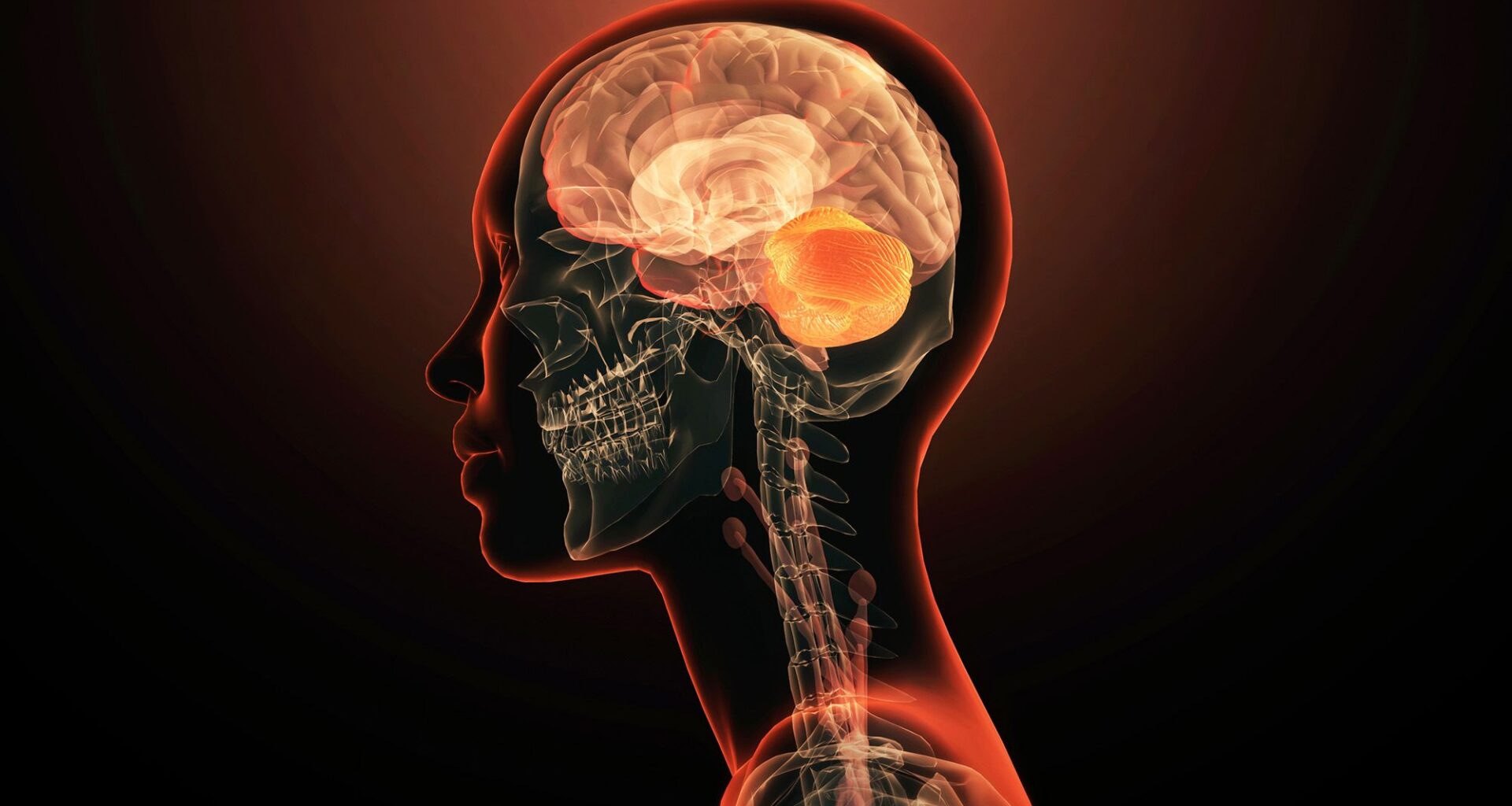
Recent research challenges a long-standing idea about how the brain develops: Rather than arising from a single source, the brain may emerge from two distinct populations of cells, the study finds.
“The brain appears as one organ,” said study co-author Kyle Loh, an associate professor of developmental biology at Stanford University. “However, we discovered that the front part of the brain and the back part of the brain come from different sources, which are pushed together to create the appearance of a single organ,” Loh told Live Science in an email.
Latest Videos FromLive Science
Two developmental journeys
You may like
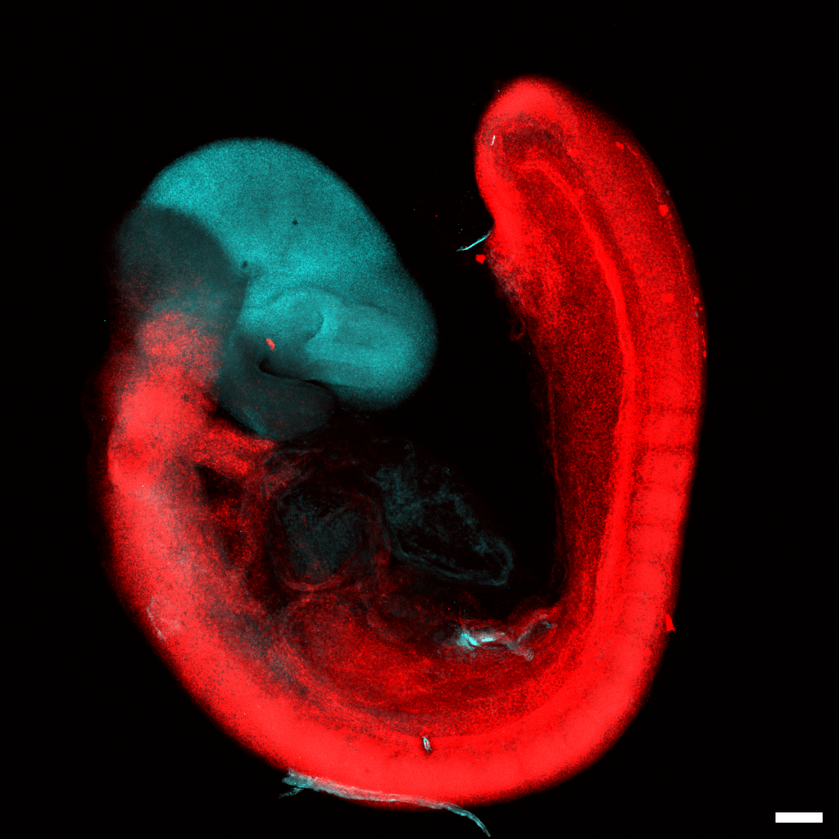
This photograph shows a 9.5-day-old mouse embryo and depicts the two separate developmental origins of the brain. The forebrain and part of the midbrain (blue) express the Otx2 gene, while the hindbrain and the rest of the midbrain (red) express Gbx2. The red cell population also extends into the spinal cord.
(Image credit: Stanford Medicine)
What to read next
Why it matters
Jokhai, R. T., Dundes, C. E., Ahsan, H. S., Kang, R. S., Salomon-Shulman, R. E. A., Rajan, A., Kim, Y. S., Stanton, L. J., Xu, C., Do, S., McDonald, B. D., López, J. M. A., Urrutia, H. A., Greenfeld, H., Wong, A., Qu, Y., Petkovic, A. S., Miao, Y., Garcia, K. C., . . . Loh, K. M. (2026). Two parallel neural ectoderm progenitors contribute to the developing brain. Nature Neuroscience. https://doi.org/10.1038/s41593-026-02433-7