
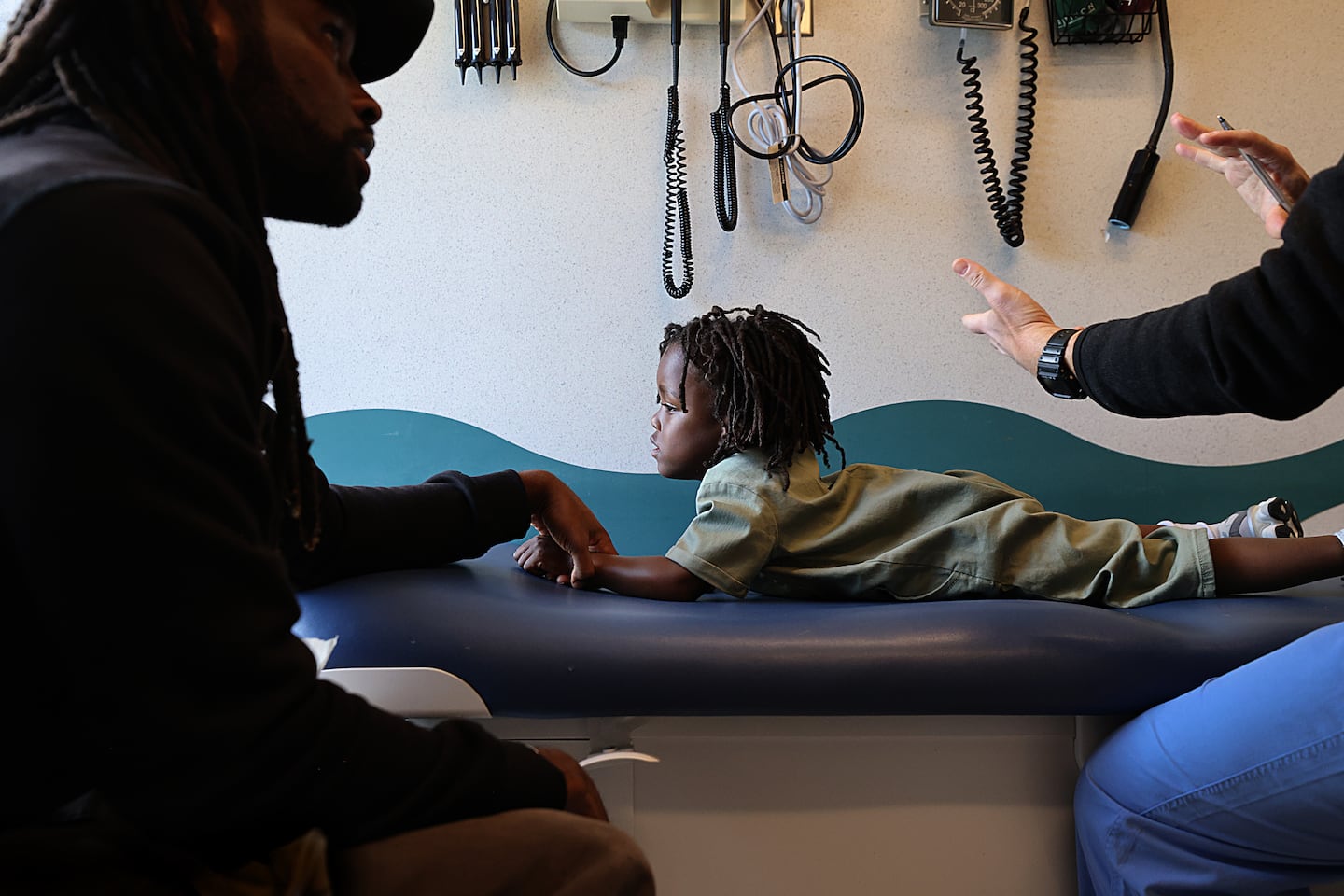
To get the operation, however, the trio stayed in the city for months, bouncing between hotels, maxing out credit cards, and racking up debt. The procedure in May 2023 occurred weeks after the family arrived, and they stayed in Boston until that September as Levi recovered.
They are among the tens of thousands of families that come to Boston each year, seeking life-saving care. These families often stay for weeks or months, hunting to find affordable rooms in one of the country’s most expensive cities.
 Levi Johnson-Griswell stood outside of Boston Children’s Cerebral Palsy and Spasticity Center.Suzanne Kreiter/Globe Staff
Together, organizations in Boston offer more than 140 low-cost or free apartments or bedrooms set aside for patients. But the beds are often full, as added capacity at Boston hospitals, increasingly specialized procedures, and rural hospital closures have pushed more patients to travel for treatment. Now, several organizations are working to expand their housing and catch up with demand.
Griswell and Johnson navigated waitlists, hotels, and finding a safe space for Levi’s weakened immune system, spending more than $20,000 on lodging alone. Then, they got connected with Hospitality Homes, which matches patients with host families or donated apartments. The nonprofit has seen more than a doubling of processed applications for housing from 2015 to 2024.
Other groups that provide housing, including Boston Children’s Hospital and Ronald McDonald House New England, are expanding their medical housing footprint to keep up with the need.
“We’re getting more applications than we have room to fill at any given time,” said Miranda Day, senior director of family and volunteer services at Children’s, who oversees housing. “People know that we are cutting-edge and have answers to some of the most unique diagnoses, and they want the best care.”
 Levi Johnson-Griswell and his parents waited for their appointment.Suzanne Kreiter/Globe Staff
At Children’s, one caregiver can sleep in the patient’s hospital room. The hospital also provides low-cost housing, a 22-bedroom house called the Yawkey Family Inn, and leases 29 apartments. This year, Children’s fulfilled more than 3,100 reservations.
But there were 645 applications Children’s couldn’t accommodate. To offset that need, Children’s is now building a second property with an additional 45 rooms, hoping to open by 2029.
The number of out-of-state patients traveling to Children’s increased to 26,346 in 2026, up from 24,355 patients in 2019, hospital data show. At Dana-Farber Cancer Institute, up to 28 percent of US patients come from outside Massachusetts, a spokesperson said.
Boston has long been a mecca for health care, a role thrust into the spotlight this month after the fatal crash of a medical jet off Nantucket. Hospitals and nonprofits have worked for decades to provide patients and families places to stay, including discounted hotel rooms. But that network is facing rising pressure, in part because of advances in areas including rare diseases and cancer that are only accessible in a handful of centers.
“More and more patients need to travel for innovation,” said Dr. Shanthi Sivendran, interim chief patient officer at the American Cancer Society. Its 45-room Hope Lodge in Jamaica Plain is one of the organization’s busiest, with a month-long waitlist. It housed some 860 patients in 2025, saving them an estimated $5.4 million.
It’s not just patients from afar who need housing near Boston’s hospitals.
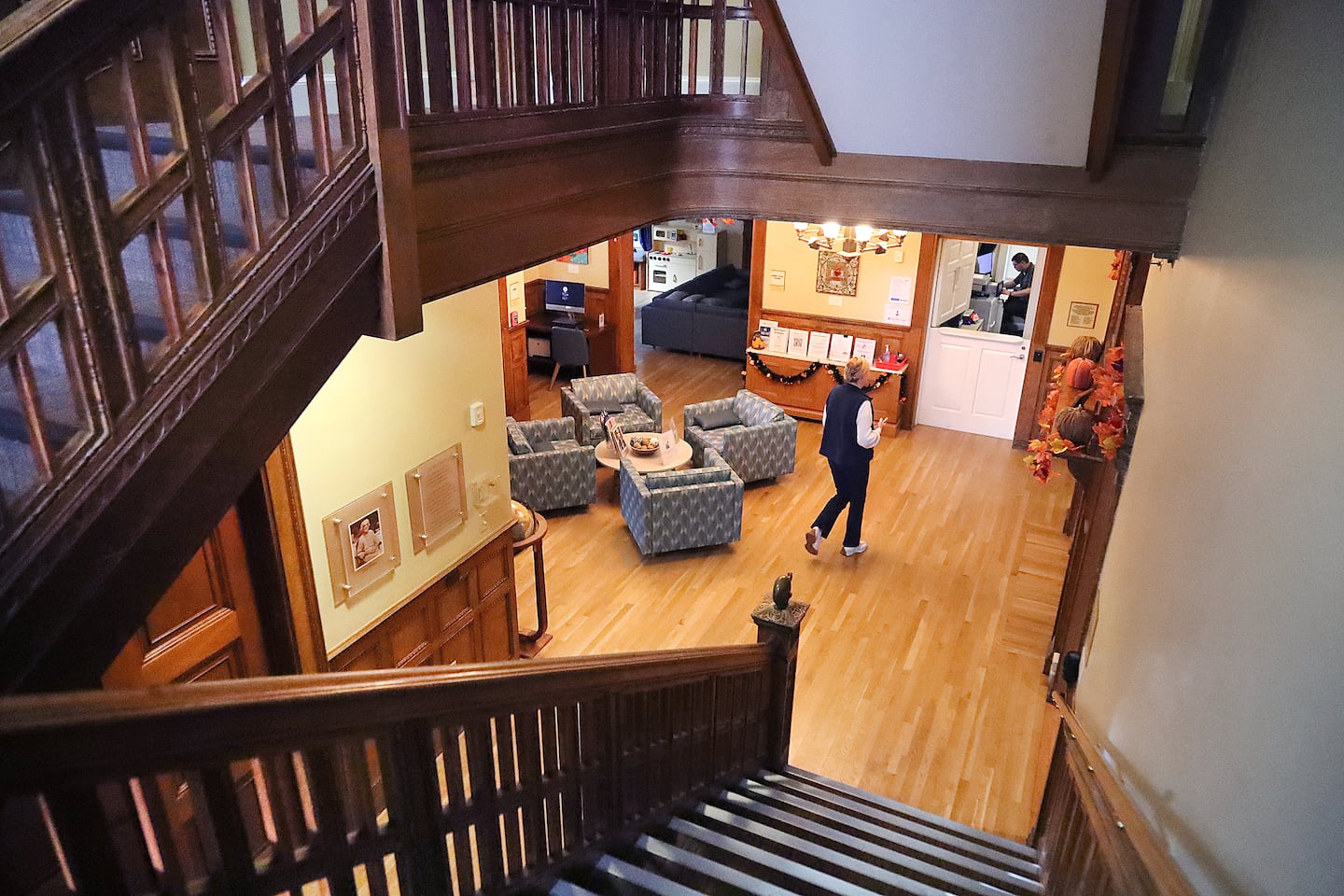 The Yawkey Family Inn accommodates families of patients who need a place to stay during medical visits.John Tlumacki/Globe Staff
Elisa Elvira’s doctors near her home in New Bedford had no experience treating her rare cancer near her abdomen. They sent her to Dana-Farber Cancer Institute, about an hour’s drive without traffic. But there usually was traffic, and Elvira, 47, needed to be there 12 hours at a time, multiple days in a row, every few weeks.
“I was so tired from the chemo,” she said. “It wasn’t practical for me and my wife to drive at night and then wake up early and go back.”
The cancer center set Elvira up with a discounted rate, $45, at the Homewood Suites and the Inn at Longwood Medical. Once this past August, the discounted rooms were full, and Elvira booked a $300 hotel. But most of the time, there was room.
“We were lucky,” she said. “It was a really big help.”
Health care is getting harder to find outside metropolitan hubs. More than 145 hospitals in rural counties closed or stopped providing acute inpatient care between 2005 and 2023, federal data show.
“What that is doing is creating more pressure on these magnet hospitals in the larger cities to take patients,” said Lauren Hoops-Schmieg, the chief executive of Ronald McDonald House New England, which houses pediatric patients and their families.
The 10 apartments at Ronald McDonald House in Boston are always full, with a waiting list of around 100 families. The organization determined that Boston needs more than 200 rooms for pediatric families. In May, it started preparing for a fund-raising campaign to build a new house featuring up to 100 rooms, aimed at accommodating more than 2,000 families each year.
Housing isn’t the only hurdle for traveling patients and their families. Many people often have to take a leave of absence from work. Once they find a place to stay, they must contend with groceries, parking, and Boston’s unwieldy layout.
For Levi’s parents, the journey to Boston started with hydrocephalus. Characterized by fluid pockets in the brain, the life-threatening condition made the infant irritable, sleepier, and unable to control his eye movements. The doctors monitored Levi to see whether he would need an endoscopic brain surgery to reroute the fluid.
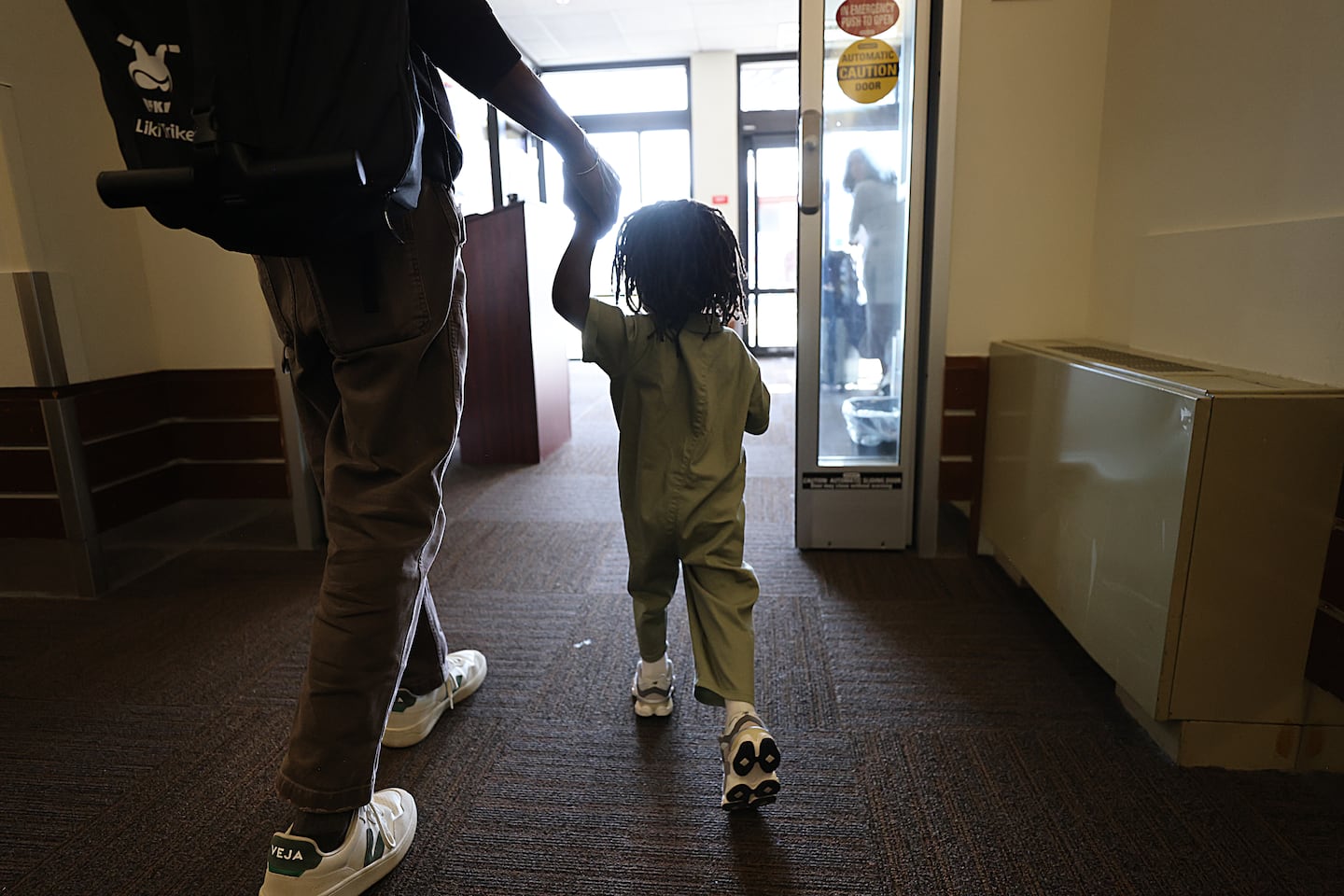 Levi Johnson-Griswell left Boston Children’s Cerebral Palsy and Spasticity Center after his appointment.Suzanne Kreiter/Globe Staff
Hydrocephalus is common for neurosurgeons to see and its treatment can be straightforward, said Dr. Katie Fehnel, a Children’s neurosurgeon and one of Levi’s doctors. But Levi’s condition was related to a serious infection that had left behind scar tissue, significantly complicating the operation.
“There’s probably a handful of places that would feel comfortable doing this,” Fehnel said.
Ronald McDonald House put the family on their waitlist. The trio tried Children’s Yawkey Family Inn but were anxious about sharing a bathroom with others, since Levi was immunocompromised. That left them hopping from hotel to hotel, constantly searching for the lowest price.
That May, Levi had his surgery. He started showing progress.
“It was heart-tugging, the first time he focused his eyes on us,” Johnson, 35, said.
As Levi recovered, the family found Hospitality Homes, which connected them with donated apartments and host families offering spare rooms. Sometimes, the families would take them out to dinner, or their kids would play together. Some became close friends.
That first year, the family drove more than 9,000 miles between North Carolina and Massachusetts. They are still paying off the credit card debt.
Now, at 3, Levi loves running around the playground and riding his bike. At their local hospital, the couple was told Levi would never walk. He has some developmental delays, but he’s walking, talking, and gaining strength. He still goes to Boston a few times a year for care.
“We aren’t in a hospitable area to a medically complex child,” Griswell said. “We don’t have this at home.”
Sometimes, Johnson connects with other families in North Carolina trying to find care for their own children.
If they have the resources to travel, she recommends Boston.