
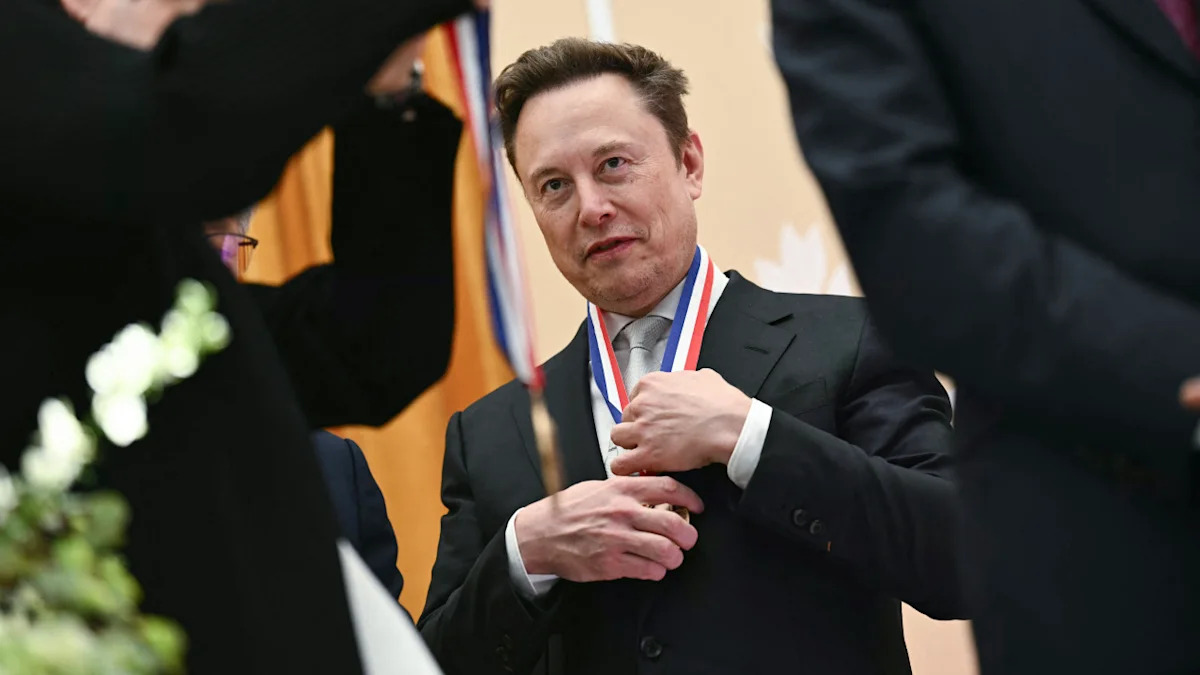
 Kent NISHIMURA/AFP via Getty Images
U.S. Department of the Treasury’s fiscal year-end report for 2026 showed that the federal budget deficit continues to widen, and that interest costs on the national debt have surpassed $1 trillion for the first time.
The rising national debt — which surpassed $40 trillion in August — and the climbing cost of its interest, have some sounding alarms, including the world’s richest man.
Must Read
Back in February, Elon Musk, speaking on the Dwarkesh Podcast, said that America was “1,000% going to go bankrupt as a country and fail as a country, without AI and robots,” adding that, “Nothing else will solve the national debt.”
While Musk is obviously biased, since he happens to have a massive interest in those technologies that he says will save America, he’s not alone in claiming the national debt could be pushing the country to a tipping point.
Cost of interest hits new high
According to the latest Treasury data, the federal budget deficit for 2026 hit $1.99 trillion, up 12% from 2025 when it sat at $1.78 trillion.
The data show that spending on net interest on the national debt for 2026 was $1.05 trillion, up from $970 billion in 2025.
That put spending on net interest behind only Social Security ($1.67 trillion) and Medicare ($1.07 trillion). The net interest surpassed spending on national defense ($956 billion).
According to Bloomberg, the debt interest spending is a record high, and could mean the risk of “a snowballing of borrowing that could leave the country more vulnerable to economic shocks.”
The Congressional Budget Office reported that the 11% increase in spending on the debt interest compared to 2025 was due to higher long-term interest rates.
The average interest rate for gross interest costs sits at 3.53%, which has climbed steadily since 2021, when it sat at 1.6%. A report from Fortune highlighted that the interest rate is “more than double the rate in 2021, just before the Federal Reserve embarked on an aggressive tightening cycle to rein in inflation.”
The Fortune report also noted that the increase in net interest payments, which hit 8%, outpaced “increases in total spending, revenue and GDP. In fact, it exceeds real GDP growth of about 2% as well as nominal GDP growth of about 6%.”
Debt apocalypse, now?
Hedge fund founder Ray Dalio has previously said that the U.S. is nearing a “death debt spiral.”
In a recent post on X, Dalio reiterated the scenario: “The typical debt squeeze dynamic that leads to overindebted countries ‘going broke’ occurs when more debt leads to higher yields, which leads to higher interest expense, which leads to larger deficits, which leads to more debt, etc.
“When debt levels and interest rates go up together, it is a double debt service whammy. The increased debt service costs lead to further decreases of demand for the debt; credit market players call that a ‘death spiral.'”
Dalio continued: “It certainly is a killer for the debtor encountering it. That is happening now.”
But when it comes to Musk’s claim that AI is a panacea, Dalio isn’t so sure.
In a separate X post, Dalio said, “Pay attention to the concentration that is existing in one thing right now: AI. Whether or not you think AI is in a bubble, you have to recognize the amount of concentration risk. There is a lot stuck on one thing for the economy and the markets.”
Not all analysts, however, saw the Treasury data as an apocalyptic warning.
Bloomberg reported that Gennadiy Goldberg, head of U.S. interest rates strategy for TD Securities, noted that the nominal GDP growth rate is higher than U.S. Treasury yields.
Goldberg wrote in a recent note, “A fiscal apocalypse is not upon us just yet,” Bloomberg reported.
What To Read Next
Join 250,000+ readers and get Moneywise’s best stories and exclusive interviews first — clear insights curated and delivered weekly. Subscribe now.
This article originally appeared on Moneywise.com under the title: US debt interest hits record $1.05 trillion in 2026, surpassing the $956-billion military budget
This article provides information only and should not be construed as advice. It is provided without warranty of any kind.