
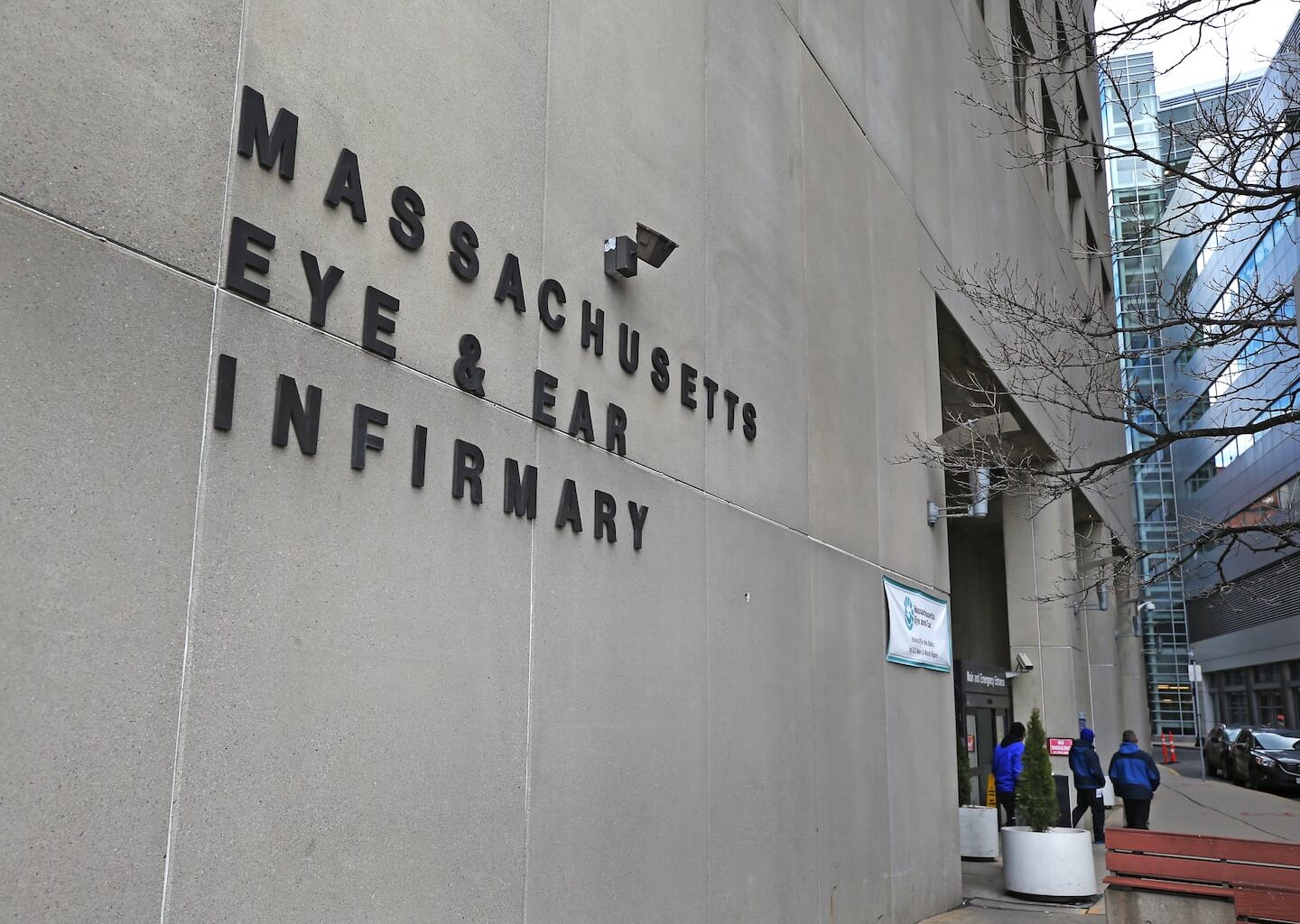
Among those affected are some pediatricians at Mass Eye and Ear, although they have been offered positions elsewhere in the system, MGB said.
“To strengthen our long-term financial sustainability, Mass General Brigham is continuing to make changes in how we operate,” the health system said in a statement. “These are difficult but necessary decisions to ensure we can continue providing exceptional care for patients, advancing research and education, and investing in the people and programs that are central to our mission.”
The cost-cutting comes about three years into the merging of clinical departments at MGB’s two flagship hospitals, Massachusetts General Hospital and Brigham and Women’s Hospital. MGB, the state’s largest health care system and private employer, consists of more than a dozen hospitals, including specialty hospitals such as Mass Eye and Ear and McLean Hospital.
This week, Dr. Phoebe Yager, who heads pediatric critical care at Mass General for Children, sent a memo to employees saying that Mass Eye and Ear will end general pediatric inpatient admissions to its 10th-floor unit by Jan. 1.
Mass Eye and Ear’s general pediatric inpatients will be treated at Newton-Wellesley Hospital, Wentworth-Douglass Hospital, Massachusetts General Hospital, and other Mass General Brigham for Children locations, Yager wrote.
She added that the health system has “identified clinical opportunities across [Mass General Brigham for Children facilities] for these physicians” affected by the move to remain at MGB and “we hope these talented physicians will consider these opportunities.”
The problem, says Dr. Anne Klibanski, the health system’s chief executive, is MGB’s small operating margin. Operating margin refers to the money made from MGB’s core work taking care of patients, and does not include income derived from investments, which are substantial. Its investment office says it oversees “one of the largest pools of institutional capital in the Boston area” and drives financial returns that support research, care, and capital projects.
Mass General Brigham reported a total margin of $2.38 billion in fiscal 2025, including income from its investments. Executives have previously said the health system should not rely on that income to sustain operations.
In fiscal 2025, MGB reported operating income of $59 million, a 0.3 percent operating margin.
That’s lower than its peers nationwide, according to MGB. The health system compares itself to more than a dozen other academic medical centers, including Mayo Clinic, Cleveland Clinic, and Johns Hopkins. Those other institutions’ median operating margin was roughly 2 percent since 2024, according to an MGB chart obtained by the Globe.
Meanwhile, since 2024, MGB’s operating margin has fallen from 1 percent to below zero, before rising in the second half of 2025.
In August, several MGB leaders, including Dr. David F.M. Brown, president of the health system’s academic medical centers, sent a memo to employees explaining why there is “so much focus on operating margin.”
The leaders said that although the health care system’s operating revenue totaled $22.8 billion, nearly all of that went to cover the cost of patient care and research. For many years, those expenses — about 65 percent of which are labor-related — have grown faster than the revenue MGB receives for providing care, the memo said.
To have “healthy” finances, MGB should have an operating margin of about 1.5 percent, or $300 million, the leaders wrote.
“An inadequate operating margin does not provide sufficient funds for us to reinvest in the assets we need to deliver high quality and safe care — like new monitoring devices, replacing aging equipment and performing basic maintenance in our clinics, units, and patient rooms,” they added.
Klibanski told MGB leaders in an Oct. 7 memo that the organization’s focus over the next two years would be to reduce duplication, improve efficiency, and strengthen patient outcomes.
The layoffs disclosed on Thursday come less than two years after MGB slashed jobs in February and March of 2025. The health system cut about 1,500 positions in two waves.
It’s unclear whether the latest cuts will be as extensive. Pastore said that will depend on whether departments find savings outside of personnel costs.
“We are reviewing how and where services are delivered across Mass General Brigham,” she said. “That may include consolidating, redesigning, relocating, or, in some cases, discontinuing programs.”
David E. Williams, president of Health Business Group, a Boston management consulting firm, said he wasn’t surprised by the news of layoffs. For quite some time, he said, MGB’s operating margin has essentially been zero. While some clinical departments are big money-makers — he cited oncology, orthopedic surgery, and cardiac surgery — other departments lose money, including pediatrics, mental health, and endocrinology. He speculated that the latter departments might be the most vulnerable for layoffs.
Adding to the pressure on MGB, Williams said, were such Trump administration initiatives as the One Big Beautiful Bill Act. In January, new Medicaid work requirements take effect, which hospitals predict will increase the number of uninsured patients, ballooning their costs. Medicaid is the government insurer for millions of poor and disabled people nationwide.
“That zero margin could easily become a negative margin unless they’re proactive about it,” said Williams. “Their top line will decrease because instead of getting reimbursement from a private insurer or Medicaid, they’re going to be left with a self-paid patient who won’t be able to pay the bill and will become a charity patient.”
MGB has emphasized its need to make responsible financial decisions during ongoing contract negotiations with the nurses union at Brigham.
Nearly 4,000 nurses at the hospital represented by the Massachusetts Nurses Association pushed for cost-of-living adjustments in addition to 5 percent annual salary increases until they reach two decades of service. That was untenable, MGB said.
The union had scheduled a strike for Oct. 14, their second planned walkout this year. That was postponed, however, after a bargaining session where the hospital made its final offer, which did not include across-the-board pay increases.
Union members are voting on Thursday and Friday on whether to accept the offer.
MGB’s lack of details regarding the latest cuts troubled Alan Sager, a professor of health law, policy and management at Boston University.
“The layoffs cry out for explanation,” Sager said. “Simply saying our margins are unsatisfactory or our operating margin is too low is starkly inadequate.”
It’s possible, Sager said, that the layoffs are being done in order to pay for the system’s expensive projects, including the $400 million development of a separate cancer institute in the wake of its impending divorce with the Dana-Farber Cancer Institute.
That’s not what’s happening, MGB said. Capital “investments are fundamentally different from the resources used to support day-to-day operations,” Pastore wrote in an email. “Likewise, relying on reserves to fund ongoing operating expenses would be fiscally irresponsible and would undermine our ability to invest in patient care, innovation and long-term sustainability.”
Jonathan Saltzman can be reached at jonathan.saltzman@globe.com. Marin Wolf can be reached at marin.wolf@globe.com.