
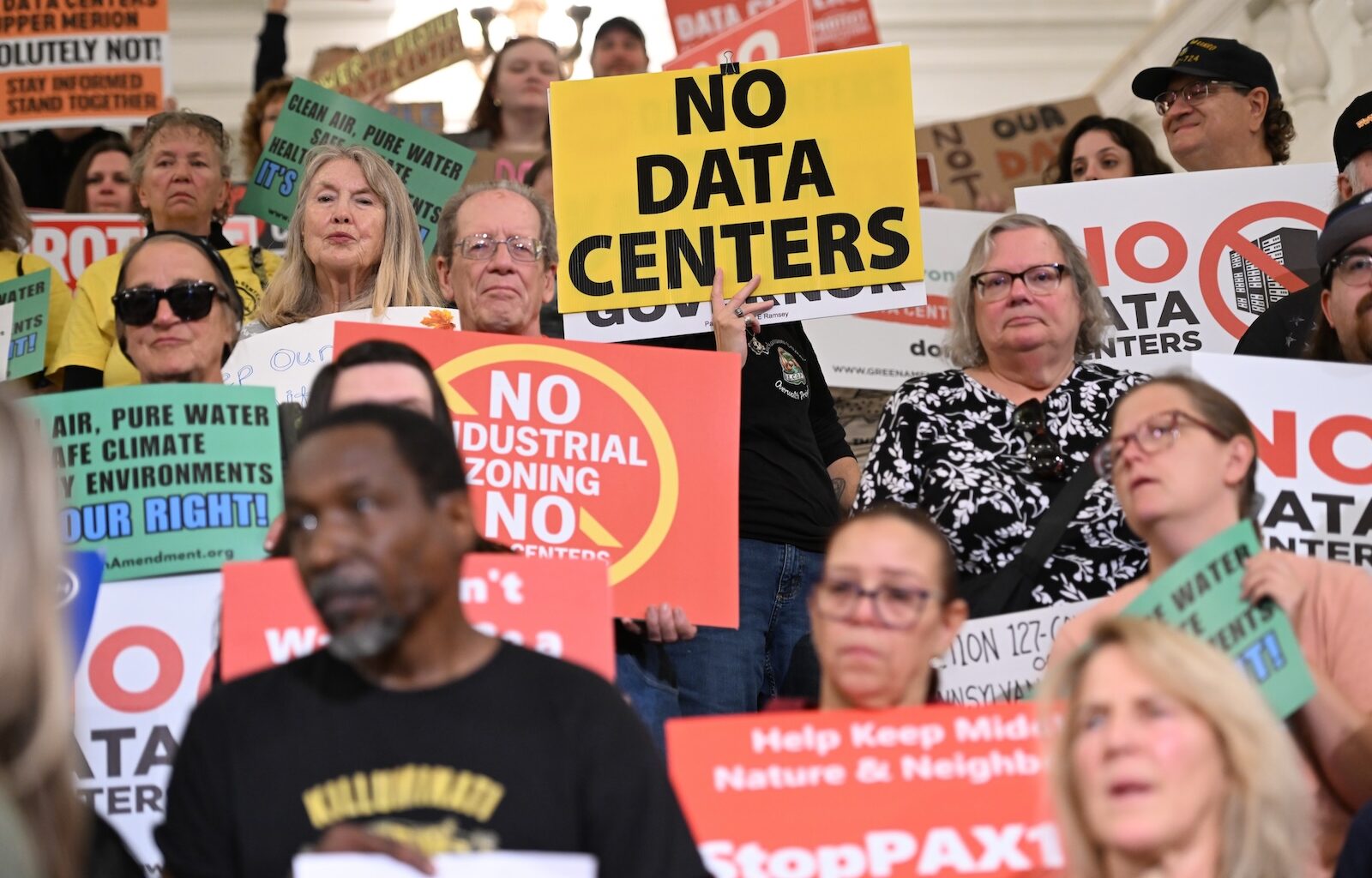
When neither candidate supports a moratorium on data centers
Pennycuick said she doesn’t want to see agricultural land converted to data center use. But she said that some communities may welcome them.
“I would not support a moratorium statewide because there are areas in our state that want them, that actively seek them out, and I don’t want to deny a community that opportunity if that’s what they want,” she said.
Instead, Pennycuick said, she now supports “serious regulatory oversight,” including the ability for local authorities to reject a proposal, along with protections on water usage, provisions to prevent additional electricity costs to be borne by ratepayers, no foreign ownership, and a ban on nondisclosure agreements between data center developers and elected officials.
Pennycuick won the district by 4 percentage points in 2022. The 24th District supported Trump by only about 2 points in 2024.
A recent poll found Democratic challenger Chris Thomas leading Pennycuick 46% to 44%, with Green Party candidate Michael Schonewolf receiving 3% and 7% undecided. The poll’s 4-point margin of error means the race remains effectively tied.
Like Pennycuick, Thomas also opposes a data center moratorium.
“The purpose of the moratorium is to give time to allow some breathing room,” Thomas said. “We already know the guardrails that we need to put in place: stopping Big Tech from jacking up our utility bills, demanding accountability from utility providers, ending backroom deals, not treating public land like a corporate giveaway, stopping big tech from polluting our air, water, and land.”
Pennycuick has launched ads questioning Thomas’ commitment to opposing data centers. She points to the support he’s received from the building trades unions.
“He took money from the trades, and those trades want the data center developer money, they want to get these data centers,” said Pennycuick. “It’s good construction jobs and [the building trades] don’t care.”
Pennycuick has also tried to tie Thomas to a data center developer but the connection is tenuous — Thomas said he was hired by a company that had previously done work on a site that later became the proposed Amazon data center in Falls Township.
Thomas referred to the ads linking him to data centers as a “blatant lying and smear campaign.”
Thomas supports Gov. Shapiro’s GRID plan to regulate data centers. Shapiro himself shifted gears after touting data center development in his February budget address. In August, the governor signed an executive order implementing the plan after opposition to AI data centers grew, and he pivoted away from voluntary compliance.
Pennycuick also expressed support for the bulk of the governor’s executive order.
Dziembowski, who has two school-age children and is a public health educator, said she’s frustrated that neither candidate will sign on to a moratorium. She said she can’t speculate about Thomas’ opposition but that it could be external pressures like the building trades unions. She said she spoke with Pennycuick about her position on a moratorium and told her it’s not her job to represent other district’s wishes, and that given the overwhelming opposition to data centers in the 24th District, she should sign on to a moratorium.
Dziembowski said the battle against data centers has larger implications than the quality of life for her and her neighbors.
“I have students that are using AI to complete their assignments,” Dziembowski said. “So that’s frustrating. I go home and I’m worried about my kids and AI creeping in, and them being exposed to untrue things. And now it’s like, oh, the physical manifestation of that is being proposed to be built on both sides of my house. When you zoom out, it really shows how people feel the government is not working for them and they want change. [Data centers] could be the symbol of it. Listen, this community is saying no, and the people that we elect to move this needle for us are not doing that. So, something needs to change.”
Carmen Russell-Sluchansky contributed to this story.