
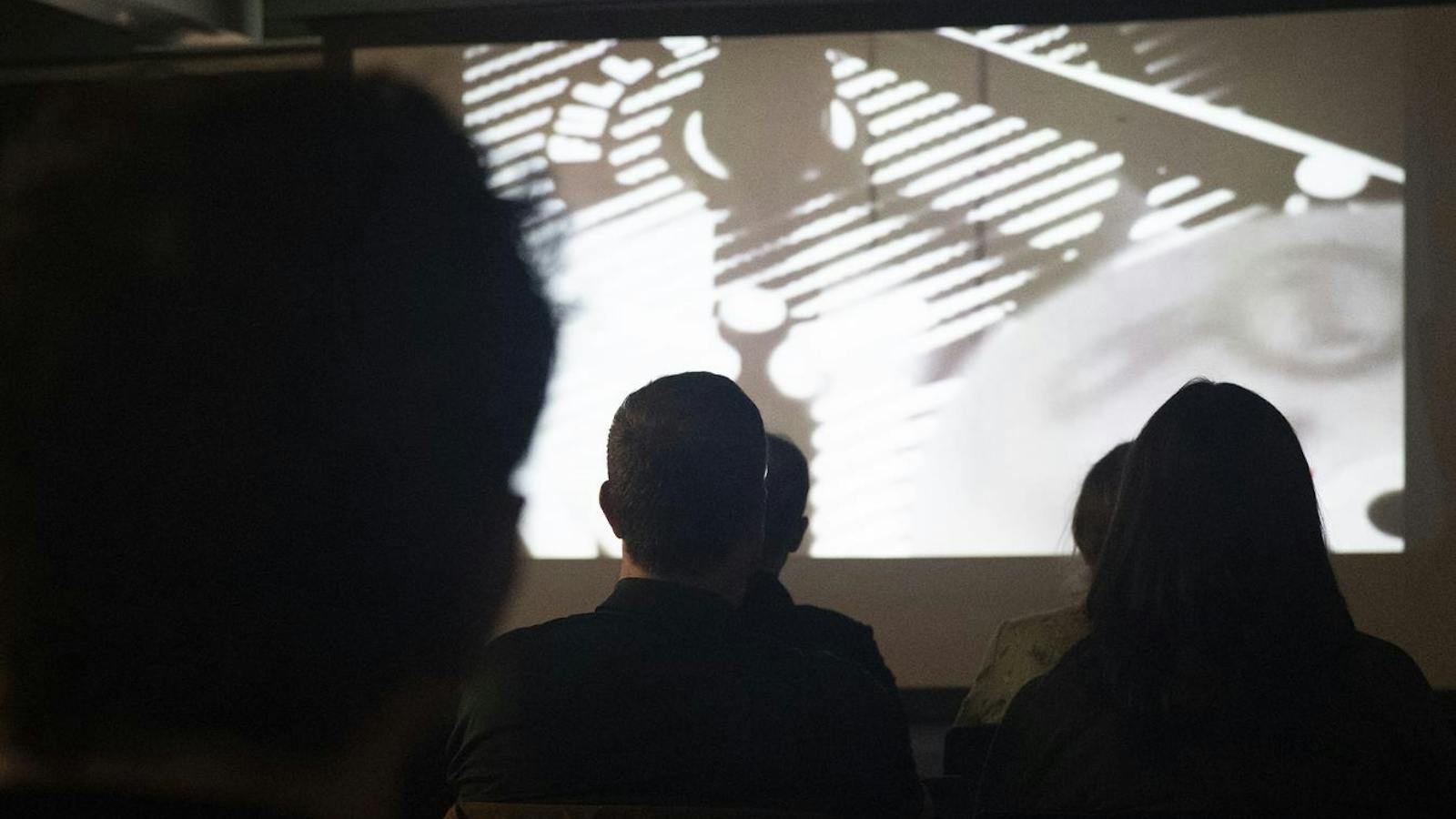
A documentary created by 33-time regional Emmy Award winner and MSU professor Troy Hale tackles the growing pervasiveness of the surveillance state by drawing several comparisons between present reality and the dystopian novel “1984” by George Orwell.
“1984 wasn’t meant to be a how-to book, it was supposed to be a warning,” Hale said in a post-viewing Q&A.
The documentary, “Humanity (1984/2026),” premiered on Thursday as a program for the ongoing “Reality Check” MSU Museum exhibition, which runs until Dec. 12. The documentary goes beyond asking what is technologically possible to analyze and the morality of technology’s usage.
“It really showcases, what I personally believe, is the embodiment of reality check,” said Brittany Carter, the MSU Museum education program coordinator, adding that the documentary questions whether the cons are “really worth” the pros for artificial intelligence surveillance.
Surveillance is not always associated with AI either, Carter said, but cited Flock cameras, which uses AI to capture, record and analyze data to identify potential criminal violations.
“I don’t think a lot of people might know that Flock cameras use AI or those kinds of traffic cameras use AI, and then require all of these data centers,” Carter said.
Like Orwell’s cautionary tale, the film argues the belief that AI-powered monitoring devices are primarily meant for public safety. The real reason, according to the documentary, is for the private interests of data companies and the agencies that use the cameras.
“They’re watching for them, so you don’t steal something from them,” Hale said. ”Or in case something happens, they have footage of it. It’s not really for you.”
The documentary captures the discourse surrounding Flock camera usage and other forms of video taking that integrate AI to surveil individuals by overlaying different footage to simulate the unsettling feeling of being watched.
The premiere is the culmination of four years of work, although much of the documentary took a more definite shape over the past five months due to increased public interest in the potential privacy violations that Flock cameras and other monitoring devices cause.
Hale used footage of both liberal and conservative commentators for the documentary to display the bipartisan pushback towards surveillance.
Hale highlighted the irony of criticizing surveillance, identifying the internet, a space notorious for its own pervasive data tracking, as the primary battleground against surveillance.
”How else is the normal person supposed to get their voice out besides the internet?” Hale said. ”But the government stuff, that’s not on the internet. The Flock stuff is not on the internet. They are captured privately.”
Through the blending of archival footage and Hale’s own videos, the film showed the history, controversial policies and dissent against surveillance, with an ending that subverts the viewer’s expectations of the extent to when and where they are being watched.
Support student media!
Please consider donating to The State News and help fund the future of journalism.
Discussion
Share and discuss “MSU professor debuts documentary questioning ethics of surveillance” on social media.