
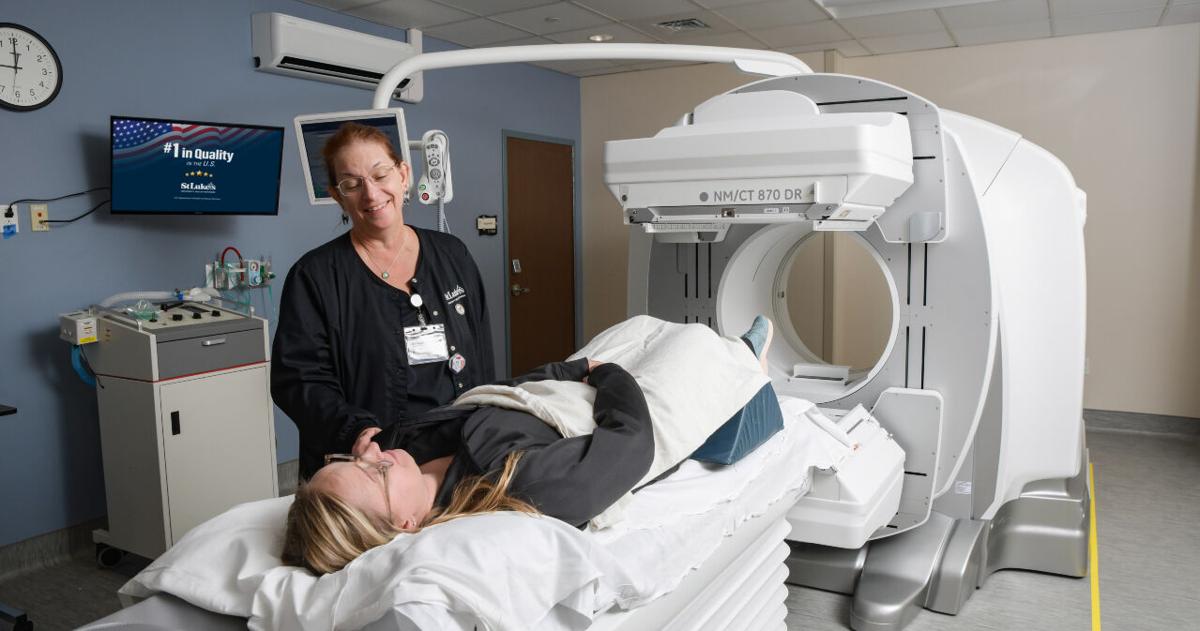
EASTON, Pa. – St. Luke’s University Health Network opened an advanced treatment center for cancer patients at its Anderson Campus.
The new Theranostics Center features four private infusion bays for patients receiving theranostic treatments, which combine advanced imaging and specialized radioactive medicines, according to a news release from the health network.
The Theranostics Center is co-located with St. Luke’s Nuclear Medicine department, allowing patients to receive consultations, imaging and treatment in one location.
“Theranostics is a personalized approach to cancer care that helps us identify disease, determine whether a patient is a candidate for treatment and then deliver therapy directly to cancer cells using paired radioactive particles and molecules that stick to the cancer cells themselves,” said Dr. Edgar Cheng, a diagnostic radiologist and SLUHN Division Chief of Nuclear Medicine.
“It enables us to treat cancer with remarkable precision while minimizing exposure to healthy tissues,” he said.
The center’s physician team includes Dr. Cheng, Dr. Jay Riccardi and Dr. Steven Yang, all board-certified diagnostic radiologists with specialized expertise in nuclear medicine, the news release said.
Patients in the program are supported by a multidisciplinary team, including clinical oncologists, radiation oncologists, radiologists, radiopharmaceutical therapy specialists, imaging technologists and registered nurses.
The patient experience begins with a consultation and education session, during which the care team explains the treatment process, discusses radiation safety precautions and answers patient questions, the news release said.
Depending on the therapy and type of cancer, patients may receive a series of infusions over several months. Following treatment, patients return for follow-up imaging, lab testing and ongoing care.
According to the news release, the St. Luke’s Theranostics Center treats patients with:
Low grade neuroendocrine tumors, a group of uncommon cancers that develop in neuroendocrine cells found throughout the body, most commonly in the digestive tract, pancreas and lungs.
Prostate cancer, particularly advanced forms that can be targeted using specialized radioligand therapies that uses a molecule to deliver radiation directly to cancer cells.
Certain thyroid cancers, building upon St. Luke’s experience with radioactive iodine treatments.
The center currently offers radioligand therapies that have been approved by the U.S. Food and Drug Administration, including Xofigo, Lutathera and Pluvicto.
The expansion strengthens the health care network’s position as a leader in nuclear medicine and theranostics, the news release said.
Since 2022, the program has been designated a Clinical Radiopharmaceutical Therapy Center of Excellence by the Society of Nuclear Medicine & Molecular Imaging. It is one of about 40 programs nationwide with the distinction, and the only center in the region.
The program is expected to expand as new therapies gain approval from the FDA.
Copyright 2026 Maranatha Broadcasting Co., Inc.. All Rights Reserved.