
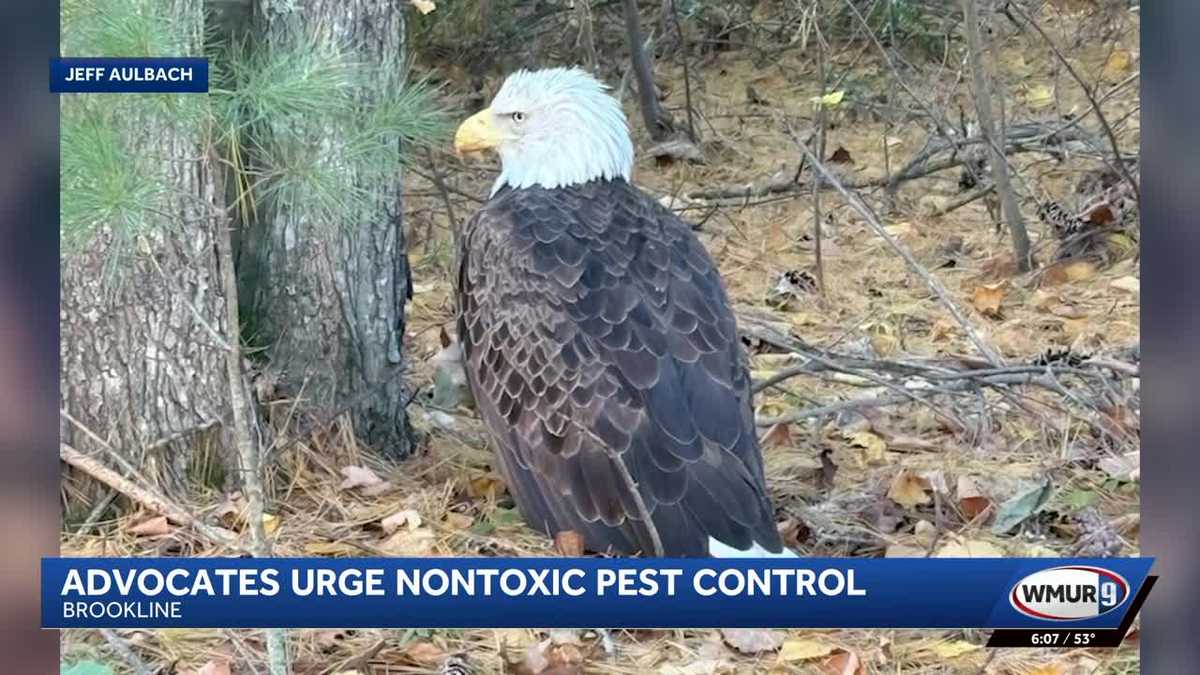
Rodent had ingested rodenticide
 BROOKLINE, N.H. —
A bald eagle is dead after eating a rodent that was poisoned with rodenticide.
“I thought it was a statue or somebody had put something in the woods because it’s completely still,” said Jeff Aulbach, who found the eagle.
Aulbach and his dog were out on a walk around their Brookline neighborhood when he spotted a bald eagle sitting still.
“I was able to approach it to about 6 to 10 feet. And, I had my camera has taken pictures, and that’s when I realized it was definitely hurt or injured. It had blood on its tail feathers,” Aulbach said.
That’s when he knew something wasn’t right.
“It literally did not move other than just to keep an eye on us. It didn’t flap its wings, didn’t do anything. I didn’t realize how much it was suffering at that point,” Aulbach said.
He and his neighbors took turns sitting with the bird until Fish and Game arrived.
The bald eagle did not make it. Officials believe she had eaten a mouse or another rodent that had ingested poison.
“Bobcats, fishers, eagles, hawks, owls, all have opportunities to catch these already poisoned rats and mice,” said Carol Foss, senior science and policy advisor at NH Audubon. “And the poison is still active in the system of these prey items. And so they get what we call secondary poisoning.”
Rodenticide is a growing issue here in New Hampshire. According to a recent study, 34 out of 35 tested animals had been exposed to rodenticides.
“The ones we know about are the ones that people find and bring to a rehabilitator,” Foss said.
Advocates like Foss urge people to find other pest control methods.
“There are a number of non-toxic ways to deal with rodents,” Foss said.