
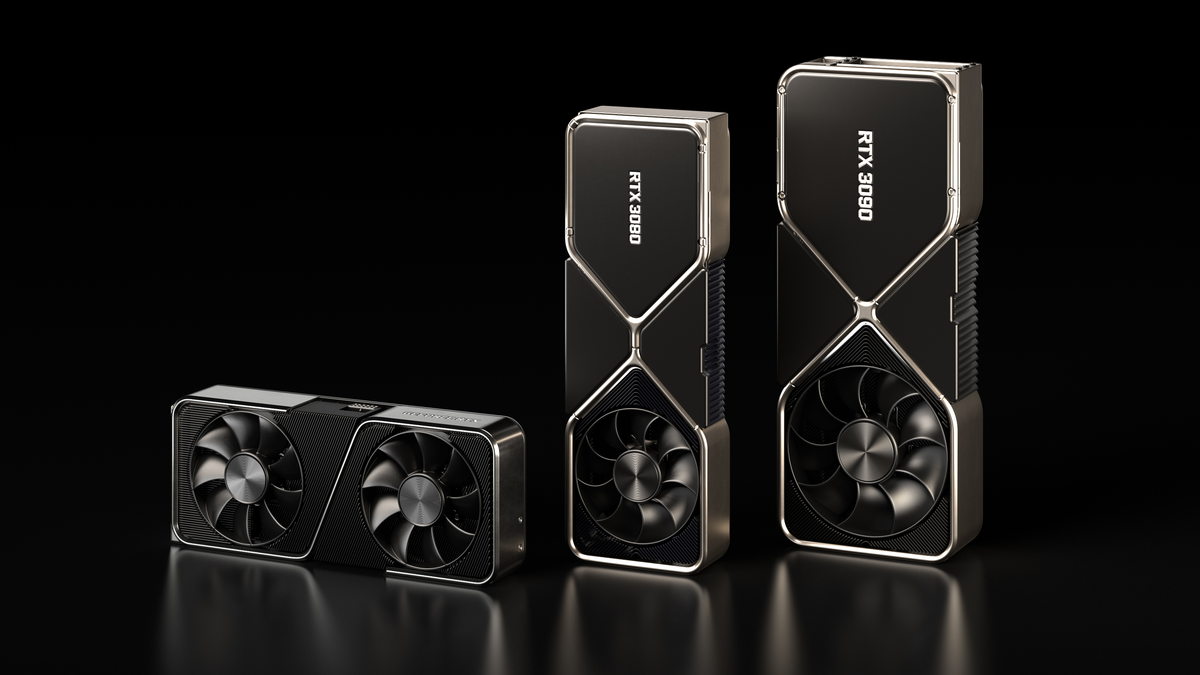
A new GPU unlock tool has unlocked the full potential of NVIDIA’s RTX 30 & RTX 40 GPUs, achieving faster AI LLM performance and compute capabilities.
Back in the crypto mining days, NVIDIA had the compute performance of its GeForce RTX 30 GPUs virtually unlocked through BIOS firmware and patches as it rolled out its mining-specific CMP line of chips. The CMP cards have also recieved a special unlock tool which exposes their full memory capabilities, jumping from 8-10 GB to 64-80 GB.
While modders managed to unlock the full mining rates, the compute restrictions were still in place. But that changes through a new open-source GitHub project called “Zagita,” which is unlocking the full BF16/FP16 rates featured on the Ampere GPUs. The tool is easy to use and doesn’t require any vBIOS flash or hardware modding.
🚨 你的 30 系显卡,算力被官方锁了一半
一个内核模块在 nvidia 驱动绑定之前动手,把 FP/BF16 指令的发射速率放到专业卡的水平。不是刷 vBIOS,也不是改驱动,驱动每次更新都不用重打补丁。
1️⃣ 3090 Ti 实测:BF16 从 87.5 涨到 157 TFLOPS,TF32 从 42.6 涨到 82.6
2️⃣ 3080 10GB 在原厂 320W…
— MrWhite 白先生 (@neuronxwhite) October 24, 2026
Running the tool is simple, and it unlocks double the compute capabilities of NVIDIA’s RTX 30 series FP16/BF16 FMA across all GA102, GA103, GA104, and GA106 GPUs.
Unlock FP/BF16 instruction issue rate on Nvidia 3000’s cards to their professional equivalents
This Linux kernel module combines the CMP unlocker’s V67/PLM technique with the pre-driver timing of the UEFI approach. It runs the unlock, writes the speed selectors (SS0 0x88888888, which selects the full BF16 rate, and the 4-bit SS1 0x8 IMLA4) and performs FLR before the unmodified NVIDIA driver binds the card. It is neither a UEFI application nor a patched NVIDIA driver.
The benefit of this early kmod driver is that it does not require manual patching each time nvidia releases a new driver version.
The effect of this unlock is that it doubles the instruction issuing speed of FP/BF16 FMA into FP32 operations on GA102, GA103, GA104 and GA106 cards.
Many users are running the tool now and seeing a boost of up to 80% on the RTX 30 series GPUs. For example, the RTX 3090 Ti has its BF16 capabilities boosted from 87.5 TFLOPs to 157 TFLOPs & TF32 goes from 42.6 TFLOPs to 82.6 TFLOPs. Similarly, the RTX 3080 10 GB goes from 65 TFLOPs of FP16 to 113 TFLOPs at its stock 320W power.
Power limitFP16BF16per MHzBefore300 W59.6 TFLOPS @ 1384 MHz63.0 @ 14620.043After, cold boot380 W100.3 @ 1208105.9 @ 12690.083After, warm reboot350 W89.5 @ 107295.1 @ 11480.083
3090 Ti dense 8192³ GEMM at 450 W, five-sample medians with FP32 accumulation:
InputBeforeAfterFP1687.46 TFLOPS118.39 TFLOPSBF1687.50 TFLOPS157.41 TFLOPSTF3242.58 TFLOPS82.61 TFLOPS
In AI LLMs, an unlocked RTX 30 GPU was able to offer 33-36% faster Prefill (long-context) output, while the latency in TTFT (Time-to-first-token) was reduced by 25%. Decode performance wasn’t affected, and matrix-multiply performance remained identical.
ChipCardPCI IDResultBF16 GEMM gainGA102RTX 3090 Ti10de:2203Unlocked+68–80%GA102RTX 309010de:2204Unlocked+25–67%GA102RTX 3080 Ti 20 GB (OEM, GA102-250)10de:2205Unlock completes, BF16 stays at half rate—GA102RTX 3080 10 GB10de:2206Unlocked+70–73%GA102RTX 3080 20 GB (memory upgrade)10de:2206Unlocked+56–59%GA104RTX 307010de:2484Unlocked+73–81%GA104RTX 3070 Ti10de:2482Not tested with this module (the same unlock worked from a UEFI port on Windows)—GA106RTX 3060 12 GB10de:2504Unlockedabout +80%GA103any10de:2414No reports yet—
Currently, the unlock is only available on Linux platforms; Windows isn’t supported yet. The RTX 30 GPU lineup sees the biggest benefit, but the unlock does extend to older GTX 9, GTX 10, & RTX 20 series cards.
Not just 30 Series but 40 Series GPUs too seemingly see their Tensor Core throughput doubled. I believe this might end up increasing these GPUs’ 2nd-hand prices as well. It’ll also be interesting to see if this can be leveraged to improve DLSS perf since it runs on Tensor Cores. https://t.co/8eN6TUtgPW
— Sebastian Castellanos (@Sebasti66855537) October 24, 2026
Even RTX 40 GPUs are seeing an uplift with these new unlocks.

Other users are also fine-tuning models on older RTX 30 GPU cards such as the 24 GB RTX 3090. A user has reportedly reached 381 tokens per second throughput on Qwen3.8-27B.
Qwen3.8-27B reportedly reached 381 tokens/sec on a single RTX 3090 with 24GB of VRAM.
The starting point was 82 tokens/sec. That is approximately a 4.6× increase without changing the GPU or the model.
Developer TeksEdge achieved this by optimizing how the model generates,…
— FHILY👑 (@Oluwaphilemon1) October 24, 2026
The AI model ran at a baseline performance of 82 TPS and improved to a 4.6x rate through optimized MTP, DFlash2 with context lookup, and an optimized lookup verification. We reported this story this week, and as models continue to be optimized on older cards, their prices are also seeing an uptick.
🔥牛逼了!12GB显卡本地跑763B!DeepSeek-V4.1-Flash-1017量化版炸裂登场,前沿质量几乎零损失!
ISTA-DASLab团队发布GSQ-RCO非均匀量化版,Strata引擎原生支持。763B参数MoE大模型最低压到1.75 bpw,在消费级硬件上就能跑!
核心亮点
🔹极致压缩 + 几乎无损:IQ2_XXS(2.00… https://t.co/yWTvTW8LZz pic.twitter.com/eAiRxXcBIN
— SuSu_酥酥👅 (@NFT_Chen) October 24, 2026
For example, the NVIDIA GeForce RTX 3090 24 GB was selling for around $1000 US, but since these reports, the prices have climbed past $2000.
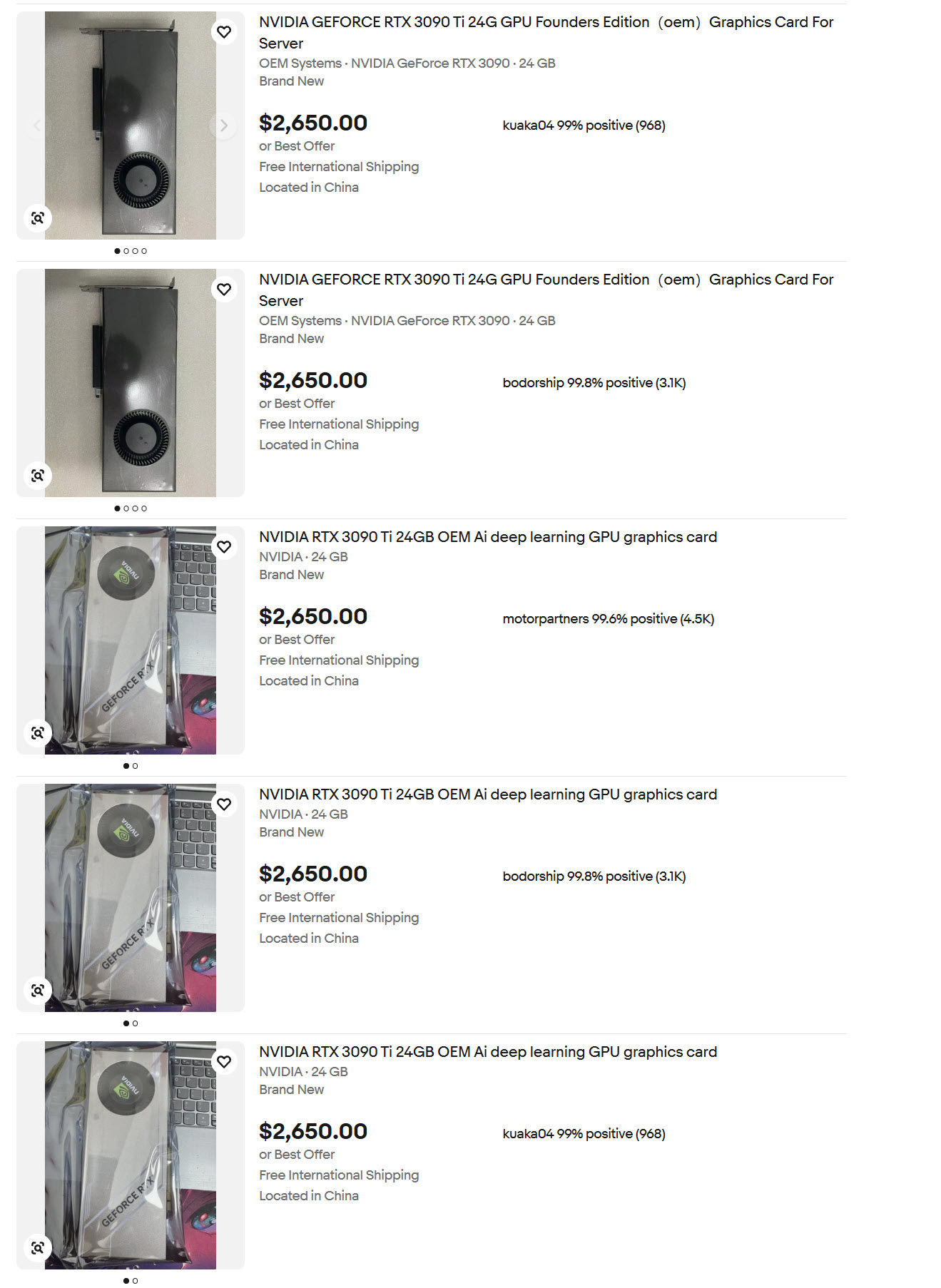
The RTX 3090 Ti is fast approaching the $ 3000 US mark, and the RTX 3080 10-12 GB models are reaching $900-$1100 US on eBay. The optimizations are giving Ampere graphics cards a new life outside of gaming, but that also means that gamers who were planning to purchase a used RTX 30 card will now have to deal with surging prices due to AI.
This unlock tool is breathing new life into Ampere-era RTX 30 cards for LLM workloads, delivering substantial compute gains that make them far more viable for inference and fine-tuning without any hardware mods. While the performance uplift is a clear win for AI enthusiasts, the resulting demand is pushing used-market prices sharply higher, turning once-affordable gaming GPUs into sought-after AI accelerators and making them less accessible for pure gamers.

About the author: A Software Engineer by training and a PC enthusiast by passion, Hassan Mujtaba serves as Wccftech’s Senior Editor for hardware section. With years of experience in the industry, he specializes in deep-dive technical analysis of next-generation CPU and GPU architectures, motherboards, and cooling solutions. His work involves not only breaking news on upcoming technologies but also extensive hands-on reviews and benchmarking.
Follow Wccftech on Google to get more of our news coverage in your feeds.