
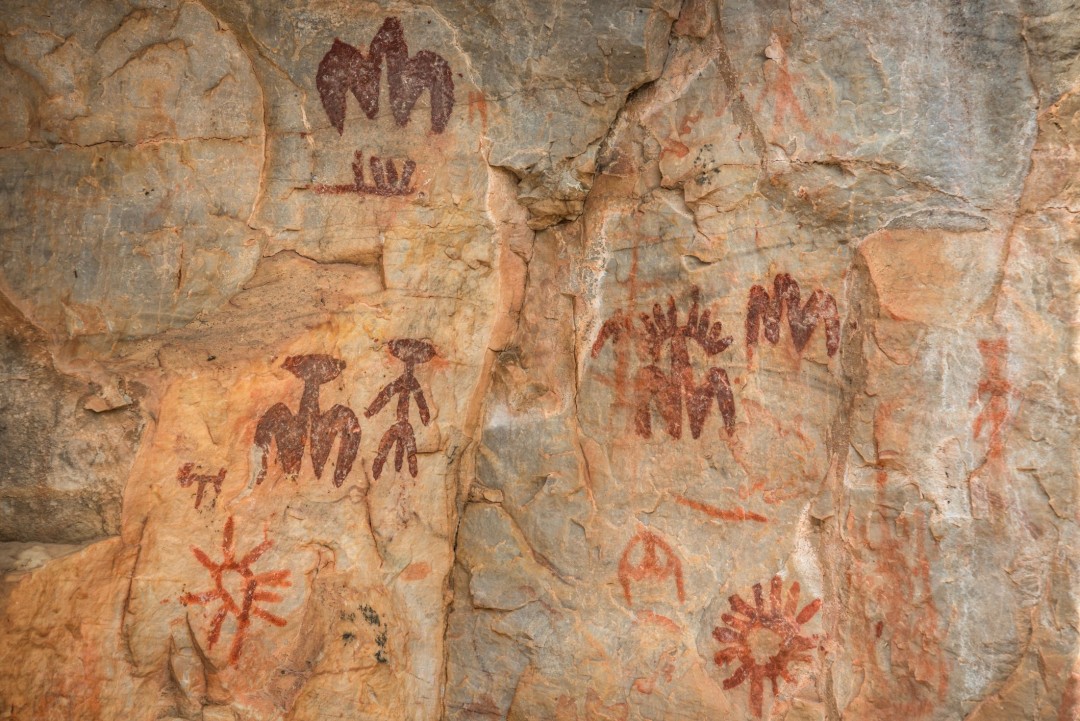
Ice Age Europeans apparently weren’t homebodies. A new DNA study of remains from caves in France, Spain, and Italy indicates that Gravettian hunter-gatherers—who lived in Europe between roughly 34,000 and 25,000 years ago—mixed more across long distances than earlier research suggested, Courthouse News Service reports. A woman from Isturitz Cave in southwestern France carried mostly western European ancestry but also genetic links to central and eastern Europe, pointing to regular contact between far-flung groups
Similar DNA patterns at another French site hint Isturitz may have served as a gathering spot. Earlier studies of art, tools, and burials pointed to “substantial interconnectivity across the continent, implying the existence of large-scale, pan-European social networks,” but the eastern and western Gravettian populations were previously thought to have remained largely genetically isolated, researchers wrote in a study published in Science Advances. “Gene flow across such large distances adds a new dimension to our understanding of how Gravettian populations were connected,” says study co-author Pere Gelabert at the University of Vienna’s Department of Evolutionary Anthropology..
At some sites, ancestry remained stable over time, researchers say. DNA from Spanish caves shows a stable western European lineage that endured through the coldest part of the last Ice Age, bolstering the idea of Iberia as a refuge. At some sites where no human bones or teeth were found, researchers analyzed ancient DNA found in cave sediment. “Sedimentary DNA allows us to recover genetic information from periods where human remains are missing,” says lead author Ron Pinhasi. “This gives us a way to connect archaeological layers with the genetic ancestry of the people who occupied a site.”