
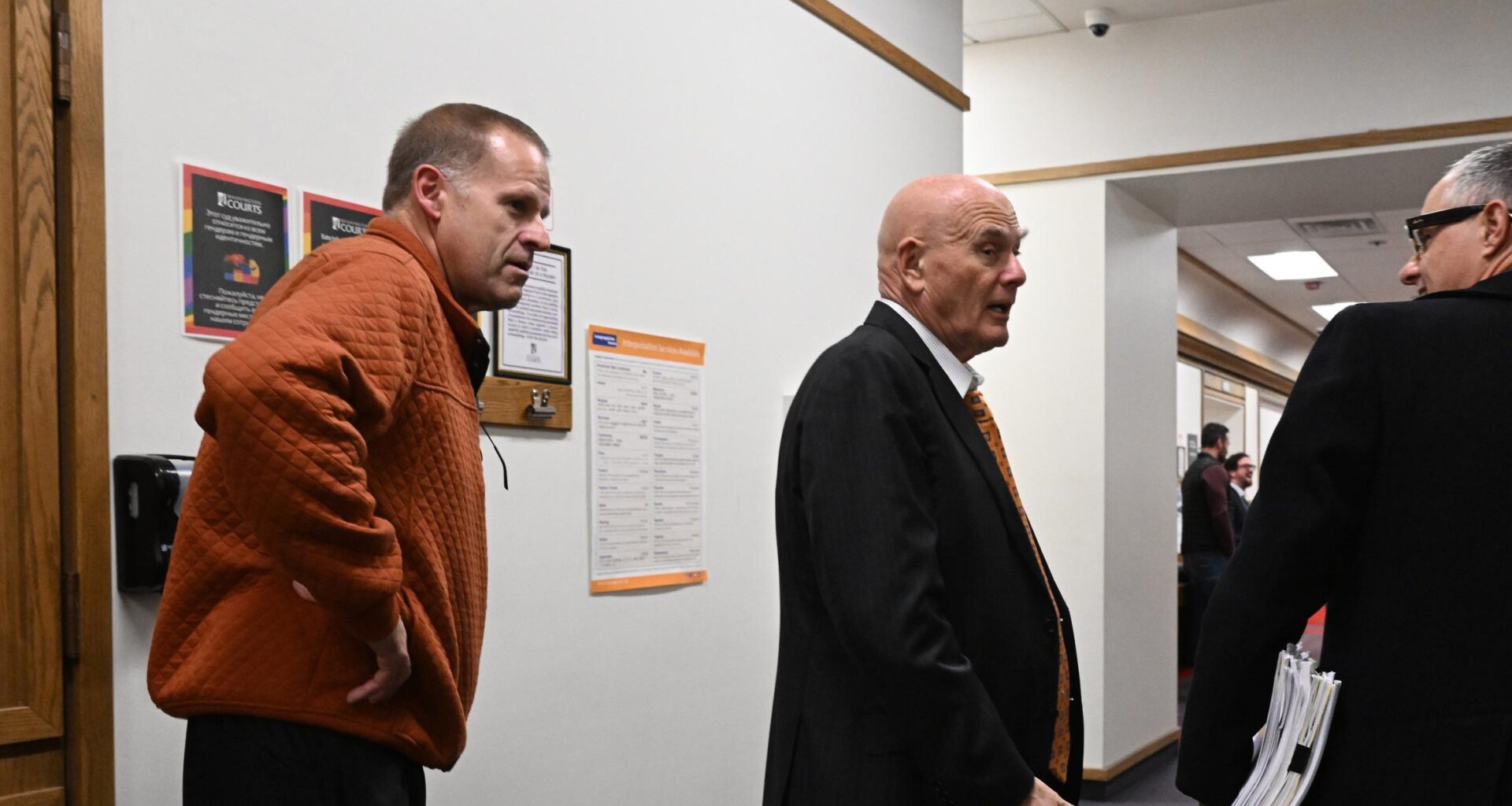
Two would-be heirs of one of Spokane’s wealthiest men will not receive a single cent, after a judge found they exploited their father’s vulnerable mental state.
Meanwhile, their older brother could receive an inheritance estimated to be around $1 billion.
Spokane Superior Court Judge Jacquelyn High-Edward issued a ruling Monday in the prolonged legal battle between Harley Douglass, and his younger siblings Lanzce Douglass and Stacey Douglass Boies, over the last will and testament of their father, real estate magnate Harlan Douglass.
At stake in the case was the sibling’s respective takes of their father’s roughly $600 million estate, $350 million real estate portfolio and promissory notes pledging $155 million in various sums to Lancze, Stacey and each of the siblings’ five children.
Harley may walk away with it all following High-Edward’s ruling. She threw out the promissory notes, voided the real estate assignments for Lancze and Stacey and found the younger siblings financially exploited a vulnerable senior.
Harley is now in line to control of the estate, which will affect cases to come between the siblings, his attorney Steve Hassing said Monday.
“All in all, it was a spectacular win,” Hassing said.
High-Edward agreed Monday to uphold Harlan’s will as it existed prior to its changing in 2019, as Harley asked in his claim. He said his siblings exerted undue influence on their father to change it to greatly benefit themselves as their father’s mental health declined, and therefore the version that split the inheritance equally among the three should be upheld.
Harlan, who died on Nov. 26, 2023, began showing memory lapses years earlier, which eventually developed into dementia and Alzheimer’s disease, as previously reported by The Spokesman-Review.
Lanzce and Stacey backed the changed will in court, which gave Lancze 65% of the estate and Stacey 35%. They testified the changes in the will came about after each rekindled relationships with their father, described in the trial as complicated. They also said the changes, which would have left Harley with $1,000, accounted for a lifetime of gifts and earlier inheritance from their mother that Harley received.
Seattle-based attorney Jason Burnett, who represented Lanzce, declined to comment on the ruling. He said they have not yet made a decision on whether to appeal.
High-Edward’s ruling effectively bars Lanzce and Stacey from receiving any inheritance from their father in addition to recognizing the prior iteration of the will. State law forbids those who financially exploit a vulnerable adult from receiving any inheritance.
Hassing said he expected the judge to reach that determination about Lanzce and Stacey from the outset. With their parents now barred from an inheritance, High-Edward will likely need to decide via motion if the 2018 will intends for Lancze’s children and Stacey’s children to receive an inheritance.
By his reading, Harley will likely receive all of it in the end, Hassing said.
The judge wrote that Lancze and Stacey had their father sign documents that they had prepared themselves, with terms he did not know about. During this time, Harlan had already come to rely on others for assistance in reading, making appointments and managing his medication.
“At the time of the April 22, 2019, meeting, Harlan was 82 years old, relied on others to read and explain documents to him, was unable to decipher numbers, could not pay his bills independently, had significant issues with memory recall,” the ruling reads, in part.
The ruling is the second time the courts found Lancze attempted to wrongly cut his older brother out of a family inheritance. A similar saga played out following the death of their mother, Maxine Douglass.
The same year Harlan’s will was edited, Harley challenged his siblings in court over changes to Maxine’s last will and testament that cut him out of the inheritance entirely. The courts eventually ruled in Harley’s favor.
Prior to that case, Maxine wrote a will in 2008 that split the estate in half: Harlan would retain one half and the remainder would be split among her three children, with Harley receiving 50%, Stacey 40% and Lanzce 10%.
Then in August 2019, Lanzce hired Seattle attorney Michael Murphy to draw up what was later referred to as the “Hamilton Deed.”
Lanzce took what Murphy wrote, transferred the writing onto Harlan’s letterhead, and then had his father sign it, according to court records.
During the signing on Aug. 14, 2019, witnesses said Harlan kept falling asleep and didn’t always appear to follow what was happening, according to court records.
The deed was signed, transferring much of Maxine’s estate to Stacey and Lanzce and removing Harley as a beneficiary.
Spokane County Superior Court Judge Raymond Clary in 2023 ruled in favor of Harley’s challenge to that deed, writing: “Lanzce Douglass, with the help of his attorney, Michael Murphy, conceived of a plan to disinherit Harley Douglass through the powers of the Special Trustee, Thomas Hamilton, and certain staged documents.
“The scheme was not only shown by the totality of the evidence,” Clary continued, “but it was clear, convincing, and inescapable.”
High-Edward echoed that sentiment in her ruling Monday, saying the unsavory circumstances of how Harlan’s will came to be changed were made clear over the course of the summer proceedings.
“After examining the extensive testimony and evidence provided at trial, observing the witness’s testimony, and considering motivation, bias, and inconsistency of each witness,” she wrote, “the totality of the circumstances establishes clear, cogent, and convincing evidence that Lanzce and Stacey unduly influenced Harlan.”