
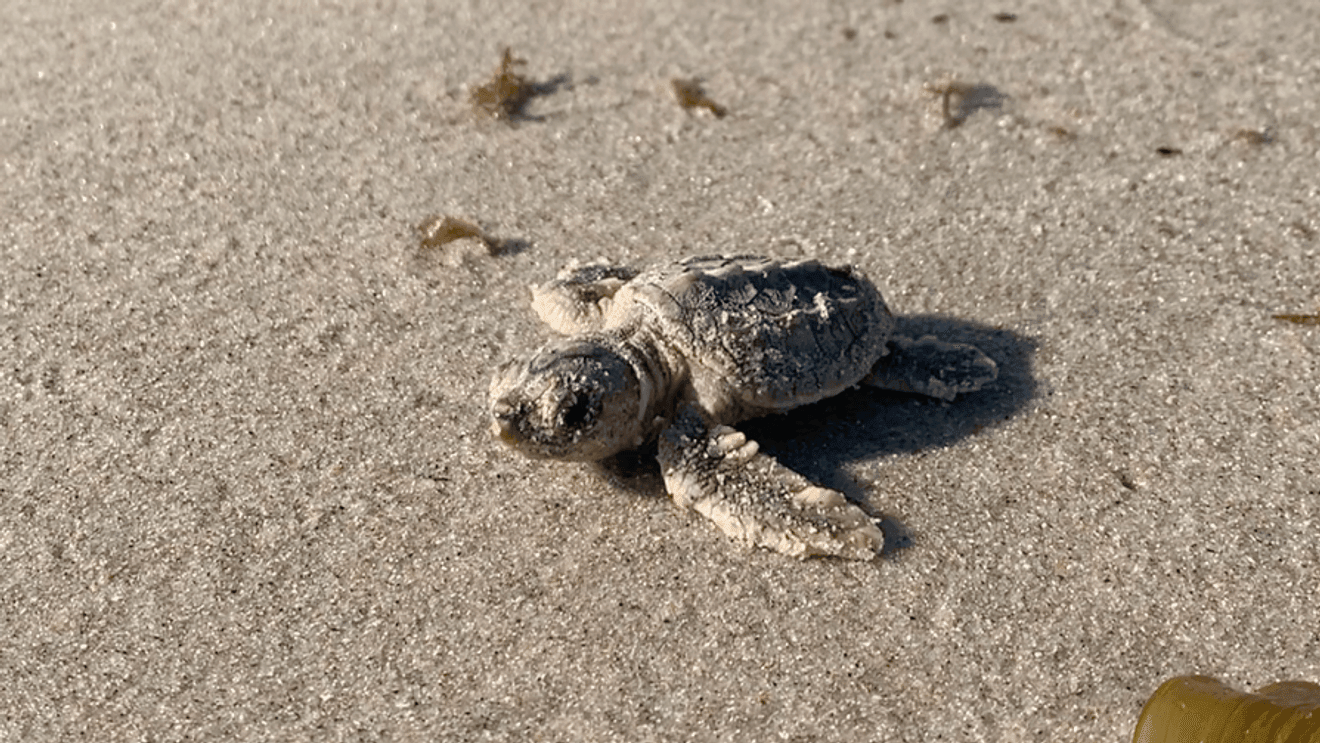
VERO BEACH, Fla. (CBS12) — Indian River County’s sea turtles broke a record. The county documented 14,083 nests as of Thursday, its highest total ever recorded. Coastal Specialist Dakota Whalen credits decades of conservation efforts for the milestone.
“This is actually a really big deal because what we’re seeing is decades of conservation paying off,” Whalen said.
But the record season is facing a rough finish. Powerful waves and high tides are eroding beaches, threatening some remaining nests.
Indian River County’s sea turtles broke a record. The county documented 14,083 nests as of Oct. 22, its highest total ever recorded. Coastal Specialist Dakota Whalen credits decades of conservation efforts for the milestone. (IRC)
Loggerheads lead the record season
The county’s latest dashboard lists 10,045 loggerhead nests, 3,970 green turtle nests and 68 leatherback nests.
The total surpassed the previous record, set in 2023, by approximately 2,000 nests, according to Whalen.
Loggerheads drove much of that increase.
“They’re dominating with 10,000 nests across our entire coastline, which is an insane number,” Whalen said.
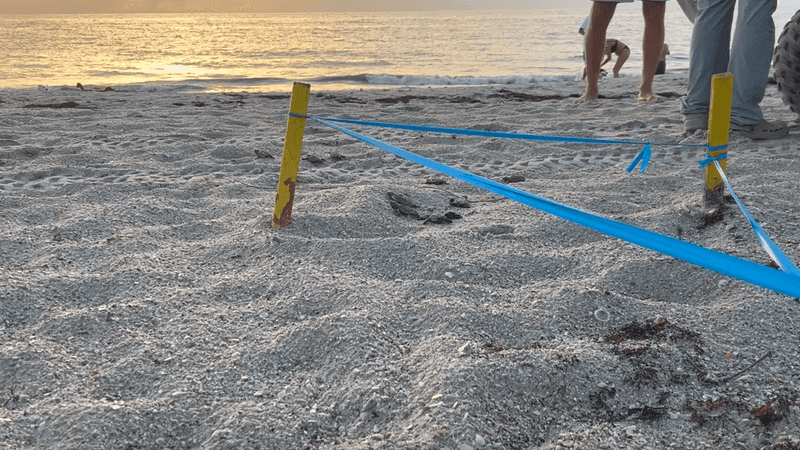
The orange markers beachgoers see represent only a fraction of the nesting activity. The county marks approximately one in 10 nests along its 22.4-mile coastline.
“If we mark 14,000 nests you wouldn’t have anywhere to sit on the beach,” Whalen said. “And like seriously it would be a sea of orange.”
Researchers evaluate those marked nests to help measure reproductive success.
Whalen said the long-term gains reflect years of work protecting turtles and their nesting beaches. Those efforts include monitoring, partnerships with conservation groups and encouraging turtle-friendly beach practices.
Rough surf threatens remaining nests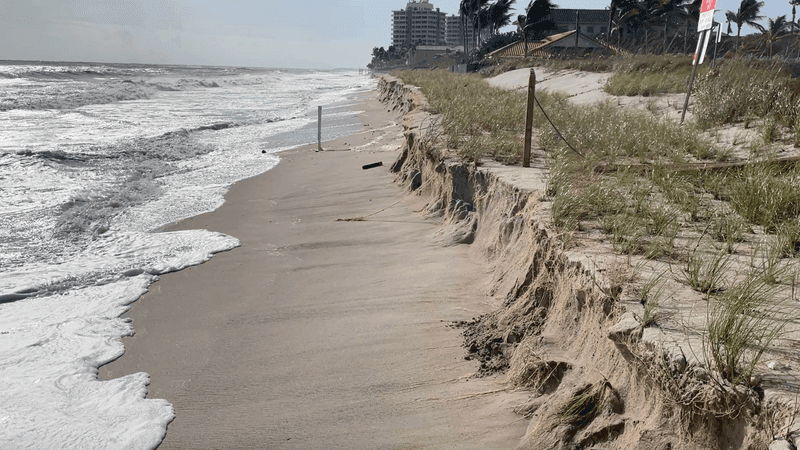
Indian River County’s sea turtles broke a record. The county documented 14,083 nests as of Oct. 22, its highest total ever recorded. Coastal Specialist Dakota Whalen credits decades of conservation efforts for the milestone. (IRC)
A nor’easter and king tides have brought challenging conditions as nesting season winds down.
Waves strip away sand, potentially exposing eggs buried beneath the beach. Unsafe conditions have delayed surveys needed to determine the full extent of the damage.
Whalen estimated that 75% to 90% of the county’s nests had already hatched before the recent rough weather.
“A lot of them have already hatched out, a lot of them have made it to the water safely,” Whalen said.
Indian River County’s nesting season officially ends on Halloween. Some nests may continue incubating beyond that date.
Nesting numbers across the Treasure Coast
Other counties also provided nesting figures. The totals cover different reporting dates and monitoring areas.
Indian River County: As of Oct. 22, the county recorded 14,083 nests: 10,045 loggerhead, 3,970 green turtle and 68 leatherback nests.
St. Lucie County: As of Sept. 30, the county recorded 10,239 nests: 9,111 loggerhead, 956 green turtle and 172 leatherback nests.
Martin County: As of Sept. 28, its Hutchinson Island monitoring area recorded 4,874 nests: 4,532 loggerhead, 161 green turtle and 181 leatherback nests.
Martin County’s figures cover approximately 7.5 miles of Hutchinson Island shoreline. That area stretches from the north side of St. Lucie Inlet to the Martin–St. Lucie county line.
CBS12 News has requested Palm Beach County’s latest countywide figures from FWC and is awaiting those numbers.
Boca Raton sees high nest counts, lower hatch success
In Boca Raton, a strong nesting season did not translate into equally strong hatching results.
David Anderson, sea turtle conservation coordinator at Gumbo Limbo Nature Center, reported the city’s third-highest nesting season. That included record counts of 1,118 loggerhead nests and 43 leatherback nests.
But an average of only about 50% of the eggs in inventoried nests hatched. Anderson said a typical hatch rate would be 70% to 80% or more.
He attributed some losses to prolonged hot, dry conditions during peak incubation. High sand temperatures can prevent embryos from continuing to develop.
Storms and high tides also washed out approximately 185 nests, Anderson said. Predators affected another 13 nests.
Artificial lighting created additional problems after hatching. Anderson said hatchlings from at least 85 nests became disoriented and headed into the dunes.
Staff plan to evaluate beachfront lighting and work with nearby properties before next season.
“So sure, it’s sad to see so many hatchlings and eggs not fully developed, but once again, we had a great nesting season,” Anderson said. “So as long as the nesting numbers continue to climb, it gives us hope.”
What to do if you find eggs or hatchlings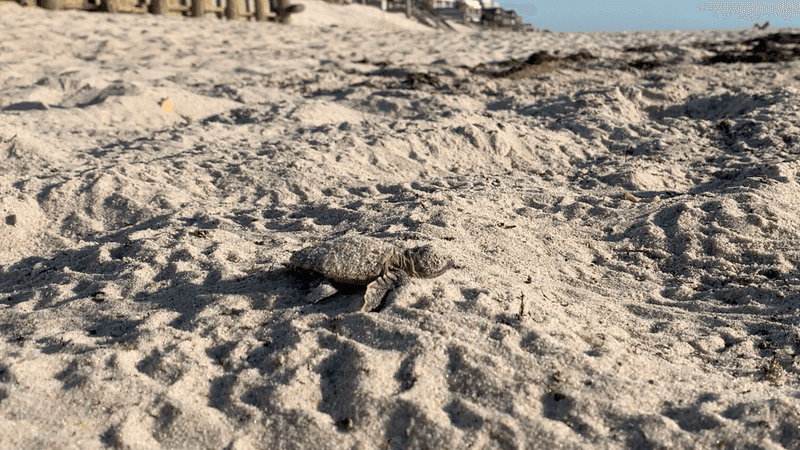
Indian River County’s sea turtles broke a record. The county documented 14,083 nests as of Oct. 22, its highest total ever recorded. Coastal Specialist Dakota Whalen credits decades of conservation efforts for the milestone. (IRC)
The Florida Fish and Wildlife Conservation Commission says sea turtles spread their nests across the season. That strategy helps some nests survive even when storms damage others.
After rough weather, beachgoers may find exposed eggs or young turtles washed ashore.
FWC says to leave exposed eggs in place. Eggs swept from their nests rarely survive, and people should not collect or rebury them.
Storm currents can also carry young turtles back ashore, sometimes tangled in seaweed. These “washback” turtles may need specialized care.
Do not pick them up or return them to the ocean. Instead, immediately call FWC’s 24-hour Wildlife Alert Hotline at 888-404-3922 for instructions.
Hatchlings actively crawling toward the ocean do not need assistance, according to FWC.
Beachgoers can help by keeping beaches clean, flat and dark. Remove beach gear, fill holes, flatten sandcastles and keep lights off the beach at night.