
Flooding closed roads and swallowed beaches as high tides combined with elevated ocean levels on both coasts.
Published Oct 28, 2026 4:17 PM EDT
|
Updated Oct 28, 2026 5:13 PM EDT
People who have lived in Fort Lauderdale for decades say the flooding from king tides this week is the worst they’ve ever seen, including hurricanes and tropical storms.
Exceptionally high king tides flooded roads, submerged beaches and set water-level records in coastal communities in Florida and California this week as October’s Hunter’s moon added to the flooding threat.
Residents in some coastal neighborhoods faced repeated flooding over several days, with some left stranded during high tide. Social media videos showed people using kayaks, paddleboards and small boats to navigate flooded streets.
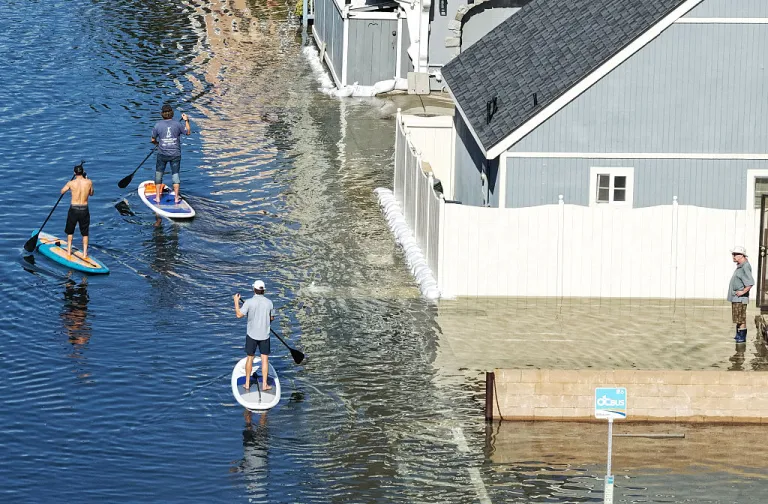
In an aerial view, people paddle board in coastal floodwaters during high tide flooding along the closed Pacific Coast Highway in the Sunset Beach community on October 27, 2026 in Huntington Beach, California. (Photo by Mario Tama/Getty Images)
In Florida, Lake Worth Pier and the South Port Everglades recorded their highest tides on record. California’s coastline near Los Angeles, San Diego and Santa Barbara all had record high tides on Oct. 27, when king tide impacts peaked.
Record high tides in Florida and California following the Oct. 26, 2026, king tide event.
In Fort Lauderdale, police closed Las Olas Boulevard for a second consecutive day Wednesday. AccuWeather Reporter Leslie Hudson was in South Florida, where residents compared the flooding to what they experienced during Hurricane Wilma in 2005.
Fort Lauderdale Chief Resilience Officer Nancy Gassman said water levels rose about 6 inches higher than during previous king tides, reaching parts of the city that had not previously flooded.
Traffic navigates through flooded roadway lanes along East Ocean Avenue in Boynton Beach, Florida, on October 26, 2026. High seasonal tides combined with elevated sea levels pushed saltwater through coastal drainage systems, inundating roads, slowing commuter traffic, and creating travel hazards across eastern Palm Beach County. (Photo by Christopher Beckett/NurPhoto via Getty Images)
Flooding along the southeastern Atlantic coast will gradually ease into the weekend as astronomical high tides become less extreme and onshore winds weaken, according to AccuWeather Senior Meteorologist Brett Anderson. However, minor coastal flooding could linger into next week, with rough surf and strong rip currents remaining concerns, especially along Florida’s east coast.
Along California’s coast, floodwaters covered parts of the Pacific Coast Highway in Huntington Beach, and waves reached doorsteps in San Diego beginning Monday.
Preliminary observations showed record water levels at tide gauges in San Pedro, La Jolla and Santa Barbara during this week’s high tides. At San Pedro, the gauge reached 8.18 feet Tuesday, Oct. 27, surpassing a record set just a day earlier. Those measurements describe water levels relative to a tidal reference point, not flood depths on land.
Drone video from AccuWeather Storm Chaser Aaron Rigsby showed homes perched near cliff edges in Pacifica, south of San Francisco, with waves washing against the rocks below.
Day after day, tidal flooding is affecting the coast of Southern California.
A coastal flood advisory remained in effect through 6 p.m. PDT Saturday for shoreline areas around San Pablo Bay, San Francisco Bay and Monterey Bay.
King tide is an informal term for exceptionally high tides. Higher tides occur around both full and new moons, when the sun, Earth and moon align. The moon’s distance from Earth and seasonal conditions can further influence their height. The most recent full moon took place on Sunday, Oct. 25.
In California, the astronomical tides are combining with already elevated ocean levels associated with El Niño and a Kelvin wave spreading along the coast.
High tide floods businesses and homes along Pacific Coast Highway at Sunset Beach, Huntington Beach, CA on Tuesday, Oct. 27, 2026. (Robert Gauthier/Los Angeles Times via Getty Images)
AccuWeather International Forecast Expert Jason Nicholls said the Kelvin wave continued to spread, with sea levels running at least 12 inches above normal along much of California by Oct. 27.
A Kelvin wave is a broad ocean disturbance that can raise coastal water levels over an extended period. That higher starting point allows high tides and waves to reach farther inland, increasing the risk of flooding and erosion.
More Coastal Flooding Coverage: