
When you buy through links on our articles, Future and its syndication partners may earn a commission.

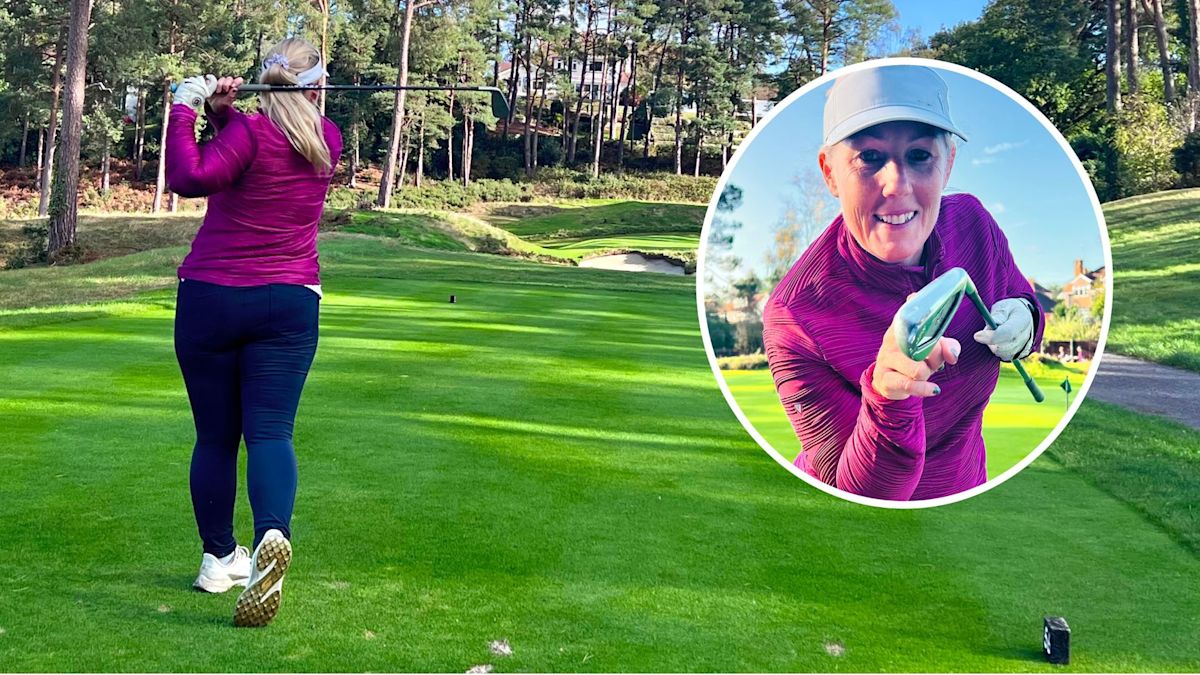
My 7-iron is my favourite club. It’s my ‘go-to’ for precision. When I hit a basket of balls at the practice ground or warm up in the net before I play, I’ll always hit it. There’s just something about this club that gives me confidence. It feels effortless and easy to use.
It was the one club I chose when Golf Monthly asked me to write about the experiment of playing a whole round of golf with just one iron and a putter.
Like many of us, it was also the first ever club I hit when I was a beginner. My dad bought me a second-hand set of irons when I started playing golf as a teenager and I always took the 7-iron to the practice ground with me when I was taking lessons and learning. So it became my practice companion, and as a consequence of the years and years of repeatedly hitting it when I started out, it’s now my most-trusted club.

We all obsess about the distance our driver goes but this season I’ve become obsessed with the carry distance of my 7-iron. It all started when I went for a custom-fit with PXG back in the spring and the fitter, by switching shafts and handing me a head with more modern tech, was able to boost my 7-iron carry distance by nearly twenty yards.
When I had to revert to my old set (because it was cost-prohibitive for me to afford the PXG irons) I couldn’t help but notice the shortfall of my own 7-iron, especially playing county golf in match week for Dorset.
At the second hole, a par-3 measuring 151 yards, nearly every opponent I played against was hitting a 7-iron into it. Not me. I needed a 5-iron, and I hated it. Not just because my 5-iron is the hardest club to hit that I carry in my bag. But because I realised that at the elite handicap level (scratch or better) I should be hitting my irons further – in-line with everyone else.
It got me looking into the statistical averages, offered by data capture specialists Shot Scope. Did you know that there’s a staggering 51 yards between the distance that a scratch handicapper hits their 7-iron (average 149 yards) and a 30-handicap hits their 7-iron (average 98 yards). In golfing terms this is so critical to accuracy and scoring. The shorter the club you hit in, the easier and the more accurate you will be.
The typical tour player hits it even further. World Number One Nelly Korda will carry her 7-iron an incredible 154-yards. But how many of you actually know how far you hit your 7-iron? If you don’t then you are missing out on some vital information that could help you improve.
According to Shot Scope’s data, the average female amateur golfer hits their 7-iron 119 yards, but how does that relate to your handicap index bracket specifically? Below are the average carry distances for players ranging from scratch to a 30-handicap, when hitting their 7-iron:
Women’s 7-Iron Distance
Data from Shot Scope users (yards)
Average Distance
Scratch
149
5-handicap
138
10-handicap
126
15-handicap
119
20-handicap
107
25-handicap
103
30-handicap
98
037.575112.5150
Product
Value
Scratch
149
5-handicap
138
10-handicap
126
15-handicap
119
20-handicap
107
25-handicap
103
30-handicap
98

Golf Monthly Logo
Analysing the data, as you might expect, better players carry their 7-iron further than high-handicappers, with scratch golfers averaging 149 yards. For reference, that’s similar to the distance that the average 20-handicapper carries a 3-wood, which highlights the role that improved ball striking and, therefore, distance plays in cutting your handicap.
Put simply, if you can increase your 7-iron carry distance you’re going to lower your scores. It’s now my goal this winter. I’m going to stop fixating over my lack of length off the tee and forget about crunching drivers endlessly on the range. Instead, I’m going to work on my swing technique using my trusty 7-iron, the one club I can hit consistently, and see if I can boost that carry distance number up