
Editor’s note: first in a series of two.
On Friday, Aug. 8, 1947, the Chattanooga Daily Times reported that the city of Chattanooga had a windfall budget surplus of $50,000, which would allow a larger expenditure for special projects and necessary improvements in public spaces.
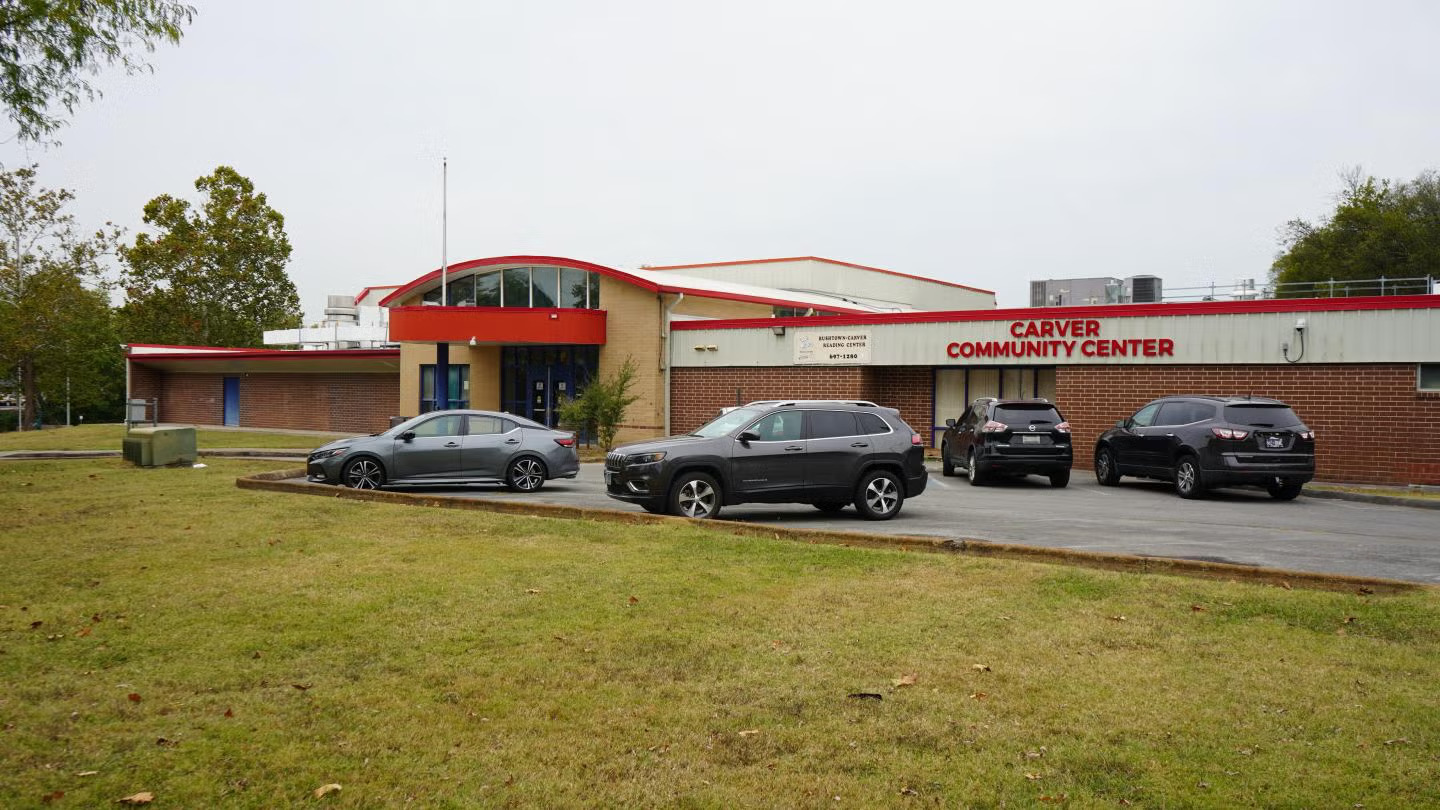
Key plans included: the acquisition of additional land between the boundaries of Warner Park on Third Street for a gymnasium and skating rink; construction of showers and a dressing room for softball on Holt Field; and the restoration of the Lincoln Community Center, recently ravaged by fire. One new project was the construction of “a Negro golf course on property bounded by North Orchard Knob Avenue, Cleveland Avenue, North Holly Street and Citico Avenue.” Commissioner Steve Conrad and Parks Superintendent Rudy Olgiati had investigated the possibilities of purchasing the land necessary for a nine-hole course and suggested $7,500 be set aside.
Almost a year passed before Commissioner George McInturff stepped forward on Aug. 30, 1948, and promoted the idea of a “municipally financed course” for the Carver community, asking his fellow commissioners to “see” the project to completion. He provided commissioners Olgiati and Frank Trotter with a detailed rendering of the area where the course would be constructed and a list of projected costs. Even though Mayor Hugh Wasson and Commissioner Roy Hyatt were absent, the three commissioners agreed that the project should be completed and authorized the appropriation of funds from the earlier budget access.
McInturff suggested that a $1,000 appropriation for the Lincoln High School, now being demolished, be reallocated to purchase land for the course.
Earlier that year, two golf “membership clubs” had been organized with their primary objective the “development of more interest in golf among Negroes” in Chattanooga. After meeting together for the first time in August 1948, the Women’s Golf and Recreation Club and the Men’s Golf Club merged with a new name, the Carver Golf Club. Officers elected were: Van G. Stern, president; Mrs. Marie Wheeler, vice president; Mrs. Mary J. Holt, secretary; Curtis Wheeler, treasurer; and Monroe D. Young, business manager. The Carver Golf Club would meet weekly – 8:30 pm on Thursdays – at the Lincoln Park Center.
The executive board appointed two committees: a membership committee and a governance committee (to create a constitution, by-laws and a policy manual.) Mrs. P. H. Vaughn was appointed chair and was joined by Joe Dansby, Howard Donaldson and Mrs. Velma McGhee. By early fall, the club had added increased membership fourfold. New members included Woodrow Keith, John Holmes, John Henry Sheppard, Herbert Talley, William Kelley, Robert Lee Hill and Julian H. Hoard.
When the Chattanooga City Commission reconvened to consider the creation of Carver Park and a Carver Golf Course, McInturff once again “kept his promise to seek the aid of his fellow commissioners” on the project. McInturff provided additional details and displayed maps of the area, identifying the area that might be used for the park and golf course.
Olgiati suggested that a small section already owned by the city could be developed as a three-hole course only to have his proposal met with “vehement objections from the Negro delegation” attending the meeting. As Stearns explained, the local “Negroes had played on a makeshift six-hole course adjoining the Milne Chair Company for nearly 15 years” and “deserved something better.” Stearns shared that many members of the Carver Golf Club had already purchased “new, expensive clubs” in anticipation of better facilities.
McInturff verified that statement, noting that he had “checked with a sporting goods store and found this to be true.”
The Carver delegation left with the “assurance of the officials” that the project would move forward quickly.
On Dec. 5, 1948, The Carver Golf Association sent a letter – “Carver Golfers Happy” — to the Chattanooga Daily Times thanking the city government for its assistance. “For many years, we have had promises for that golf course, but only promises. Therefore, we, the members of The Carver Golf Association, wish to publicly thank our present administration of commissioners in general and Commissioner McInturff in particular for the forward step in bringing this long-south project into a reality.” President Stearns concluded the letter with an acknowledgement that they were looking forward to the completion of the project by summer 1949.
Chattanooga delivered on its promise. On Sunday, July 31, 1949, the city and the local community dedicated the nine-hole course on North Orchard Knob Avenue. The first golf course within a larger park setting for African American players in Tennessee, the Carver Course, would remain open until the 1960s.
Linda Moss Mines is the official Chattanooga and Hamilton County Historian. For more on Local History, visit Chattahistoricalassoc.org.