
Ahead of Tuesday night’s game against the Nets, Brooklyn head coach Jordi Fernandez was asked for his assessment of the new-look Celtics.
His first observation was their competitiveness. His second was their focus on forcing turnovers.
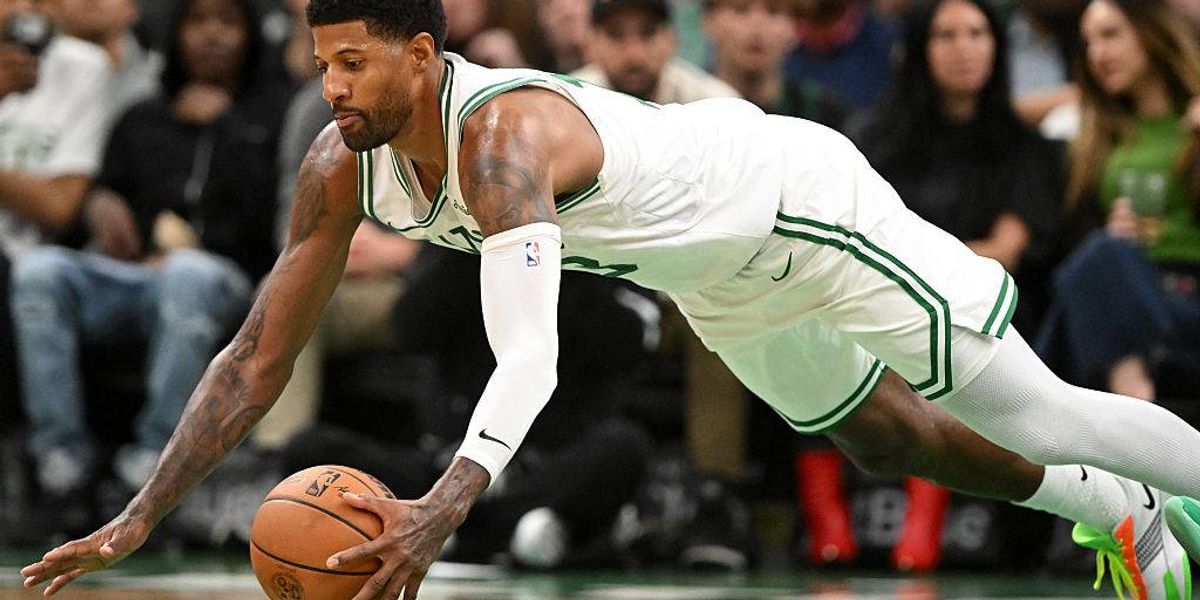
That’s part of the identity the Celtics are looking to establish. In fact, after the home-opening win over the Knicks, a game in which the Celtics forced 18 turnovers, Paul George said that’s the type of team they are.
“I think that’s what this team is,” he said. “We force turnovers.”
Through the first week and a half of the season, the Celtics have backed that up.
They’ve forced at least 16 turnovers in each of their first five games. For reference, they reached that mark just 16 times all of last season. Their 92 forced turnovers are also their most over any five-game stretch in the Joe Mazzulla era.
That’s a significant change for a team that has struggled to generate turnovers in recent years.
Since Mazzulla took over ahead of the 2022-23 season, the Celtics have ranked 26th (12.6%), 29th (12.2%), 24th (13.1%), and 26th (12.9%) in opponents’ turnover percentage. In turnovers forced per game, they’ve ranked 26th (12.7), 29th (12.0), 27th (12.8), and 29th (12.4).
This season, however, has been a different story.
Opponents are averaging 18.4 turnovers per game against the Celtics, which ranks among the top three in the NBA, trailing only the Raptors and Lakers. While it’s still a small sample size, the Celtics were already showing signs of improvement in the preseason, when they forced 82 turnovers across four games (20.5 per game).
So, what’s behind the early-season success?
“I think our length. I think our ability to guard. We’ve got great defenders, guys that sit down, guard their guys,” George said. “We’ve got guys that have high IQs to read and make plays. We’re becoming a team on a string where we rotate around each other and help one another. We’re active with our hands. We’ve got great rim protectors as our centers, and that allows us to be aggressive on the ball, knowing that we’ve got shot blockers at the rim.
The Celtics are being more aggressive and taking more risks both on and off the ball. They’re trusting their teammates to be in the right positions, rotate when necessary, and provide help when someone steps out to make a play.
The results have been evident.
The Celtics have totaled 46 steals and 101 deflections. They’re averaging 20.2 deflections per game, up from 15.2 last season, and 9.2 steals per game, up from 7.1. They’ve also drawn 16 offensive fouls (3.1 per game). Overall, opponents are averaging six more turnovers per game than they did last season (18.4, up from 12.4).
“I think it really just comes down to the connectivity that we all have defensively,” Baylor Scheierman said. “Obviously, we have guys that can defend the ball one-on-one, but I think it’s more of a connected effort of knowing that our teammates have our back, allowing us to be more aggressive, and that’s allowed us to get more steals, more deflections, and stuff like that defensively.”
Hugo Gonzalez echoed that sentiment, pointing to the importance of communication and playing as a unit.
“I just think it’s a communication thing and also trying to be connected,” Gonzalez said. “I think we do a great job of trying to be together on defense and knowing that everybody’s guarding everybody. Not you guarding your matchups. I think we do a great job of that.”
That connectivity and communication are especially important in the Celtics’ new defensive system, something the coaching staff has stressed since training camp.
“It’s been a big focus point for us starting in training camp, and then as we continue to start the year,” Scheierman said. “It’s probably been one of, if not the biggest things they’ve harped on. Just the connectivity.”
That emphasis has translated into contributions across the roster. Ten different Celtics have recorded multiple steals this season. George (12), Derrick White (7), and Jordan Walsh (5) lead the way, while Scheierman, Tatum, and Pritchard have each recorded four.
The deflections have been similarly spread out, with 12 different Celtics recording multiple. George (29), Scheierman (11), Tatum (10), and Pritchard (10) have all reached double figures.
“It’s communication, positioning, trusting that once I go, they’ll rotate around too,” Neemias Queta said. “Having that understanding that doing your job forces somebody else to do the next job.”
That trust also extends to the bigs protecting the rim behind them, namely Queta (eight blocks) and Mitchell Robinson (four blocks). Their presence gives the perimeter defenders more freedom to pressure the ball and take chances, knowing they have help waiting at the rim.
“It’s huge,” Scheierman said. “Knowing that they’re at the rim protecting, it really takes a lot off us as primary defenders on the ball or even off-ball, knowing that they’re back there kind of directing us and obviously helping at the rim.”
Forcing turnovers has been something the Celtics have wanted to do in the past. Now, they have the personnel to make it happen, and the early results are showing what that can look like.