
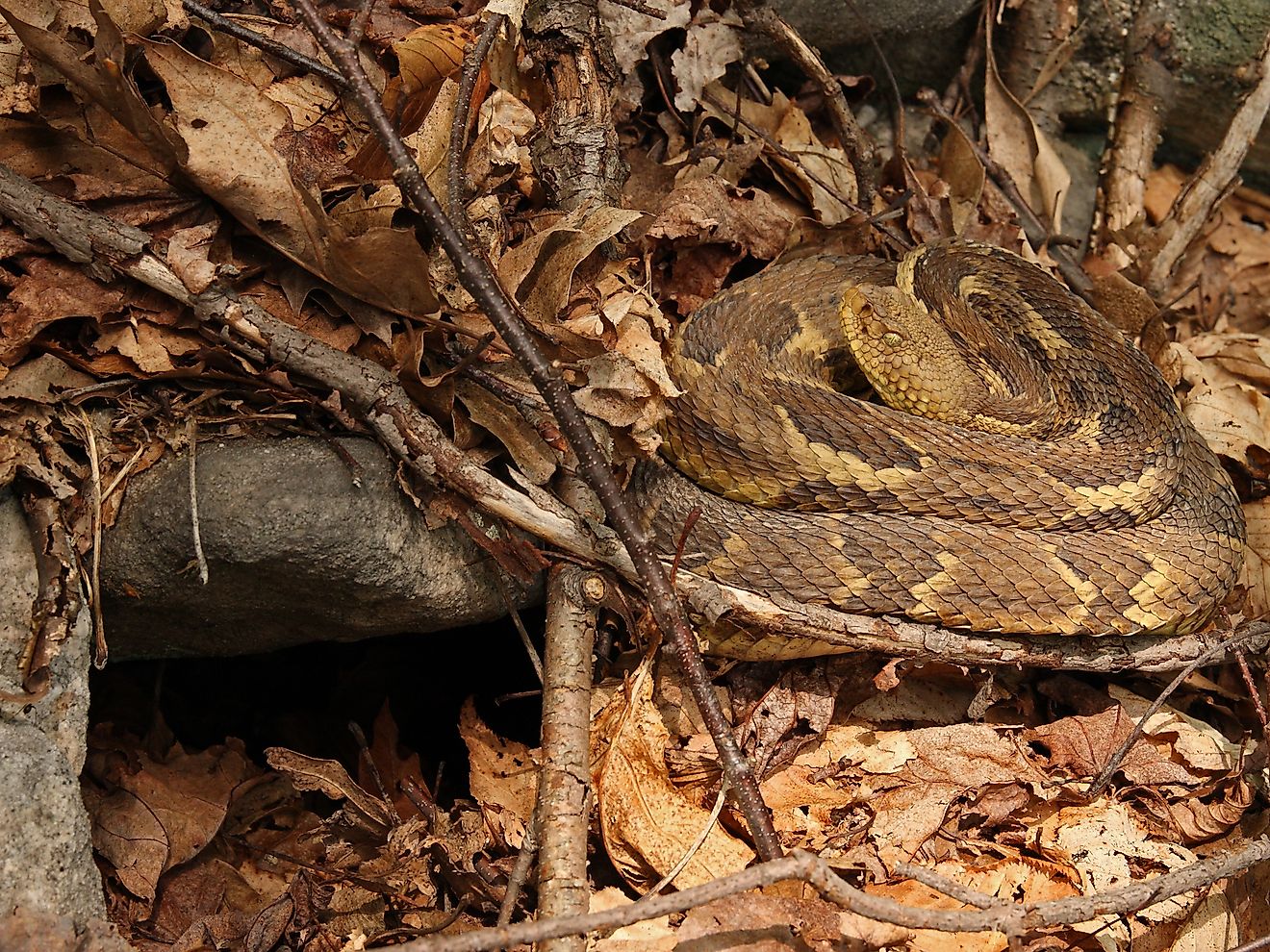
Every autumn, timber rattlesnakes in Indiana’s Brown County State Park leave the oak woods where they spent the summer and head back to the same rocky winter dens they use year after year. Park biologists have marked more than 100 of these snakes in a state where the species is endangered. Communal dens, called hibernacula, are how many northern snakes survive the cold. Underground cracks and rock piles that stay below the frost line let dozens of snakes, and sometimes several species, ride out the winter together, then emerge on warm spring days to bask in the sun near the entrance. A few state parks protect some of the most important of these dens in the country, and they offer a quieter, closer-to-home look at a natural ritual most people never see.
Brown County State Park, Indiana
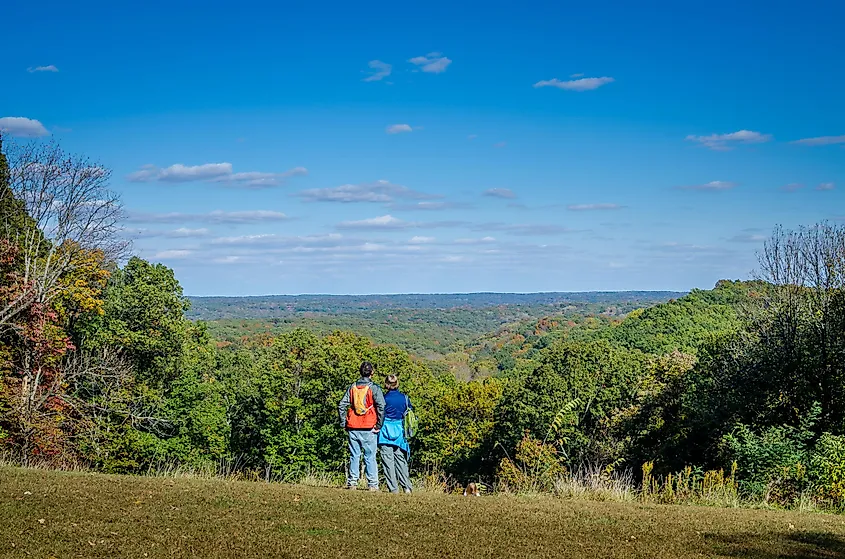 Hikers at Brown County State Park in fall.
Indiana’s largest state park is one of the only places left in the state where timber rattlesnakes survive. According to the Indiana Department of Natural Resources, staff and researchers have marked 115 rattlesnakes in the park, and the snakes return to winter dens set into undisturbed, rocky ridges far from the busiest trails.
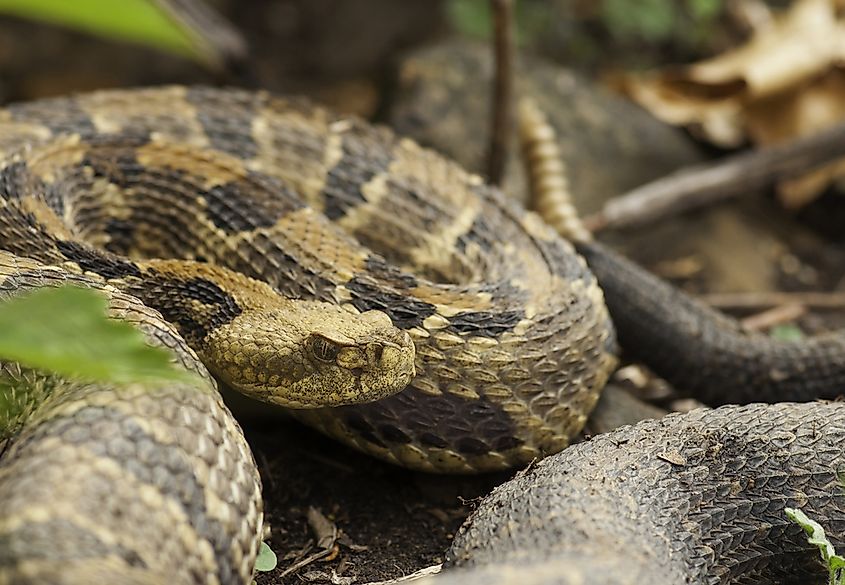 A timber rattlesnake, the species that returns each fall to Brown County’s rocky winter dens.
Brown County’s rattlesnakes are mostly yellow or brown, and they can grow up to 6 feet long, but they are rarely aggressive. The park reports that no visitor has been bitten by a timber rattlesnake there in the last 30 years. In spring, pregnant females linger near the dens, basking on sunny ledges before the rest of the snakes scatter into the surrounding oak forest to hunt mice, chipmunks, and squirrels.
Hudson Highlands State Park Preserve, New York
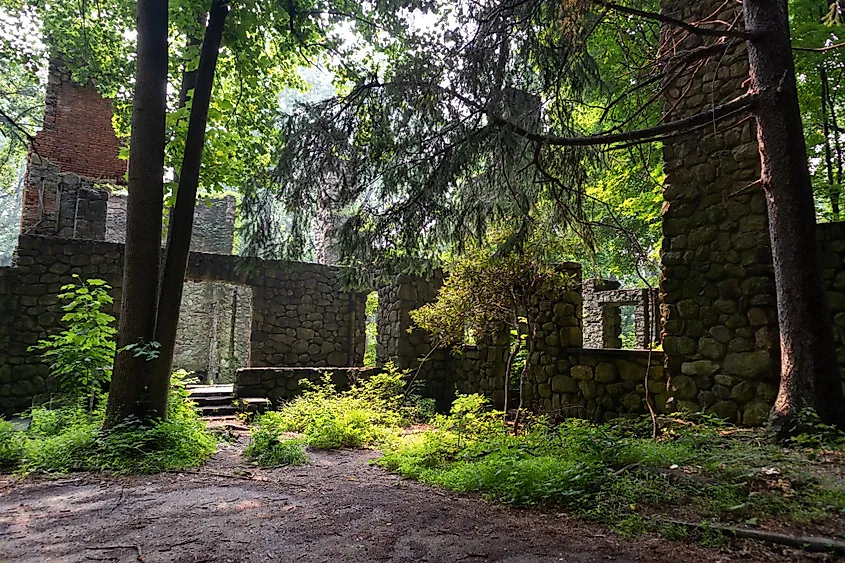 Ruins of the Old Cornish Estate at Hudson Highlands State Park Preserve in Cold Spring, New York.
In the steep, rocky ridges along the Hudson River, a single snake den once made legal history. In the 1990s, a timber rattlesnake den was found on land next to Hudson Highlands State Park Preserve, on property where a company planned to expand a quarry and fence the snakes out. New York’s environmental agency stepped in, and in 1999, the courts ruled that the state could protect the den’s habitat, not just the snakes themselves.
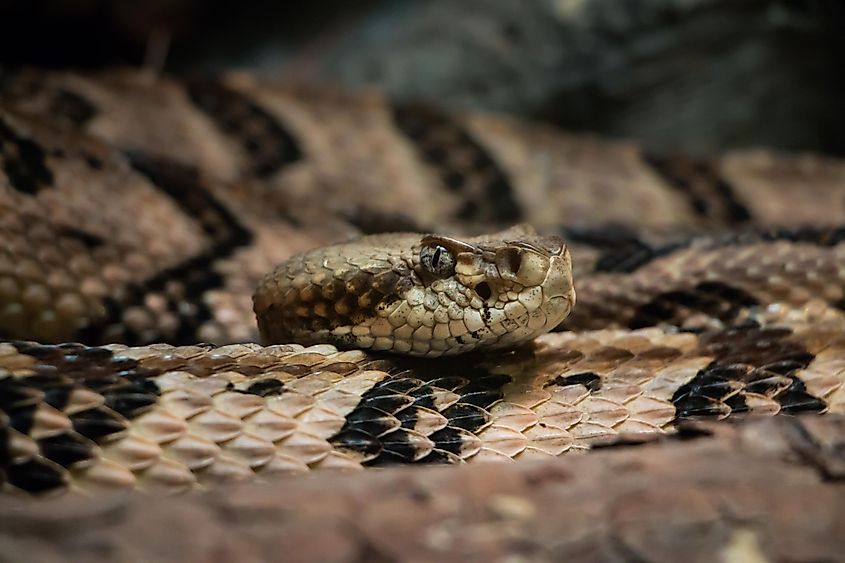 A timber rattlesnake, a threatened species in New York.
The site was later bought by the conservation group Scenic Hudson and joined to the park, linking its northern and southern sections. Timber rattlesnakes are listed as threatened in New York, and state biologists still monitor known dens across the Highlands, where fractured bedrock and sunny, south-facing slopes provide ideal winter shelter.
Whitewater And Great River Bluffs State Parks, Minnesota
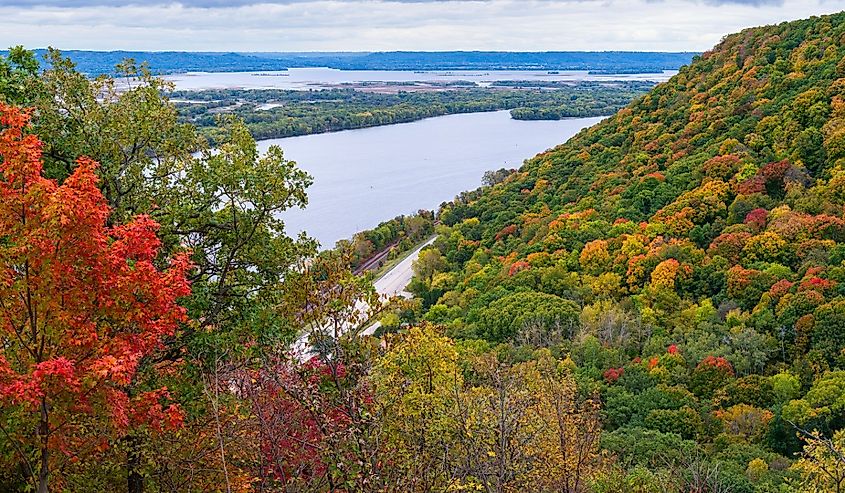 Great River Bluffs State Park, overlooking the Mississippi River in southeastern Minnesota.
Minnesota’s timber rattlesnakes live only in the blufflands of the state’s southeastern corner, and two state parks sit in the heart of their range. At Whitewater State Park and Great River Bluffs State Park, the snakes den in rocky crevices on south- and west-facing bluff prairies, where the sun warms the ground early in spring and late into fall.
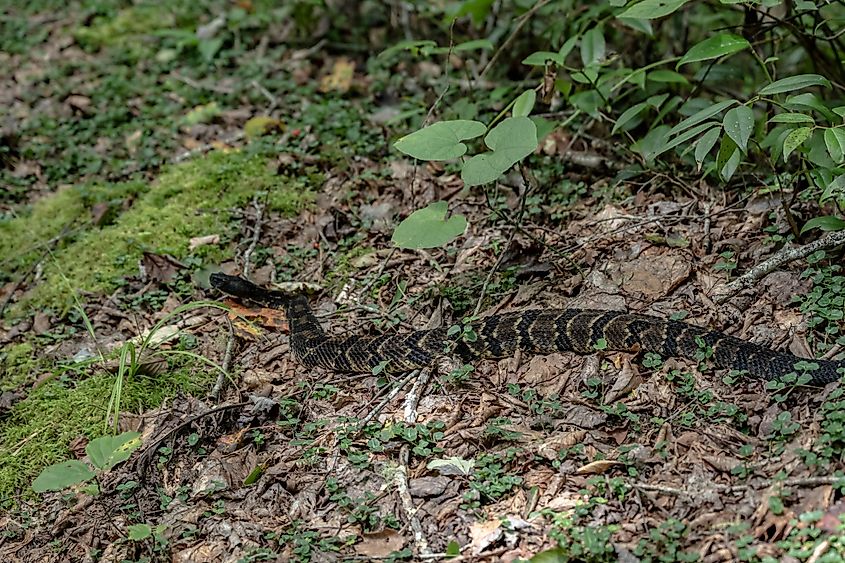 A timber rattlesnake on the forest floor. In Minnesota, the species is listed as threatened.
The Minnesota Department of Natural Resources lists the species as threatened and notes that many once-active dens have disappeared, which is why the state has worked to restore bluff prairie habitat and protect remaining dens on public land, including state parks. Both parks post warning signs about rattlesnakes along their bluff trails, and visitors are asked to stay on the trail and give any snake plenty of room.
Why Snakes Share Winter Homes
Snakes cannot make their own body heat, so in cold climates they have to find a place to wait out the winter where the ground never freezes. Good den sites are rare, which is why many snakes return to the same one every fall, and why a single crevice can hold dozens of rattlesnakes along with black rat snakes and copperheads. Eastern garter snakes take the habit even further. According to park naturalists in Michigan and Ohio, they sometimes gather by the hundreds or even thousands in a single den, then emerge together in spring to bask and mate. The largest known gatherings, at Manitoba’s Narcisse Snake Dens, are in a Canadian wildlife management area rather than a state park, but the same behavior plays out on a smaller scale in parks across the northern US every spring.
Watching From A Safe Distance
Snake dens are among the most sensitive spots in any park, and disturbing them can harm entire local populations. Most parks do not publicize exact den locations for that reason. For visitors, the safest approach is simple. Stay on marked trails, watch where you step and put your hands on rocky ledges in spring and fall, and never try to handle or move a snake. Timber rattlesnakes are protected in every state on this list, and their best chance of survival is being left alone.
Victoria DeBeau November 1 2026 in Places