
Topics in this edition of the PHR Mailbag include a tough start to the season for the Kings, discussing a pair of Penguins veterans, and much more. If your question doesn’t appear here, check back in last weekend’s mailbag while we’ll have one more from our most recent call for questions next weekend.
lgr34561: What do you have to say to the Rangers’ start? How about Garand?! Do you think they can keep this up without Shesty or will the wheels eventually fall off of Garand?
I’d say there’s a reason not to get too excited (or down, depending on the situation) on a small sample size to start the season. Teams can be hot (or cold) out of the gate but lots of times, they often get at least somewhere close to where they were expected to be. And here we are, a couple of weeks from when this question was asked and the Rangers are about where they were expected to be.
They entered play this weekend outside of the playoffs, though just by one point. Going into training camp, most probably would have had New York squarely in the playoff bubble with a best-case scenario of third in the division and the worst-case one being that they miss the playoffs. So, a month in, they’re about where most thought they would be. Doing so without Igor Shesterkin for a big chunk of that is impressive.
But can a team get into the playoffs with Dylan Garand, Joonas Korpisalo, and James Reimer comprising their goalie group? I have a hard time saying yes to that. Garand isn’t as bad as he has been lately; I’m willing to chalk that up to a bit of fatigue and teams getting a better book on him in his first extended NHL action. I’m happy that he’s going to get an extended NHL look as I was stunned that he made it through waivers. I think he’s an NHL-caliber netminder, just not a starter. And neither are the other two.
They’re in a conference that has the deepest division (the Atlantic) where both Wild Card spots could easily go to them once again. Carolina and Washington were the in-season favorites for the top two seeds in the Metropolitan and now New Jersey has a goalie, making them the likely candidate for the third spot. I don’t see a real window for them to be a playoff contender here. But they will get a long look at Garand to see if he can be a fixture as Shesterkin’s backup and that will have some value to them. But I’d be surprised to see them in the postseason.
bigalval: The Kings have been off to a horrendous start this year, to say the least. They finally got their first win of the year, but have been in most of the games except for the first game of the year. The team is very old and I don’t know why Holland keeps on bringing old guys. It’s time for Luc and Ken Holland to be replaced. I think it’s time for a fire sale and a complete rebuild. What are your thoughts on the Kings?
A rebuild is long overdue for the Kings but the internal appetite for one clearly isn’t there. Whether that’s from Luc Robitaille or an ownership directive remains to be seen. It makes a big difference, too. If this isn’t ownership saying that selling isn’t an option, then a change in the team presidency could allow them to chart a new path.
But the team’s actions, going back to the hiring of Holland in the first place, are to push ahead as a win-now team. That’s why Holland keeps bringing in veterans. He’s going for players with a track record who he trusts to fill specific spots on the roster. It’s an approach I understand given what the marching orders clearly are: Try to make the playoffs. I don’t agree with it but I get it.
The problem is that the Pacific Division isn’t the deepest at the moment. With the roster they have, they could legitimately land a bottom seed in the playoffs without it being too surprising. They need a bit more consistency in goal (looking at you, Darcy Kuemper) and some of their offensive players to produce a bit more (Quinton Byfield and Adrian Kempe come to mind) but I could see a path for them to squeak in.
Would it mean yet another first-round exit? Probably. But that seems to be acceptable from an expectations level. Given the current people in place, I don’t think those expectations are changing which means their fortunes aren’t going to be changing either.
Unclemike1526: Are you as surprised as I am that Teuvo Teravainen is still a Hawk on an expiring deal? With a lot of teams needing a C and the Hawks playing Teuvo on the wing and a need on defense (Especially RH defense) that they haven’t made a move yet? It’s mysterious to me. Thanks.
First, Teravainen hasn’t played a regular center role since early in his career in Carolina (and even then, it wasn’t full-time). He can fill in down the middle in a pinch for a game or two but he is not a natural pivot. Teams looking at him are looking at him as a winger, not a center. That hurts his trade value since wingers are the skater position typically in the least demand.
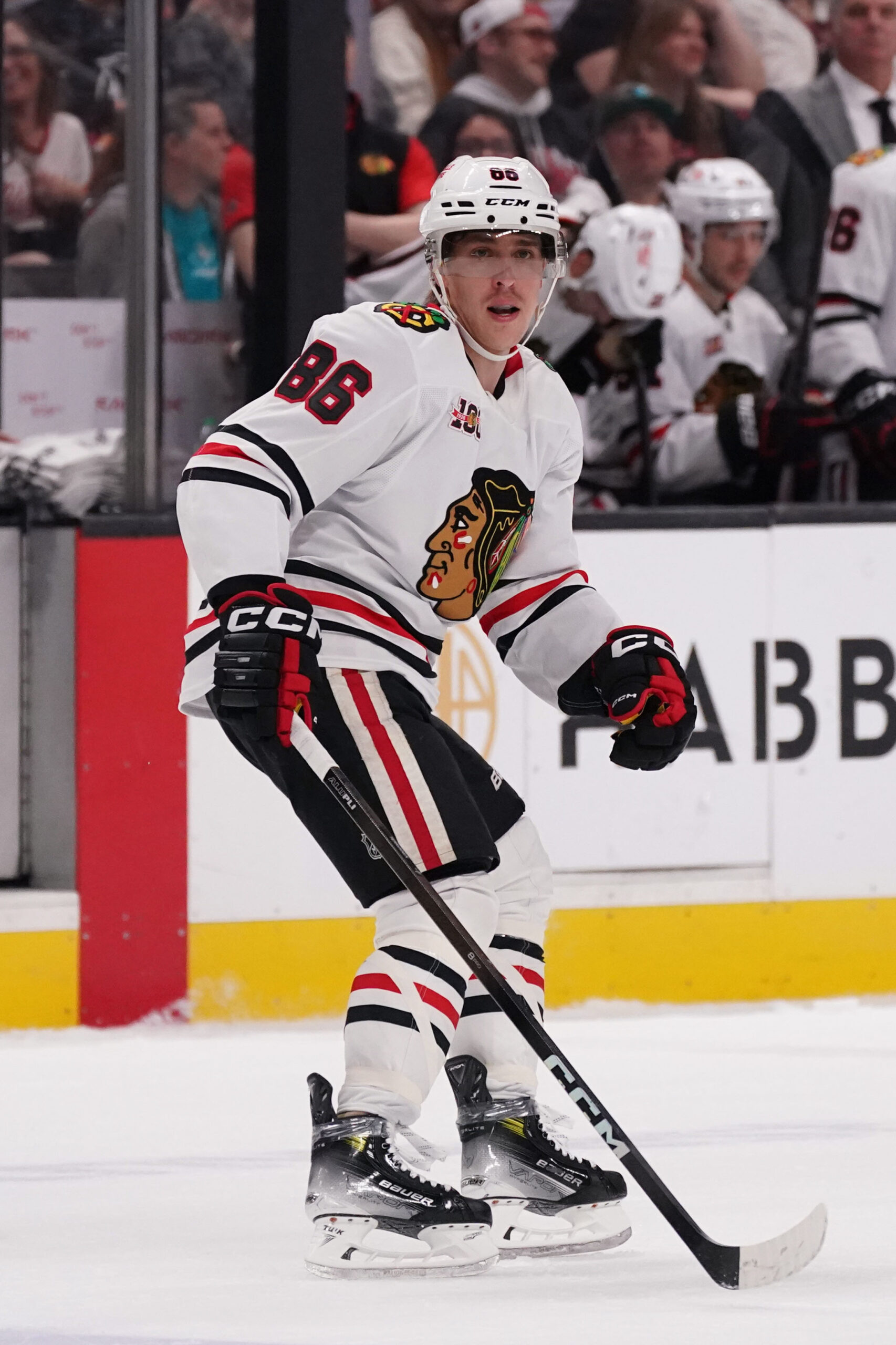 His contract also hurts. Yes, it’s an expiring deal, but he has a $5.4MM AAV. That’s simply not a price tag that teams are going to be willing to pay for someone who isn’t good enough to be a full-time top-six piece on a good team and is not a great fit as a bottom-six player. If Teravainen were to be placed on waivers tomorrow, he’d probably pass through unclaimed, simply because of the contract. While he is a more effective player than Andre Burakovsky was with Chicago, there are some parallels to his situation from a year ago. And we all saw his trade value, a token late-round pick to save the Blackhawks from buying him out, a trade the Senators probably already regret.
I think Teravainen will do better than that on the trade front at some point. But I think he profiles as more of a move at the trade deadline where the team eats half the remaining contract and gets a better pick back than a sixth-rounder (which is what Burakovsky fetched).
As for Chicago needing defensive help, you’re not wrong. But they wouldn’t get a blueliner of consequence for Teravainen’s services. They’d be getting more of a fringe player, likely one who would be on the fringes of the lineup, and the Blackhawks might still need to retain money as a lot of teams are tight to the cap ceiling right now. They already have a few of those in their younger roster players so, for a team that’s still rebuilding, they’re probably better off giving those reps to them.
Jolly Roger: Successfully dumping the puck out of the defensive zone to relieve pressure is a good play, especially if it is done without icing the puck. However, in most cases it is technically a giveaway as it results in a loss of possession.
Do you know if such a play officially counts as a giveaway? Doing that would obviously make the giveaway metric useless.
This is one of those stats that falls under the ‘miscellaneous stats’ umbrella, formerly known as ‘extra stats’ (the NHL isn’t known for being creative with category names). That means there is no defined definition for it and interpretation of what constitutes a giveaway can be wildly different from arena to arena. Other categories classified this way are takeaways and hits, the latter of which is so comically scored differently from rink to rink that it largely loses all meaning. Giveaways aren’t as bad, at least, but boy, there is still a lot of variance. Below are the total number of giveaways recorded in each of Thursday’s 11 games:
27, 42, 30, 35, 29, 34, 37, 39, 34, 21, 38
That’s a big gap from game to game. Yes, some have more giveaways than others, but probably not 50% more. That just shows that there isn’t a uniform definition of a giveaway. That said, for the most part, I don’t think a successful zone clear is typically classified as a giveaway. If you bank it off the boards to center ice, it’s a change of possession but not a giveaway. But if you pass the puck to center, miss the intended target, and it goes to an opponent, it probably is, even though the puck technically successfully cleared the zone. But given the lack of a uniform standard, the stat itself probably isn’t the most reliable to glean much from.
SouthernBuc: What type of return could the Pens get in a Rakell or Rust trade? Did they wait a year too long?
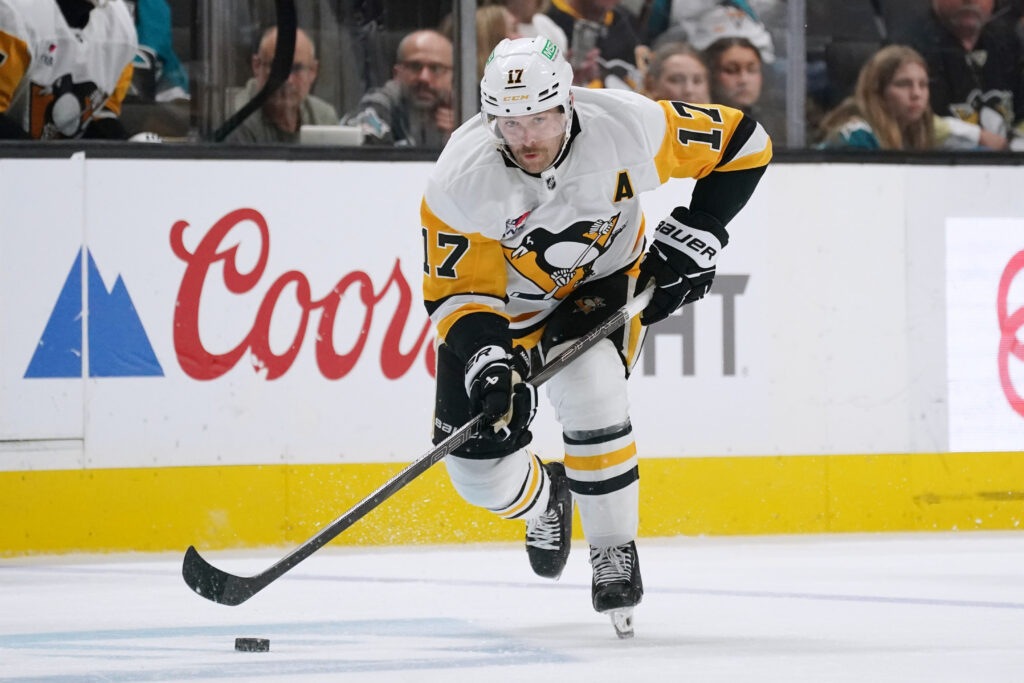
A lot depends on the next few months. Bryan Rust is now out for another month and change with a lower-body injury which takes him out of the mix for a while. He was off to a decent start before being sidelined so will he be able to get back to that level, playing around a 60-point pace or so? If yes, I don’t think they will have waited too long. He has an affordable contract and a strong track record. Teams will pay for that.
As for Rickard Rakell, I think they may have waited too long to move him for top value. His start to the season is a bit concerning and it leads to thoughts that his 70-point effort two years ago was the outlier that’s not going to be repeated. He may be more of a 45-50-point player in the eyes of the trade market. Don’t get me wrong, there’s still value here, especially on a $5MM price tag through next season, but it’s probably not going to be quite the caliber of return that it would have been had GM Kyle Dubas moved him right after that 70-point campaign.
From a rough value perspective, I think Rust would bring back a first-round pick plus another piece of some significance (not quite worth that, but not a nothing asset either). Rakell’s a little trickier. I wouldn’t rule out a late first-round pick but teams would probably be more inclined to offer two seconds, a price tag I don’t see the Penguins wanting. In both cases, I think they’d prefer young players to picks and would be seeking first-round-value youngsters, plus taking back a contract to make the money work.
Unless they’re completely out of the playoff mix in a few months, however, I’m curious to see if they’ll actually go through with being sellers. They’ve been open to it for a couple of years now but haven’t pulled the trigger. At some point, will they actually go through with it? If they do, they should be able to add some quality assets by moving these two.
Jolly Roger: What has been the value of the latest local TV deals for the NHL teams and how do they compare with the previous contracts?
The terms of local deals are seldom disclosed publicly so there’s not a lot I can pull up for you there. For teams who own the team and the TV network, it’s often a below-market value on paper for accounting purposes. With the league taking over broadcasting some teams following the collapse of the FanDuel networks, they might be more of a cost- and revenue-sharing arrangement over a fixed fee. So, let’s look at the national rights instead, where there is some information available.
The current US television deal between ESPN and TNT runs at $625MM per year combined and runs through next season. Meanwhile, Sportsnet in Canada has the rights there, paying $11 billion CAD over 12 years, starting this season. At the time, that was around $7.7 billion in USD, or about $642MM US per year. There are carve-outs (Amazon and French TV rights) in the Canadian deal but those are purchased from Sportsnet, so it’s no extra money in the league’s coffers.
For comparison, the previous US deal with NBC was $200MM per year for a decade. Before that, post-lockout, it ranged between $60MM and $70MM per season with NBC even getting a deal that largely amounted to revenue sharing instead of a fixed fee. Pre-lockout, they were at $120MM per season. The last Canadian deal was $5.2 billion Canadian over 12 years, or about $433MM CAD ($310MM USD) per season.
It wouldn’t be surprising to see the US national TV rights deal wrapped up over the next few months or so as leagues like to get these done early. As we’ve seen with other sports, it’ll probably have a streaming network in the mix with some exclusive games to up the overall revenue and further send the salary cap skyrocketing.
Photo courtesy of David Gonzales-Imagn Images via Reuters Connect.