
Democrats secured control of the Senate on Tuesday, a seismic shift that effectively blocks President Trump’s campaign to reshape the Federal Reserve and neutralizes what many analysts viewed as a threat to the central bank’s independence.
It also heightens the challenge for Trump should he maneuver to replace any sitting officials.
“Democrats’ control of the Senate reclaims the party’s ability to approve or deny the President’s nominees for judges and heads of other executive branch agencies,” Jonathan Pingle, an economist for UBS, wrote in a note. “That includes the need for Democrats to approve any new members of the Board of Governors of the Federal Reserve System should one of the existing governors step aside.”
That political firewall directly impacts the administration’s ongoing effort to remove Fed governor Lisa Cook. Trump fired Cook in August 2025, claiming she committed mortgage fraud by making misrepresentations on loan documents years before her appointment to the central bank. Cook, a Biden appointee, has denied any wrongdoing and sued. The lawsuit has gone through multiple court rungs before reaching the Supreme Court earlier this year.
Last month, Trump established a committee to determine whether her statements constituted legal “cause” for removal from the central bank, signaling that his efforts to oust her are continuing.
Read more: How much control does the president have over the Fed and interest rates?
However, Tuesday’s election significantly changed the stakes of that investigation. Michael Feroli, chief US economist for JPMorgan, noted that the Senate flip alters the math for the White House.
“Even a successful removal would not open a seat up to a friend of the administration,” Feroli wrote in a client note.
Jaret Seiberg, analyst with TD Cowen, agreed that the inability to confirm a replacement may make Trump less inclined to fire Cook.
Not everyone is convinced the administration will back down, however. Loretta Mester, former head of the Cleveland Fed, told Yahoo Finance, “Perhaps it makes it less likely he will succeed, but I’m not convinced it will stop the president from trying.”
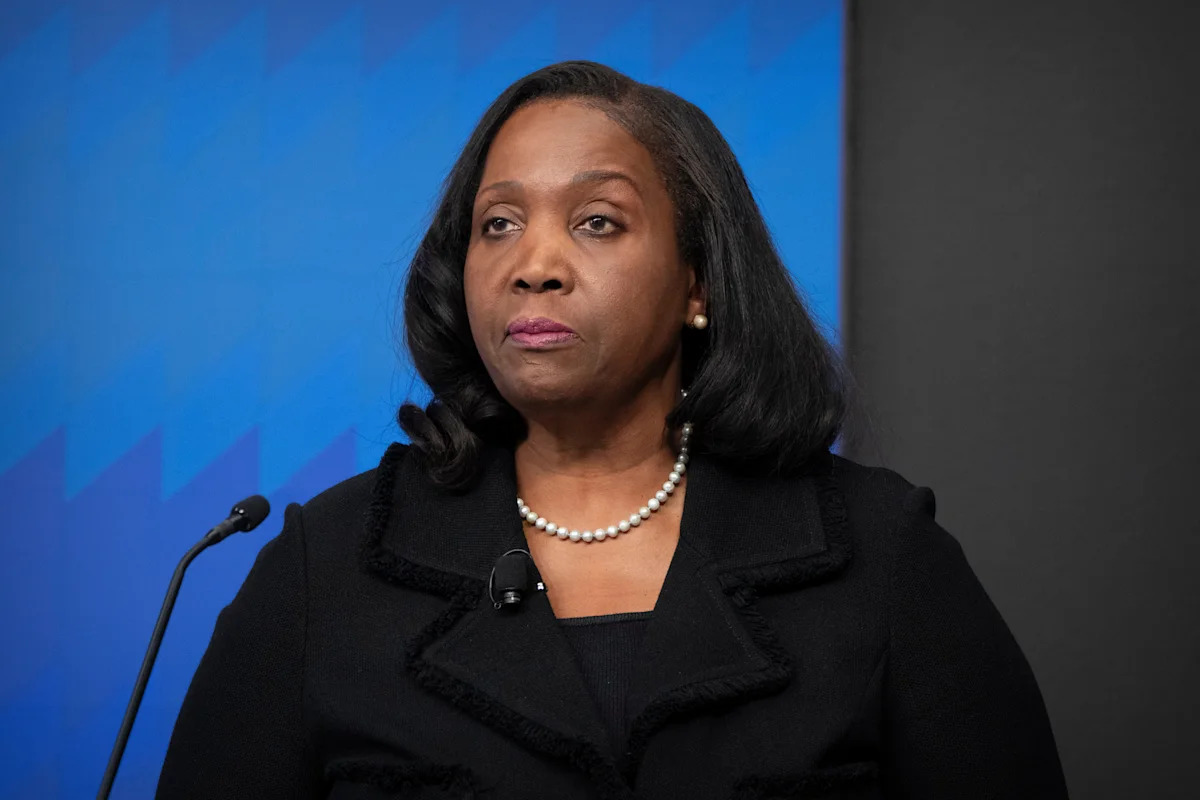
 Federal Reserve governor Lisa Cook speaks during an event at the Brookings Institution on Nov. 3, 2025, in Washington. (AP Photo/Mark Schiefelbein, File) · AP Photo/Mark Schiefelbein
More broadly, Democrats taking power in Congress changes the atmosphere in which Fed officials work to set monetary policy devoid of political influence.
Trump has been vocal and persistent in urging policymakers to lower interest rates. The central bank has held steady, raising rates at times despite the White House pressure. The new power dynamic gives them more cover.
“The election result means the president has less leverage — on Congress, on the country and on the Fed,” Daleep Singh, chief global economist at PGIM and a former senior official in the Biden administration, said in an interview on Bloomberg Television. “Voters are angry about the rising cost of living. You put those two thoughts together, and the Fed is uniquely positioned to do something about it.”
Read more: How jobs, inflation, and the Fed are all related
The Fed’s future leadership and makeup
Beyond the Cook dispute, the new Senate majority will dictate the Fed’s long-term leadership.
While natural turnover on the Board of Governors for 14-year terms is historically slow, key institutional shifts are looming. There is only one governor whose term ends in the next two years — Jay Powell’s in January 2028. As a result of the election, the administration will now need to replace Powell with someone amenable to Senate Democrats, or else leave the seat vacant. Vice Chair Philip Jefferson’s term as vice chair ends in September, though he could remain as a governor.
In the near term, the political shift provides breathing room for current Fed Chairman Kevin Warsh, Trump’s hand-picked appointee.
RSM economist Joseph Brusuelas deemed Warsh one of the big winners of the election.
“One gets the sense that the administration will have other priorities over the next two years,” Brusuelas wrote on X. “Warsh and the Fed will be free to pursue price stability and shaping policy in the best interests of the economy rather than the incumbent.”
But Feroli warned that if Warsh wants to remain Fed chair beyond one term, which ends in May 2030, he should begin courting the new legislative majority.
“While there’s another election between now and then, last night increased the odds his term will end with Democratic control of the Senate,” Feroli said. “Unless he wants to be a one-term chair, Warsh will need to spend less time looking out the window and more time walking the halls of Congress.”
Follow Jennifer Schonberger on X @Jenniferisms and on Instagram.