
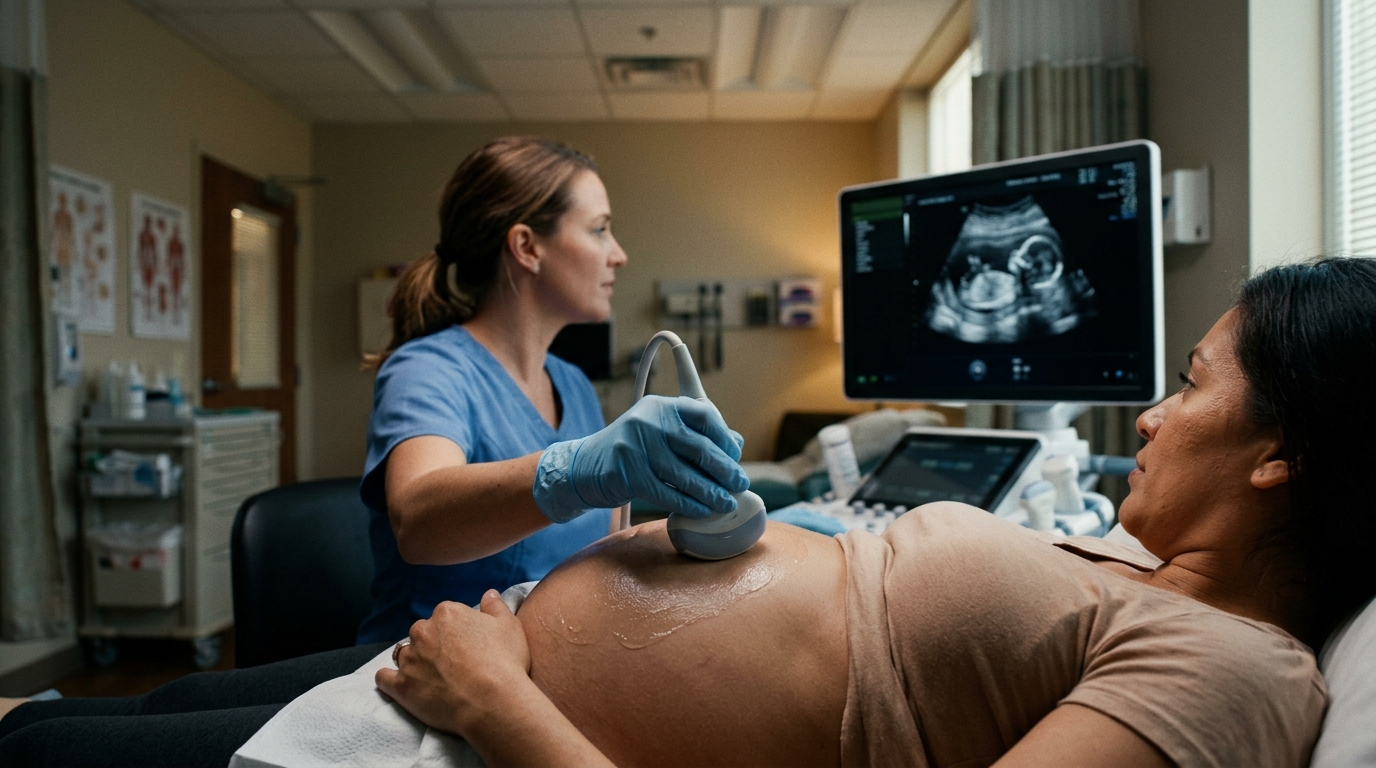
An integrated diagnostic approach combining karyotyping, copy number variation sequencing, and whole exome sequencing achieved an overall molecular diagnostic yield of 45.95 percent in Chinese fetuses with suspected skeletal malformations, according to research published in BMC Pregnancy and Childbirth. The investigation evaluated singleton pregnancies with skeletal abnormalities detected by prenatal ultrasonography between January 2019 and December 2022 to assess the genetic etiology and clinical utility of combining multiple genomic screening modalities.
Fetal biological samples were collected through amniocentesis or cordocentesis to perform simultaneous karyotyping, copy number variation sequencing (CNV-seq), and whole exome sequencing (WES). Karyotyping and CNV-seq identified chromosomal abnormalities in 16.22 percent of cases (6 out of 37). The subsequent application of whole exome sequencing revealed an additional 11 cases harboring pathogenic or likely pathogenic variants across six distinct genes, providing an incremental diagnostic yield of 29.73 percent beyond chromosomal analysis alone.
The study evaluated diagnostic efficacy across clinical severity tiers by stratifying fetuses into lethal, intermediate, and non-lethal groups based on prenatal ultrasound examinations. Molecular diagnostic rates were highest in the lethal group at 71.43 percent (5 out of 7), followed by 46.67 percent in the non-lethal group (7 out of 15) and 35.71 percent in the intermediate group (5 out of 14). The researchers noted that these yield differences between severity strata did not reach statistical significance (P > 0.05).
Bioinformatic analysis of unmapped CNV-seq reads against a pathogen reference database enabled the incidental detection of intrauterine infection. This pipeline identified a congenital cytomegalovirus infection in case 37, leading to its exclusion from the ultrasound-stratified analysis. Genetic sequencing also revealed novel molecular alterations, including one rare case presenting two de novo COL2A1 variants positioned in cis on the same allele and another case harboring a previously uncharacterized de novo EHMT1 variant.
Documented pregnancy outcomes showed that the rate of pregnancy termination was roughly twice as high among molecularly confirmed positive cases compared to genetically negative cases, at 52.94 percent versus 26.67 percent. Furthermore, no live births with normal physical development occurred among fetuses with molecularly confirmed lethal conditions. The authors concluded that karyotyping, CNV-seq, and WES represent complementary prenatal technologies that, when integrated with ultrasound severity stratification, clarify risk assessment and support reproductive decision-making.
Subject of Research: Prenatal genetic diagnosis and etiology of fetal skeletal dysplasia using combined molecular technologies
Article Title: Prenatal diagnosis and genetic etiology of fetal skeletal dysplasia in China: a combined application of karyotyping, CNV-seq and WES
Article References: Hu, Y., Liu, W., Peng, Y., Ding, Y., Wan, X., Ye, L., Zhang, S., Wang, J., & Xu, J. (2026). Prenatal diagnosis and genetic etiology of fetal skeletal dysplasia in China: a combined application of karyotyping, CNV-seq and WES. BMC Pregnancy and Childbirth. https://doi.org/10.1186/s12884-026-10173-6
Image Credits: AI Generated
DOI: 10.1186/s12884-026-10173-6
Keywords: prenatal diagnosis, skeletal dysplasia, karyotyping, CNV-seq, whole exome sequencing, fetal ultrasonography, COL2A1, clinical genetics, Prenatal, diagnosis, genetic, etiology