
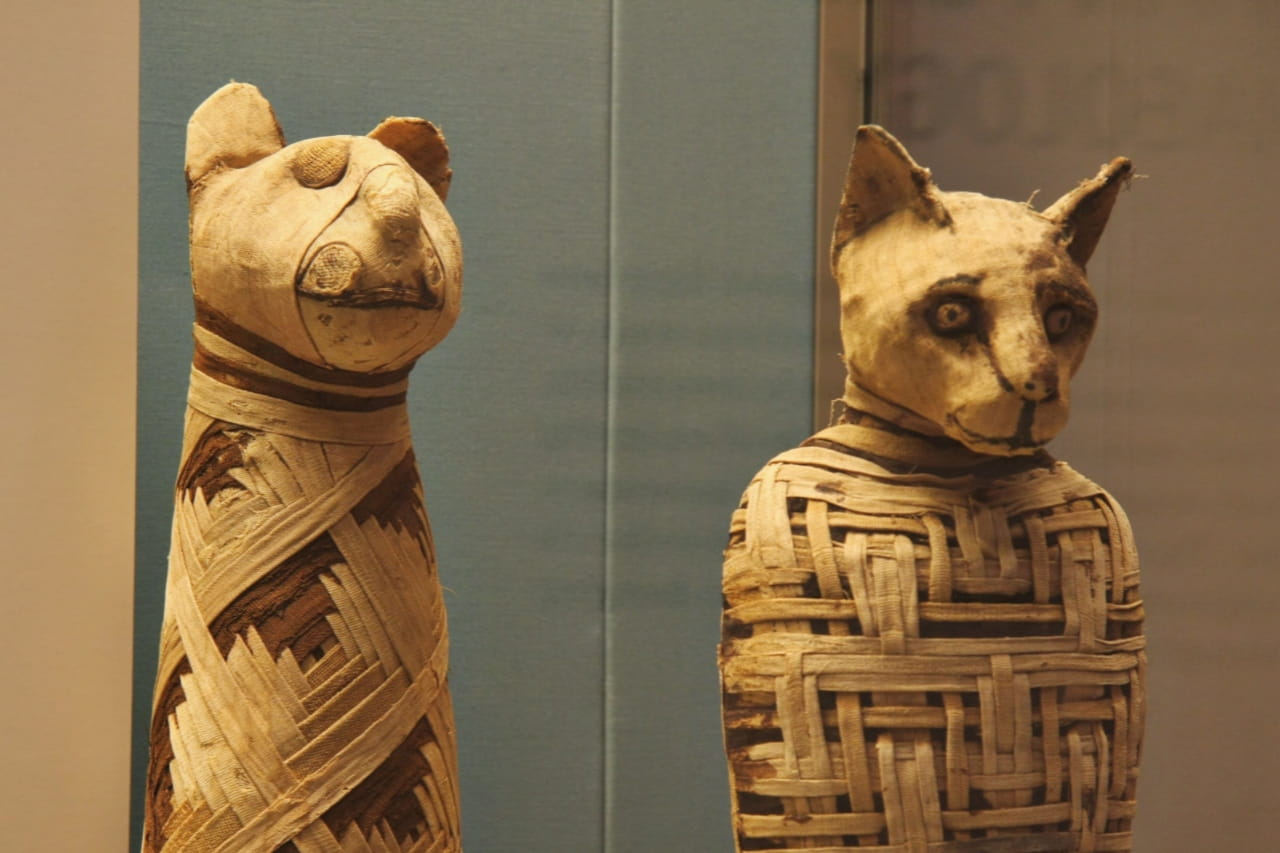
A box of cat skulls in a Vienna museum is showing researchers how ancient Egyptians kept animals meant for sacrifice. A team from Belgium and Italy studied 131 skulls from Beni Hassan, a burial site along the Nile, and found disease, injury and violence in most of the animals.
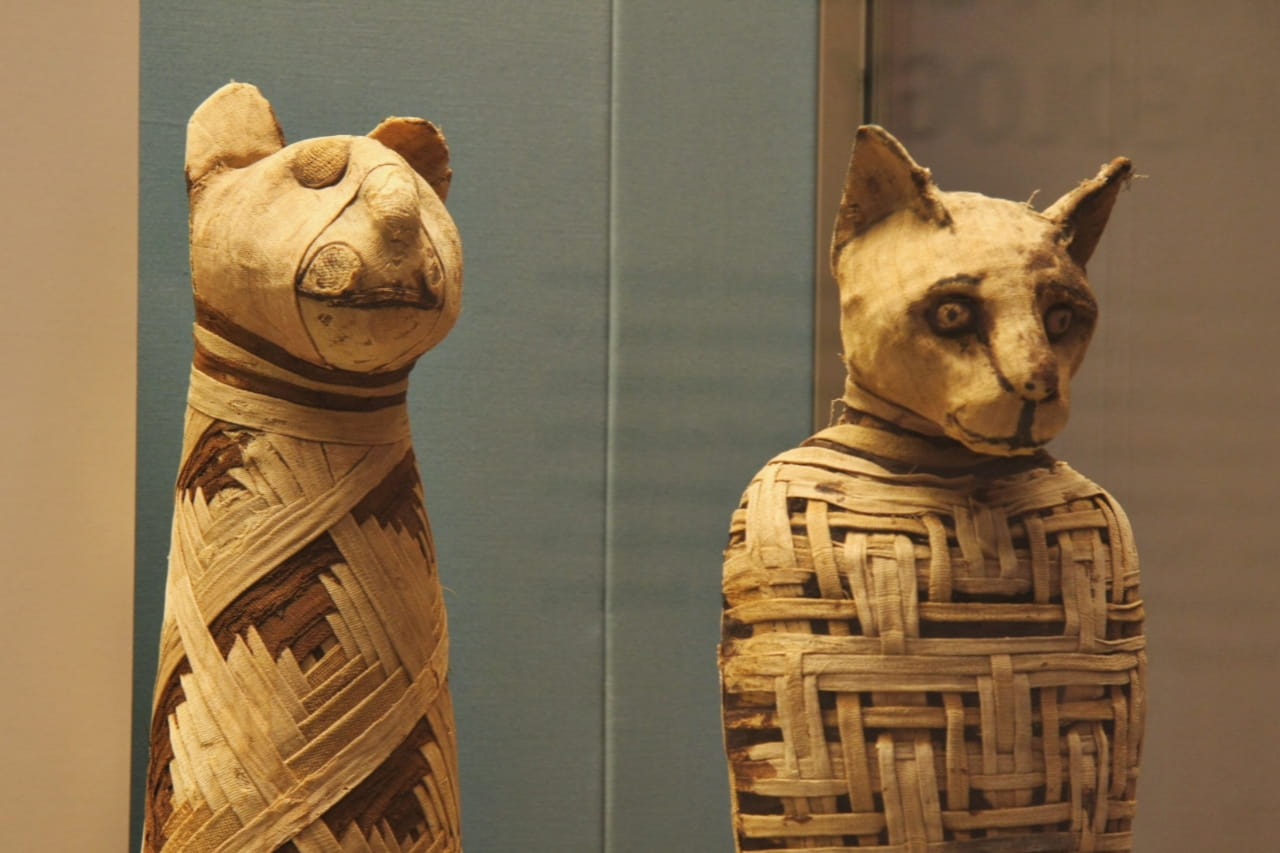 Egyptian mummies of animals in the British Museum. Credit: Mario Sánchez, CC BY-SA 2.0
The skulls came from cat mummies unwrapped in the 1800s. The Natural History Museum in Vienna bought them in 1883 for 800 florins from the brother of the late zoologist Ludwig Jeitteles, the original collector. Letters from dealer Friedrich Mook in the museum archives name Beni Hassan as the source. The authors say the set stayed unknown to science until now and call it the largest museum collection of Egyptian cat skulls with a documented origin.
Seven skulls belong to jungle cats, a larger wild species. The rest vary widely in size, with skull lengths from 77 to 132 millimeters. Most are house cats, though some could be African wildcats or hybrids. Of the 131 animals, 113 were adults, 7 were subadults and 11 were juveniles. X-ray studies of mummies from other collections show mostly young cats, with adults making up under 23 percent. The authors link the adult bias in Vienna to a preference for adult specimens among early zoologists.
Health problems stood out, with 81 skulls, or 62 percent, showing at least one condition. Twenty-six animals had gum disease, 24 had lost teeth and 22 had tartar buildup. Dental rates were similar to or lower than those in modern feral cats. Thirty-five skulls had pitting and eight had a rough surface. The authors suggest skin infections in crowded quarters caused scratching and bone reaction. Nineteen skulls had small holes in the eye socket floor, which look like a human condition tied to anemia, but the cause in cats stays unclear because only skulls survive.
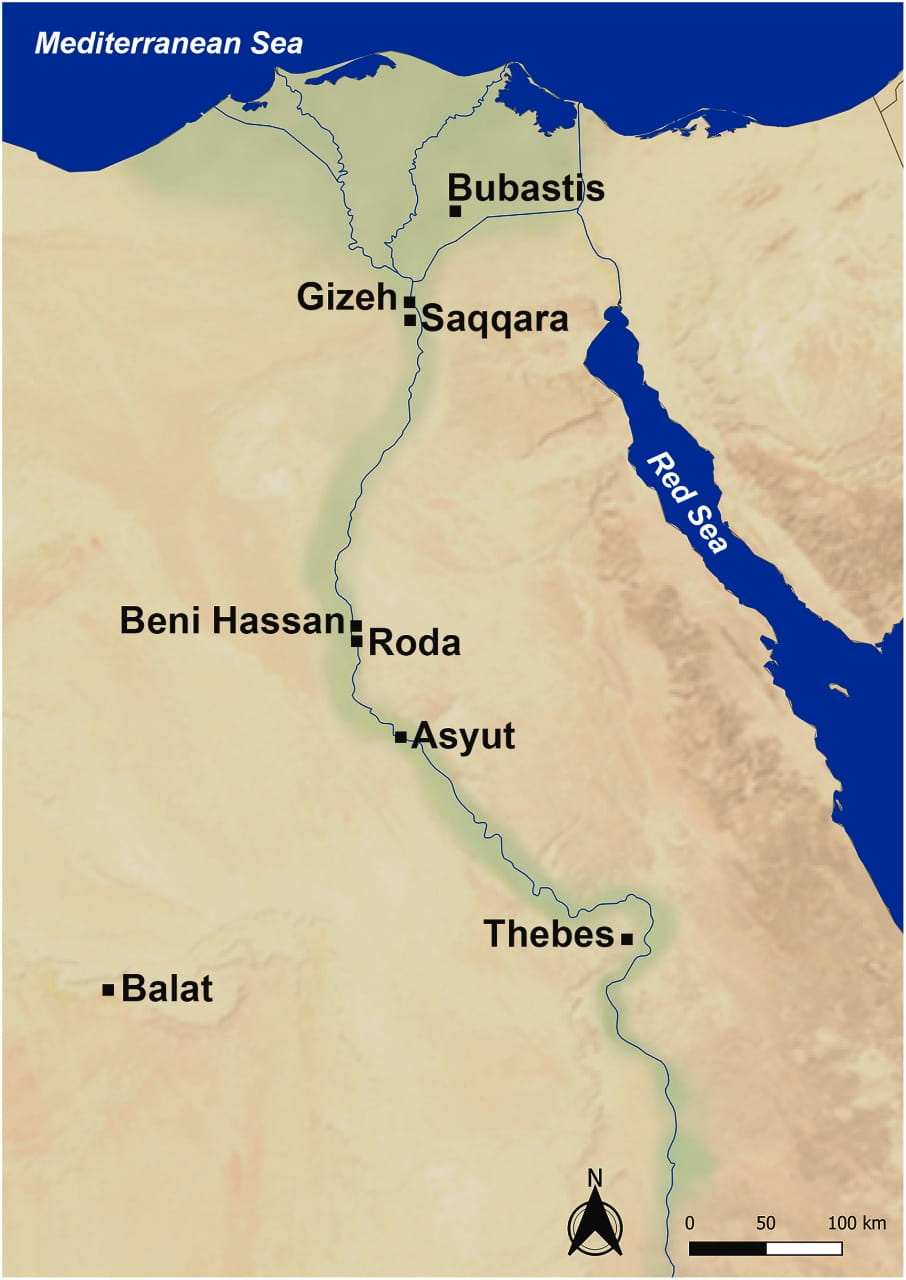 Localities with cat cemeteries mentioned in the srudy. Credit: Van Neer et al., Journal of Archaeological Science (2026)
Fourteen skulls, or 11 percent, showed injuries. Eight had puncture marks from fights between cats, and three of those healed. One house cat had healed punctures matching the canines of a jungle cat in size and spacing. People caused other wounds, and hack marks point to a sharp metal tool, while fractures or dents in the skull point to a blunt object, possibly a thick wooden stick. Two cats died of their wounds, while three or four survived blows to the head. The authors say some injuries could be discipline or a way to split up fighting animals, but the fatal ones were meant to kill.
Six of the seven jungle cats had pathologies, much like the house cats. The authors read this as a sign all the felids lived together in the same stressful conditions, likely in confined spaces.
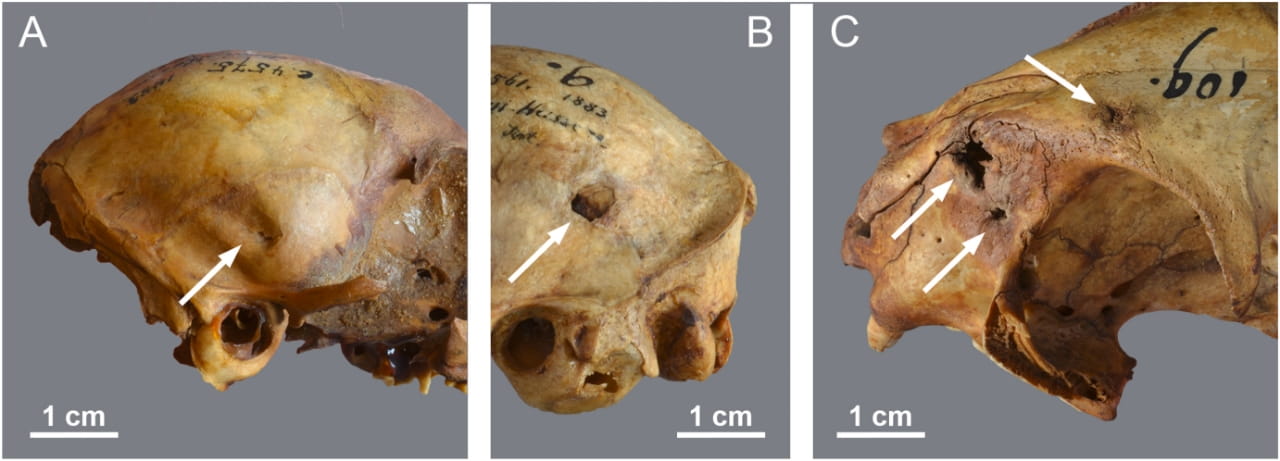 Examples of puncture marks on several skulls. Signs of healing are visible on specimen C. Credit: Van Neer et al., Journal of Archaeological Science (2026)
Radiocarbon dates from nine skulls place eight between 380 and 40 BCE, from the end of the Late Period into the Ptolemaic era. One cat dates to about 980 to 820 BCE, in the Third Intermediate Period. No known text records cat mummies at Beni Hassan so early. The date suggests mummification began there sooner than thought, unless the skull came from Bubastis.
Chemical tests on four jungle cats and twelve house cats found a carbon value of minus 16.7 in jungle cats against minus 18.5 in house cats. The gap fits a wetland or river habitat early in life. Captivity was too short to erase the signal, so the authors conclude the jungle cats were wild-caught, not bred in captivity.
Publication: Van Neer, W., De Cupere, B., & Ottoni, C. (2026). Keeping cats for mummification in ancient Egypt: osteological evidence from Beni Hassan. Journal of Archaeological Science, 196(106733), 106733. doi:10.1016/j.jas.2026.106733