
Brian Rolapp stood at a glass podium in Cromwell, Conn., debuting one of the PGA Tour’s most dramatic competitive overhauls since its inception.
At the Travelers Championship in June, the CEO scanned the room as he explained the philosophy behind the tour’s new two-tiered system, which would introduce true promotion and relegation to the PGA Tour for the first time. Beginning in 2028, the best players in the world would finally play head-to-head regularly throughout an entire season. Match play would be implemented in the Tour Championship for the first time, too.
Rolapp, a former NFL executive, thanked key members of the Future Competition Committee — including Tiger Woods and MLB executive Theo Epstein — before effortlessly moving through questions from the media. Until one inquiry tripped him up.
“Hold on, let me make sure I get this right,” Rolapp said, putting his hand up.
For confirmation about the future of Monday qualifying tournaments, Rolapp’s eyes immediately fixed on one individual in the front row. She wasn’t shown on screen, and her name wasn’t mentioned in Rolapp’s public remarks, but everyone watching from inside the organization knew exactly who the PGA Tour CEO turned to at that moment.
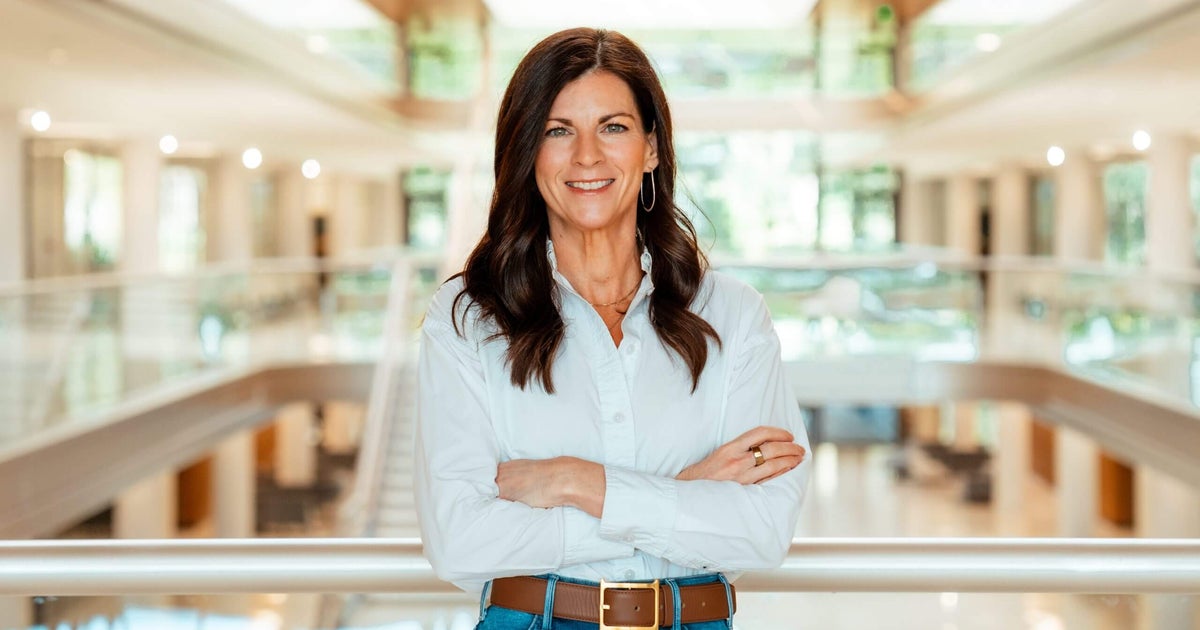
Kirsten Burgess, known in tour circles as “Kirty,” is the PGA Tour’s senior vice president of competition administration and had the answer. She also served as one of the tour staffers in the Future Competition Committee’s working group. But Burgess’ brief interaction with Rolapp in Connecticut perfectly represented her quiet, yet outsized role in facilitating the sweeping changes coming soon to the tour.
“She is essential to the PGA Tour,” Rolapp says. “She is at the center of all things competitive and all things players.”
On Monday, with its role complete, the Future Competition Committee’s tenure ended. The PGA Tour board voted to approve its proposed competitive model. It will now move into the implementation phase of a structure that is supposed to make the season much easier to follow. That work could not have been completed without Burgess, often one of the only women in the boardrooms that decided the PGA Tour’s future.
“If we lost Kirty, it would be like the Dodgers losing Shohei Ohtani, or the Buffalo Bills losing Josh Allen,” says Keith Mitchell, one of the six player directors who sat on the Future Competition Committee. “She is the MVP of the PGA Tour.”
Twenty-three years ago, Burgess began calling the PGA Tour’s Ponte Vedra, Fla., offices every single day.
She was eager for a role based in the area, where her husband had just moved, and her persistence paid off. In June 2003, Burgess landed a role with the Champions Tour, in player relations and tournament business affairs, two years after graduating from Florida State.
It was an ironic career development for Burgess, who grew up in coal-mining country in Kentucky with golf practically an entry requirement in her family tree. Her great-grandfather and uncle were PGA professionals. Her parents were scratch golfers. But Burgess actively resisted it.
“I called my mom and told her I got a job at the PGA Tour, and she was like, ‘See? All those years of me making you play golf have paid off,’” Burgess says. “It became the joke in the family.”
So Burgess began her serendipitous golf industry journey. It would soon turn into a rapid ascent up the PGA Tour ranks.
Blades Brown makes history with first PGA Tour win
Shortly after starting in the Champions Tour, Burgess was offered a role helping with competitions. In the PGA Tour ecosystem, the competitions department is the epicenter, the powerhouse. It determines which tournaments include which players, who is eligible for what exemptions and when. Competitions not only writes the rules, but communicates and enforces them. Courses, calendars, criteria — Burgess touched the minutiae of it all while managing player meetings for the tour’s governance and serving as a point person for the most convoluted questions.
“She gained this incredible knowledge of how that all works, which is incredibly complicated,” says Tyler Dennis, the PGA Tour’s chief competitions officer. “She became a real point of contact for the players.”
Burgess was recruited by Tim Finchem, the tour’s commissioner from 1994 to 2016, to be his executive assistant, a role she held for five years, including the thick of the 2008 financial crisis and Woods’ public scandals.
In late 2012, an organizational shakeup at the tour led to an opening back in the department Burgess realized she not only had missed but also had a special eye for. Burgess returned to competitions, but this time with much more responsibility.
“I ended up back where I really loved to be,” Burgess said.
“I did not go to a fancy school. I’m not the smart person in the room. But I do have a tendency, when you do the same thing over and over, to see the patterns of what’s happening. So the players would ask, am I going to get into a tournament or am I not going to get in? They’d call me the Magic 8 Ball.”
After years of answering players’ calls at all hours of the day and night, and beginning to help with the Player Advisory Council on tour, Burgess faced the biggest challenge of her career at the onset of COVID-19. Suddenly, Burgess was asked to rewrite a 200-page regulations book, and the tour’s entire shortened season had to be rethought. Points, medical extensions, membership rules: it all fell in her lap. She learned that her role wasn’t just about regurgitating rules. It could determine livelihoods.
“I know every way that everything impacts the players’ lives,” she says. “Their family, their travel — maybe that’s the superpower of being a girl. You just listen.”
The pandemic turned out to be an appetizer compared to the next predicament that hit her desk.
It was May 2022, at the Memorial Championship in Dublin, Ohio. On Burgess’ right was Commissioner Jay Monahan; on her left was her boss, Dennis. Jon Rahm was present, and so was Brooks Koepka. The group was in the middle of a pivotal big-picture discussion about the structure of the tour. How could it get the stars playing against each other more often? Burgess remembers how strange it felt to be sitting at the head of this particular boardroom table.
“I almost had this weird, out-of-body experience, where I was like, how did I get here?” she says.
The group had walked out of the room, a productive meeting behind them, when Burgess and her peers looked down at their phones to dozens of notifications. The most pivotal news of the last five years had broken: the launch of the LIV Golf league and the list of players who signed up for its inaugural event in London.
“Oh boy,” Burgess says. “I just remember thinking, everything’s about to change.”
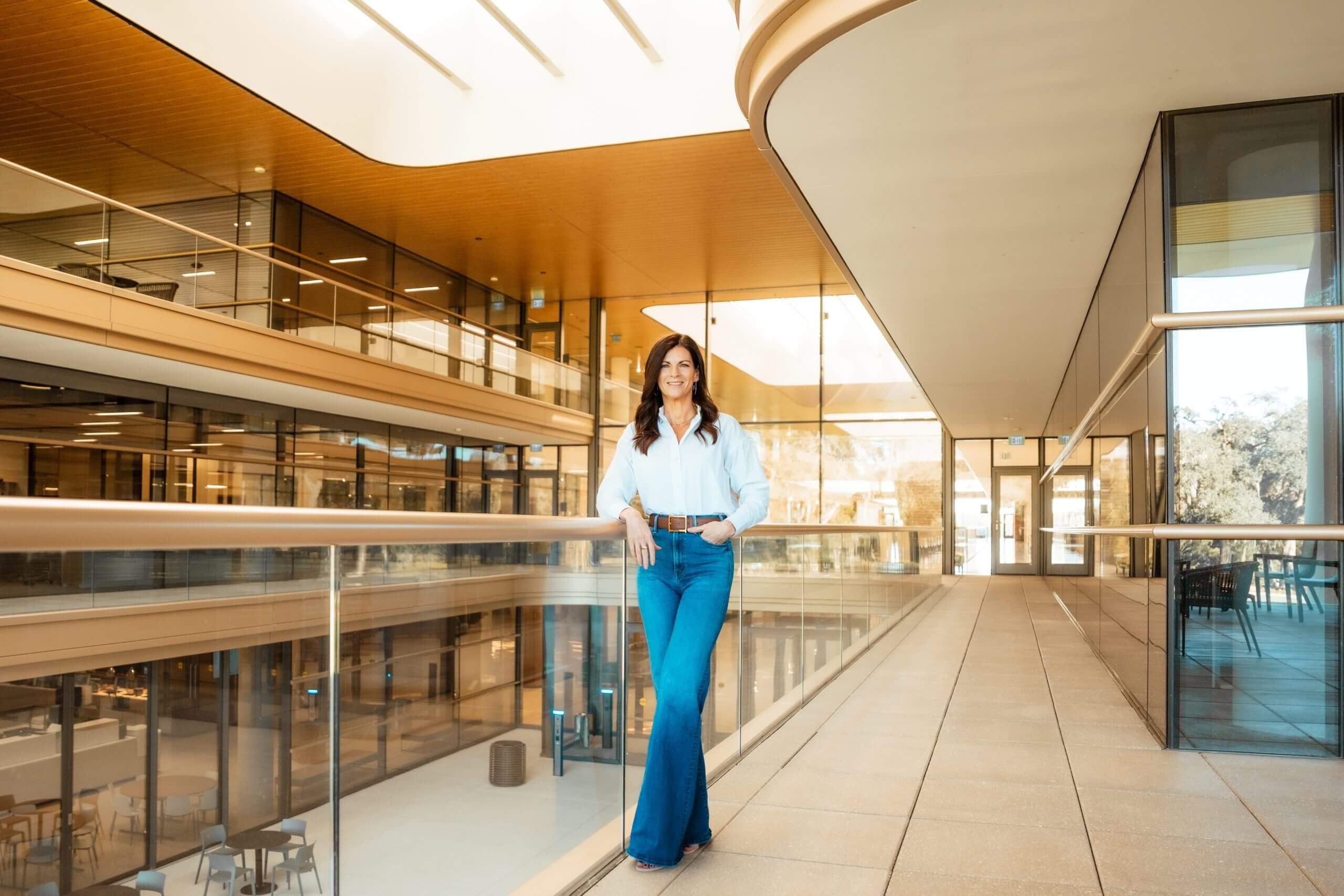
Kirty Burgess learned the PGA Tour from the inside over the last two decades, rising to a vital role. (Courtesy of PGA Tour)
Weeks later, it was Burgess’ signature on the paperwork that officially rejected those players’ requests to play elsewhere, thrusting her into the forefront of a years-long power struggle with the rebel tour. Burgess’ work with the subcommittees of the Player Advisory Council on Tour was integral during this period. She was a voice of experience and information as players watched the tour forcibly transform before their eyes.
“She knows every decision has a trickle effect,” says Camilo Villegas, another FCC player director. “She understands that if we move one chip, a lot of other chips are going to fall. Are they going to fall in the right direction, or in a bad direction? That’s where her analysis was unbelievable.”
Three years later, Burgess was ready to quit. In late summer of 2025, she sat in her kitchen, across from her two teenage sons, Brooks and Brady, seriously considering walking away.
It had been five years of one thing after the next. The tour had survived the pandemic, the LIV Golf threat had subsided and the big-money signature events had been implemented. Now, the latest: A new CEO wants to wipe the slate clean.
Before Rolapp’s Future Competition Committee could even be officially formed, Burgess was tasked with gathering and compiling all the information his regime would need as context for reshaping the PGA Tour. Another wave of change was only beginning.
“I don’t know that I should do this anymore,” Burgess told her boys. “I could just stay home, and I could be with you guys way more. Maybe they don’t need me.”
Brooks stared at her blankly before snapping his mother back to reality: “Mom, you could, but then you wouldn’t be happy,” he told her. “It’s just not you.”
Burgess began to view the daunting task ahead as an opportunity. For once, the walls she always had to operate within — the rules, regulations, the precedents — were being intentionally taken down.
“Kirty is by far the most knowledgeable person at the tour with all the elements of eligibility,” Patrick Cantlay, one of the six player directors on the FCC, says. “As we went through this process of trying to create an easier-to-understand, easier-to-navigate PGA Tour, we couldn’t have done the work without her and her expertise.”
Early on, Rolapp noticed that the players in the room with him — Woods, Mitchell, Cantlay, Villegas, Maverick McNealy and Adam Scott — met his ideas with silence. He interpreted the lack of comment as endorsement, as it would have been in the NFL, where he had worked for 22 years. Rolapp was focused on the business opportunities the tour was missing out on and the prospect of a must-see TV product every week.
But the players’ silence reflected their concern about the number of events and how match play would actually work in a season-ending championship.
Burgess, banking on her experience with players and her understanding of all the decisions they face, knew something was off. So she told Rolapp, flat out: ‘I know what you’re trying to do, but the way you’re doing it isn’t working.’
“She said, ‘Let me tell you exactly how these guys think, and what you’re missing,’” Rolapp said.
From there, it took one meeting — in February at Torrey Pines, with just Rolapp and his six player directors — to recalibrate the committee’s entire direction.
“That was a complete turning point in the FCC process,” Rolapp said. “It put it right back on the rails, and Kirty was at the center of that.”
Four months later, Rolapp stood at his podium in Connecticut, announcing the simplification of the PGA Tour to the world, with the Championship Series for the top group of players and a Challenger Series below it.
All the while, as the structure continued to roll out over the summer — and was finally approved on Monday — Burgess could be found sitting in her PGA Tour headquarters office, still unbeknownst as the key to it all.
“I’m not really a secret weapon,” Burgess says. “I’ve just been around a long time.”