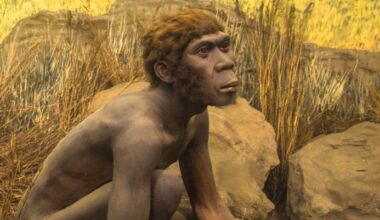
SScience Read More Researchers Reconstruct Face of Oldest Known Homo sapiensSeptember 27, 2026 Scientists have created a digital facial approximation of the Jebel Irhoud hominin, whose remains are dated to about…
SScience Read More Neanderthal Gene Still Shapes Muscle and Jaws in Some Living HumansAugust 8, 2026 Neanderthals vanished roughly 42,000 years ago, but a piece of their biology appears to be quietly at work…
SScience Read More Scientists Find Traces of Two Unknown Archaic Hominins in Human DNAAugust 2, 2026 New research led by the University of California, Berkeley reveals that beyond Neanderthals and Denisovans, humans interbred with…
SScience Read More 224,000-Year-Old Homo Skull Fragment Adds New Mystery to Human OriginsJuly 31, 2026 A fossilized skull fragment of Homo sp. unearthed in central Spain offers paleoanthropologists a fresh window into the…
SScience Read More New Study Challenges Long-Held Idea that Our Ancestors Simply Got Bigger Over TimeJune 24, 2026 For decades, paleoanthropologists assumed that hominins — the lineage leading to modern humans — gradually grew larger over…
MMedication Read More Neanderthals May Have Used Birch Tar as Natural AntibioticMarch 19, 2026 New experiments show that tar made from birch bark — long known as a tool adhesive — can…
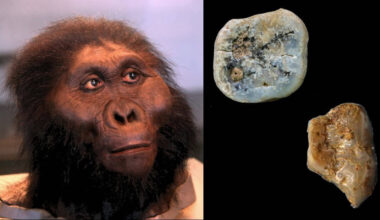
SScience Read More The Forgotten Cousins of Humanity Who May Have Made the World’s First ToolsOctober 11, 2025 Paranthropus was adapted for chewing, with teeth up to four times the size of a modern humans. Teeth…
SScience Read More 80,000-Year-Old Neanderthal Footprints Found in PortugalSeptember 27, 2025 Archaeologists have discovered two Neanderthals tracksites in the southwestern most region of Europe: at Monte Clérigo, dated to…
GGenetics Read More Study: Genetic Variant Inherited from Neanderthals Reduces Activity of Key Muscle EnzymeAugust 12, 2025 The Neanderthal variant in AMPD1 decreases its enzymatic activity by 25% in lab-produced proteins and by up to…