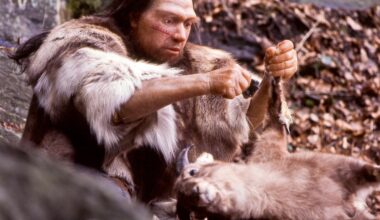
SScience Read More Neanderthals May Have Used the World’s First Antibiotic 50,000 Years AgoMarch 21, 2026 Creating birch tar using Neanderthal methods. Image credits: University of Cologne. If you were a Neanderthal hunter 50,000…

SScience Read More Neanderthal men may have chosen human women more often, reshaping human history: DNA study suggests |March 2, 2026 Ancient history often feels distant and abstract, reduced to fossil fragments and textbook timelines. Yet every so often,…
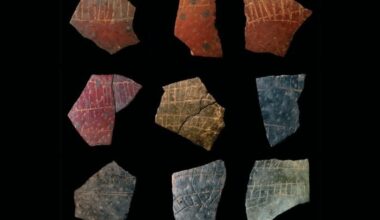
SScience Read More Humans Sketched Oddly Precise Geometric Patterns Onto Ostrich Eggs 60,000 Years AgoFebruary 27, 2026 Ostrich eggs are huge. Big enough, in fact, for ancient humans to use them as primitive writing surfaces…
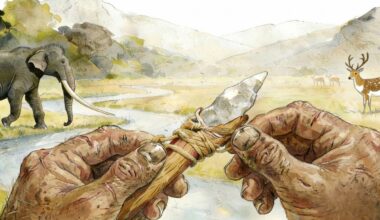
SScience Read More Discovery of complex pre-historic tools in China suggests our ancestors were far more advanced than thoughtJanuary 29, 2026 Complex prehistoric tools unearthed at an archaeological site in central China are upending long-standing assumptions about human evolution,…
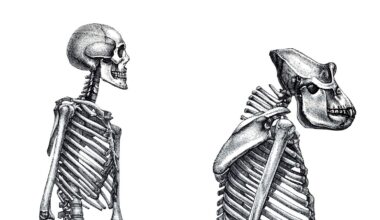
SScience Read More Anthropologists Still Can’t Agree On The AnswerJanuary 25, 2026 The chin is one of our most familiar features, yet scientists still debate why we evolved it. Here’s…
WWildlife Read More How Fearsome Wolves Became Loyal Dogs — and Changed Human History ForeverDecember 24, 2025 The dog diverged from a now-extinct population of wolves 27,000–40,000 years ago, before or during the Last Glacial…
SScience Read More Early humans mastered fire-making 400,000 years ago, new study revealsDecember 13, 2025 A new study from a well-known Paleolithic site in eastern England has revealed that early humans mastered fire-making…
SScience Read More Neanderthals and early humans reshaped Europe’s landscapes long before the rise of agriculture, study findsOctober 27, 2025 A recent study published in PLOS One reveals that Neanderthals and early modern humans began to reshape Europe’s…
SScience Read More Lead exposure may have influenced brain and language development in early humans and NeanderthalsOctober 26, 2025 A new study published in Science Advances suggests that humans and their ancestors were exposed to lead nearly…
SScience Read More Eating carrion reconsidered: how scavenging shaped human evolution and made us humanOctober 25, 2025 A new multidisciplinary study led by the National Center for Research on Human Evolution (CENIEH), in collaboration with…
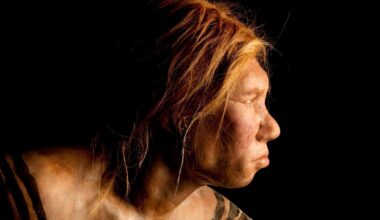
GGenetics Read More Neanderthal-human hybrids may have been scourged by a genetic mismatchOctober 20, 2025 A model of a Neanderthal woman Joe McNally/Getty Modern humans may indeed have wiped out Neanderthals – but…
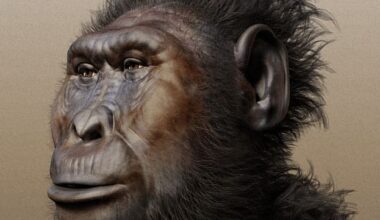
SScience Read More Million-year-old fossil changes what we know about human hands and feetOctober 19, 2025 Newly discovered fossils in Kenya reveal that Paranthropus boisei, once seen as a simple plant-eater, had surprisingly human-like…