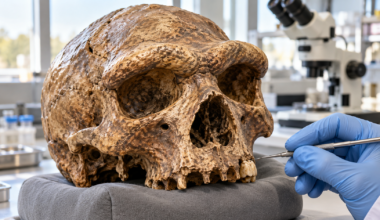
SScience Read More Ancient DNA identifies 146,000 year-old ‘Dragon Man’ as a DenisovanOctober 12, 2026 Ancient DNA and proteins identify China’s nearly complete “Dragon Man” skull as Denisovan.The fossil, at least 146,000 years…
SScience Read More Neanderthal woodworking was far more advanced than we thought, new study showsOctober 8, 2026 Neanderthals did far more with wood than burn it. A new study of 597 wooden remains and imprints…
SScience Read More The First Denisovan Arm Bone Offers a New Clue to What These Ancient and Mysterious Humans Looked LikeSeptember 11, 2026 The fossil is only about 4.5 centimeters long, a broken piece of the radius near the elbow. But…
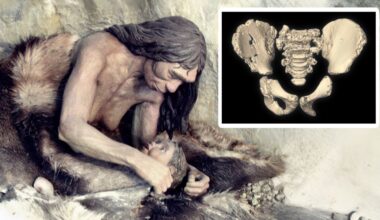
SScience Read More Neanderthal pelvises challenge a long-held idea about childbirth and walkingAugust 26, 2026 For decades, scientists have used the human pelvis to study a basic question about our evolution: how did…
SScience Read More Neanderthal gene inherited by modern humans linked to greater muscle massAugust 13, 2026 A gene inherited from Neanderthals tens of thousands of years ago is linked to greater muscle mass in…
SScience Read More Scientists Found DNA from Not One, but Two ‘Ghost Species’ Hiding in Our Genetic CodeAugust 7, 2026 Here’s what you’ll learn when you read this story: UC Berkeley researchers created a framework designed to identify…
SScience Read More You May Carry Neanderthal DNA. Scientists Found What It Does to YouAugust 7, 2026 If you happen to carry a certain piece of Neanderthal DNA, you likely have more muscle than people…
SScience Read More Mystery cave collapse uncovers ‘advanced human time capsule’ | History | NewsJune 24, 2026 Archaeologists have uncovered a remarkably preserved prehistoric cave that is helping researchers piece together a crucial chapter in…
SScience Read More Payre fossil teeth reveal regional diversity among Europe’s earliest NeanderthalsMay 27, 2026 A team led by the Centro Nacional de Investigación sobre la Evolución Humana studied fossil teeth from the…
SScience Read More China scientists argue that harsh settings, not warm climates, drive early human creativityMay 24, 2026 Archaeologists in central China have directly challenged the long-held belief that humanity’s earliest ancestors reached their creative peak…
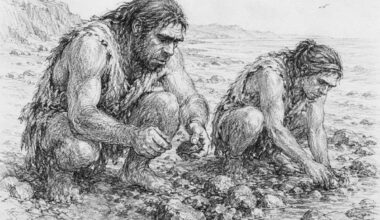
SScience Read More Neanderthals gathered shellfish like modern humans 115,000 years ago, study findsMay 23, 2026 Neanderthal groups living along the southern coast of Europe gathered shellfish through every season around 115,000 years ago,…
SScience Read More Scientists May Have Finally Figured Out Why Most People Are Right-HandedMay 20, 2026 Around 90% of people—across cultures and throughout recorded history—are right-handed. That fact may seem ordinary, yet it remains…