PPhysics Read More Are the cosmic voids truly empty?November 6, 2025 Credit: Pixabay/CC0 Public Domain If we take out all the matter, neutrinos, dark matter, cosmic rays, and radiation…
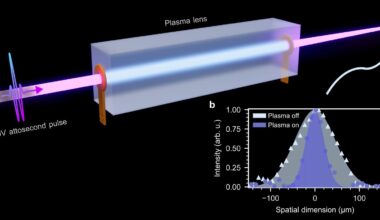
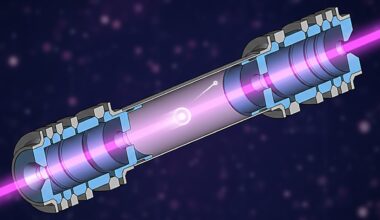
PPhysics Read More Plasma lens can focus attosecond pulses across different ranges of XUV lightNovember 6, 2025 a, An attosecond pulse enters a capillary, where a strong electrical pulse generates a hydrogen plasma. As the…
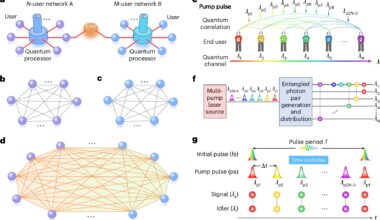
PPhysics Read More Two independent quantum networks successfully fused into oneNovember 6, 2025 Scheme of quantum network fusion, network architecture and operation principle. Credit: Nature Photonics (2025). DOI: 10.1038/s41566-025-01792-0 Many quantum…
PPhysics Read More Superconducting qubit that lasts for over 1 millisecond is primed for industrial scalingNovember 5, 2025 A Princeton team has reported their new qubit lasts for over 1 millisecond, three times longer than the…
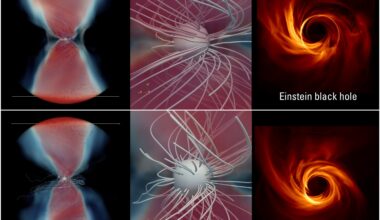
PPhysics Read More Are there different types of black holes? New method puts Einstein to the testNovember 5, 2025 At the current resolution of telescopes, black holes predicted by different theories of gravity still look very similar.…
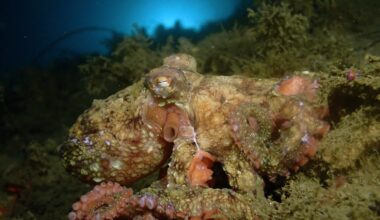
SScience Read More Scientists produce powerhouse pigment behind octopus camouflageNovember 5, 2025 An octopus camouflages itself with the seafloor. Credit: Charlotte Seid Scientists at UC San Diego have moved one…
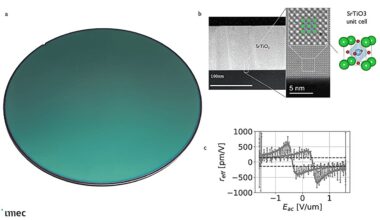
PPhysics Read More Thin-film strontium titanate sets electro-optic performance record at cryogenic temperaturesNovember 5, 2025 (a) Thin-film 200-mm strontium titanate (SrTiO3) grown on silicon wafer. (b) Transmission electron microscope image highlighting the crystallinity…
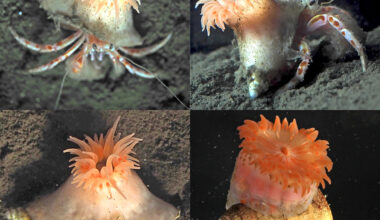
WWildlife Read More Pink sea anemone that ‘builds a home’ for hermit crabs discovered off Japan’s deep-sea coastNovember 5, 2025 Paracalliactis tsukisome, a newly discovered sea anemone living in symbiosis with hermit crabs on the deep-sea floor off…
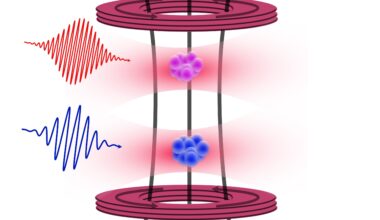
PPhysics Read More Physicists achieve high precision in measuring strontium atoms using rubidium neighborNovember 5, 2025 Small clouds of strontium atoms (blue) and rubidium atoms (red) are trapped together. The well-known properties of rubidium…
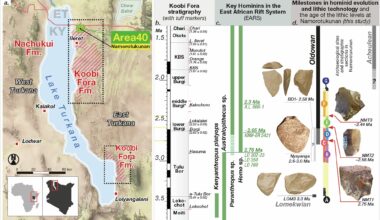
SScience Read More 2.75-million-year-old stone tools may mark a turning point in human evolutionNovember 5, 2025 Map of Turkana Basin with the Namorotukunan Archaeological Site and timeline of currently known events in the Plio-Pleistocene.…
PPhysics Read More CERN’s electrostatic trap ‘recycles’ anions to illuminate the heaviest elementsNovember 5, 2025 Illustration of the ion trap used by the ISOLDE team to measure the electron affinity of chlorine. In…
SScience Read More Astronomers may have found the first stars that formed after the Big BangNovember 5, 2025 Credit: Neale LaSalle from Pexels For years, astronomers have been on the hunt for the first generation of…