
A real estate expert has called for an overhaul of the commission-based system, claiming it is profiting greedy agents more than home sellers.
Property marketing strategist David Kaity said agents are pocketing record profits due to uncapped percentage-based commissions.
The payment system means agents earn a steady slice of every property sale, and because there’s no cap, the more they sell, the more they earn, with no limits.
‘Most of us believe that a percentage-based commission incentivises real estate agents to work hard on our behalf to achieve the highest sale price possible for the vendor, because the higher the sale price, the higher their commission,’ Mr Kaity said.
‘Unfortunately, this is only partially true.’
Mr Kaity said the model created a conflict of interest between the agent and the seller by encouraging the agent to sell quickly, instead of achieving the highest sale price possible.
That, he said, was potentially costing the vendor hundreds of thousands of dollars.
‘Under this model, without even realising it, they risk leaving five or six figures on the table,’ he said.

Property marketing strategist David Kaity (pictured) is calling for a rethink in the way real estate agents earn money from home sales
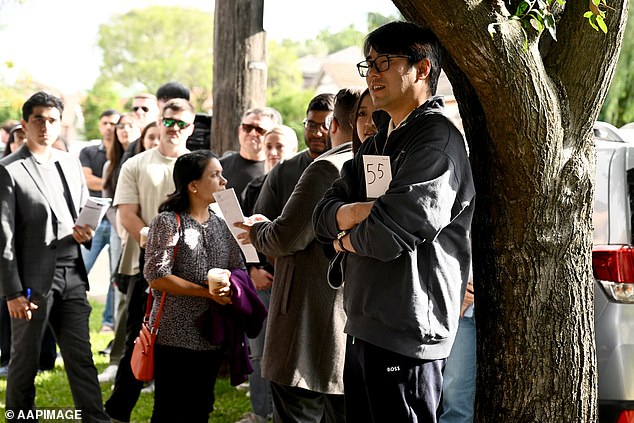
Mr Kaity said the uncapped percentage-based commission model created a conflict of interest between the agent and the seller by encouraging the agent to sell quickly, instead of achieving the highest sale price possible (stock image)
‘It’s essentially not about how much money agents are making thanks to higher property prices, but that their percentage commissions encourage homeowners to undersell their homes to get a quick sale and allow them to pick up the bulk of their commissions sooner.’
A real estate agent who charged a two per cent commission on a $1million sale would only get $2,000 on the last $100,000 of the sale price, which Mr Kaity said was often the most important part of the sale for vendors.
‘Anyone can sell a $1million home for $900,000, a scarecrow in the front yard holding a sign could achieve that result,’ he said.
‘Why reward someone with 90 per cent of their commission on the easiest part of the sale?
‘An agent would only lose $2,000 if they convinced the vendor to sell quickly for $900,000 so they could then pocket their $18,000 fast.’
Strategic Property Group managing director Trent Fleskens said Mr Kaity raised valid points, but it was important not to ‘throw the baby out with the bathwater’.
‘Good agents do work hard to maximise the sale price, their reputation, and long-term client base depend on it,’ he said.
‘That said, there is an issue in how commissions are structured, particularly in hot markets where properties can move quickly and agents may prioritise volume over value.
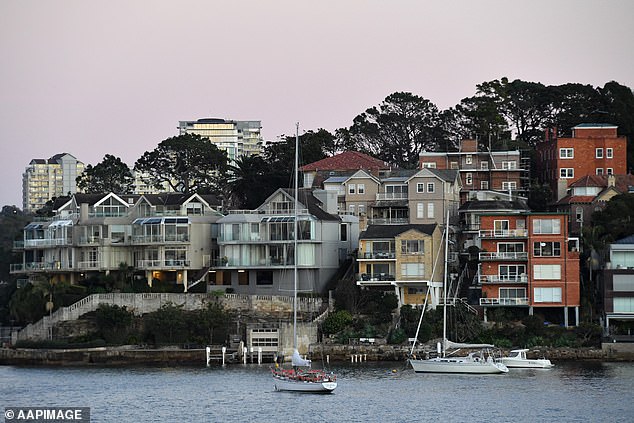
Government-imposed caps on real estate agent commissions for residential property transactions in Australia have been dismantled in recent years (stock image)
‘Good agents can make more than good surgeons in markets like this one.’
The most recent data from the Australian Taxation Office for 2022-23 has surgeons earning an average annual income of $472,475, making it the highest-paid job in the country.
The average real estate sales agent earned $100,531 per year.
Mr Kaity said it was ‘critical’ sellers understood the last stretch of the sale price of their property didn’t make much of a difference to your agent’s commission.
‘Frustratingly, negotiations also happen behind your back where you never see or hear what’s being said about you or your property,’ he said.
‘It’s rather like entrusting your chickens to a fox.’
Mr Kaity said it made more sense to tie the reward for selling a property to the last 10 per cent of the value of any property.
‘In my view, anyone who helps you sell your home should only be paid based on this last stretch, which is the cream, or premium, of your home’s value,’ he said.
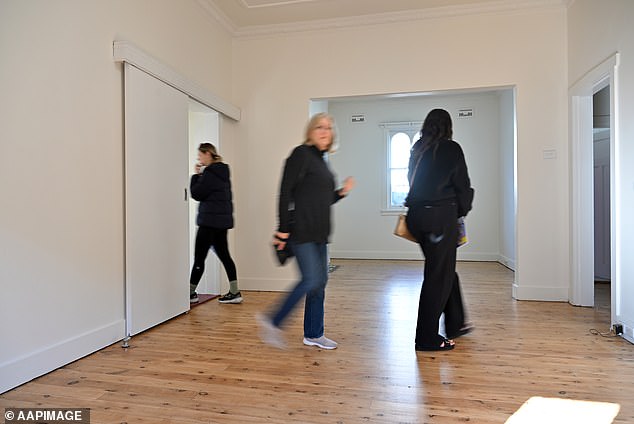
Real estate agents are earning more money than ever as property prices soar across Australia
‘While sellers are often keen to get a deal done quickly, under the prevailing commission system, which we’ve been conditioned to accept as best practice, many sellers are underselling their property and are completely oblivious.’
Mr Fleskens said suggestions agents only be paid on the last 10 per cent of the value was impractical and oversimplified the sales process.
‘A more effective solution might be a tiered or performance-based commission model that balances early effort with incentive to push for top dollar,’ he said.
‘And let’s be clear, not every vendor wants or needs to hold out for the absolute top price, especially in a high-interest-rate environment where time on market can be costly.’
Historically, there have been government-imposed caps on real estate agent commissions for residential property transactions in Australia, though these have largely been dismantled in recent years.
Prior to 2014, Queensland law capped commissions with agents allowed to charge up to 5 per cent on the first $18,000 and 2.5 per cent on the remaining balance of the sale price.
The Real Estate Institute of Australia said agents provided critical services, from market analysis to negotiation, that add genuine value for vendors.
‘Payment structures are market-driven and negotiable, and sellers are free to agree on alternatives such as tiered or fixed fees,’
‘The typical agent fee nationally falls between 1.5 per cent and 2.5 per cent, with 2 per cent commonly cited.’